

1 Ducat – Teutonic Order
Germany
Context
Year: 1626
Country: Germany 
Issuer: Teutonic Order
Ruler: Ferdinand II
Currency:
(1525—1809)
Demonetized: Yes
References
KM: #Click to copy to clipboard66
Numista: #420370
Value
Bullion value: $572.04
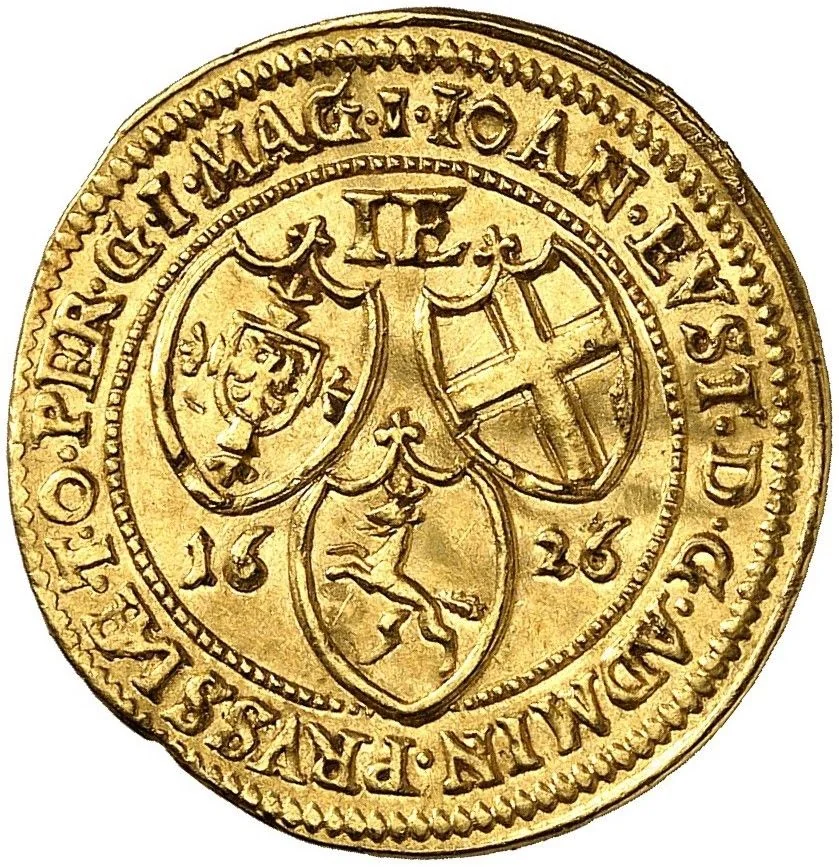
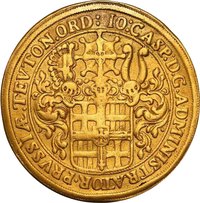
Obverse
Description:
Three shields within a circle.
Inscription:
• IOAN • EVST • D • G • ADMIN • PRVSSIÆ • T • O • PER • G • I • MAG •
IE
16 26
IE
16 26
Script: Latin
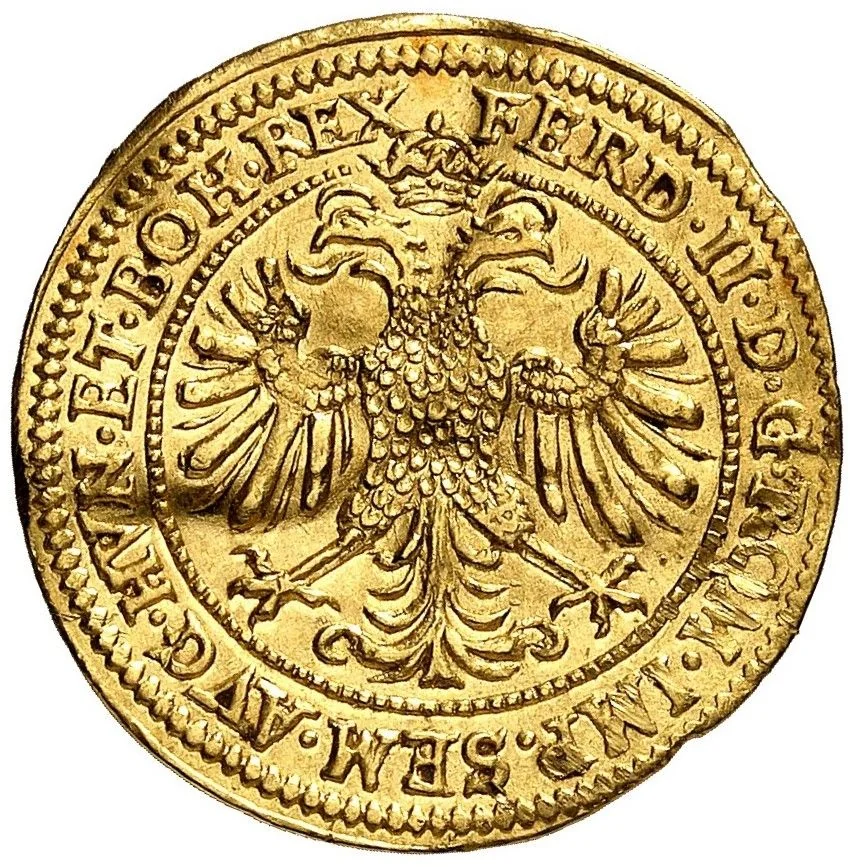
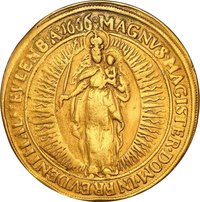
Reverse
Description:
Double-headed crowned eagle.
Inscription:
FERD • II • D • G • ROM • IMP • SEM • AVG • HVN • ET • BOH • REX
Script: Latin
Edge
Mints
| Name | Mark |
|---|---|
| Nuremberg | — |
Mintings
| Year | Mint Mark | Mintage | Quality | Collection |
|---|---|---|---|---|
| 1626 | — | — |
Historical background
In 1626, the Teutonic Order State, a monastic territory in the Duchy of Prussia, faced a complex and deteriorating currency situation deeply entangled in the wider economic turmoil of the Polish-Lithuanian Commonwealth, to which it was a fief. The primary issue was the rampant debasement of the coinage, particularly the small denomination coins like schillings and groschens that circulated in daily trade. The Order’s mints, notably in Königsberg, were engaged in competitive devaluation with the Polish crown, producing coins with ever-lower silver content to generate seigniorage revenue. This practice, while filling state coffers in the short term, fueled severe inflation and a loss of public trust, as the intrinsic value of coins fell far below their face value.
This monetary crisis was exacerbated by the geopolitical and military pressures of the era. The Teutonic State, though neutral, was acutely affected by the Thirty Years' War (1618-1648) raging across the Holy Roman Empire. The conflict disrupted trade, increased military expenditure, and led to the circulation of even more debased foreign coins from neighboring warzones, further polluting the monetary supply. Additionally, the state grappled with the classic economic problem of "bad money driving out good," as described by Gresham's Law. Older, higher-silver coins were hoarded or melted down, leaving only the poor-quality new issues in active circulation, which crippled reliable commerce and savings.
The situation prompted official concern and attempts at regulation, but these were largely ineffective. The Order's administration issued mandates to fix exchange rates and control the inflow of foreign coin, yet it could not resolve the fundamental incentive to continue debasement for fiscal needs. The currency instability of 1626 thus reflected a weak fiscal state caught between the monetary policies of its Polish overlord, the economic shockwaves of a continental war, and its own reliance on inflationary finance, undermining both its economic stability and its administrative authority within the region.
This monetary crisis was exacerbated by the geopolitical and military pressures of the era. The Teutonic State, though neutral, was acutely affected by the Thirty Years' War (1618-1648) raging across the Holy Roman Empire. The conflict disrupted trade, increased military expenditure, and led to the circulation of even more debased foreign coins from neighboring warzones, further polluting the monetary supply. Additionally, the state grappled with the classic economic problem of "bad money driving out good," as described by Gresham's Law. Older, higher-silver coins were hoarded or melted down, leaving only the poor-quality new issues in active circulation, which crippled reliable commerce and savings.
The situation prompted official concern and attempts at regulation, but these were largely ineffective. The Order's administration issued mandates to fix exchange rates and control the inflow of foreign coin, yet it could not resolve the fundamental incentive to continue debasement for fiscal needs. The currency instability of 1626 thus reflected a weak fiscal state caught between the monetary policies of its Polish overlord, the economic shockwaves of a continental war, and its own reliance on inflationary finance, undermining both its economic stability and its administrative authority within the region.
✨ Legendary