

2 lariat – Maldives
Add to wishlist
Maldives
Context
Year: 1800
Islamic (Hijri) Year:: 1214
Issuer: Maldives
Ruler: Muhammad Mueenuddeen I
Currency:
(1660—1947)
Demonetized: Yes
References
KM: #
Numista: #117864
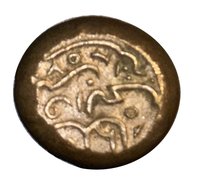
Obverse
Description:
Sultan's full name,
title, and lineage
in three lines.
title, and lineage
in three lines.
Inscription:
السلطان
محمد معين
الدين اسكندر
محمد معين
الدين اسكندر
Translation:
The Sultan
Muhammad Mu'in
al-Din Iskandar
Muhammad Mu'in
al-Din Iskandar
Language: Arabic
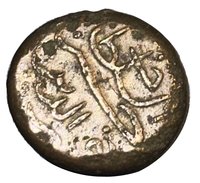
Reverse
Description:
Sultan, [date]
Inscription:
سلطان
البر والبحر
١٢١۴
سنة
البر والبحر
١٢١۴
سنة
Translation:
Sultan
of the Land and the Sea
1214
Year
of the Land and the Sea
1214
Year
Language: Arabic
Edge
Mintings
| Year | Mint Mark | Mintage | Quality | Collection |
|---|---|---|---|---|
| 1800 | — | — |
Historical background
In the early 1800s, the Maldives operated within a complex and informal monetary system, heavily influenced by its position in Indian Ocean trade networks. The official currency, as decreed by the sultanate in Malé, was the Larin, a silver wire coin bent into a hook shape that was historically widespread across the Persian Gulf and South Asia. However, by this period, the physical supply of Larins within the atolls was often scarce. The economy remained fundamentally based on barter, with dried fish (Maldive fish), cowrie shells, and coconuts serving as the primary mediums of exchange for daily transactions among the islanders.
Simultaneously, a multitude of foreign silver coins circulated unofficially but vitally, brought in by Arab, Indian, Malay, and later European merchants. These included Spanish dollars (pieces of eight), Maria Theresa thalers, and various Indian and Ceylonese rupees. Their value was not fixed by a central authority but fluctuated based on their intrinsic silver content and the demands of trade. This created a dual system: foreign coinage facilitated external trade and larger transactions, while barter and limited local coinage sustained the internal subsistence economy.
This fragmented currency situation reflected the Maldives' political and economic reality at the time. The central sultanate's control was often weak over distant atolls, and it lacked the minting capacity to produce sufficient standardized coinage for the entire archipelago. Consequently, the monetary landscape was decentralized and pragmatic, shaped more by the currents of regional commerce than by central fiscal policy. This would begin to change only later in the 19th century with stronger British influence and the eventual formalization of the Maldivian rupee.
Simultaneously, a multitude of foreign silver coins circulated unofficially but vitally, brought in by Arab, Indian, Malay, and later European merchants. These included Spanish dollars (pieces of eight), Maria Theresa thalers, and various Indian and Ceylonese rupees. Their value was not fixed by a central authority but fluctuated based on their intrinsic silver content and the demands of trade. This created a dual system: foreign coinage facilitated external trade and larger transactions, while barter and limited local coinage sustained the internal subsistence economy.
This fragmented currency situation reflected the Maldives' political and economic reality at the time. The central sultanate's control was often weak over distant atolls, and it lacked the minting capacity to produce sufficient standardized coinage for the entire archipelago. Consequently, the monetary landscape was decentralized and pragmatic, shaped more by the currents of regional commerce than by central fiscal policy. This would begin to change only later in the 19th century with stronger British influence and the eventual formalization of the Maldivian rupee.

✨ Legendary