

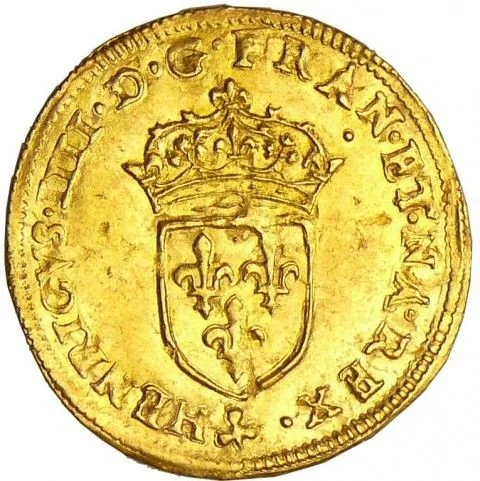
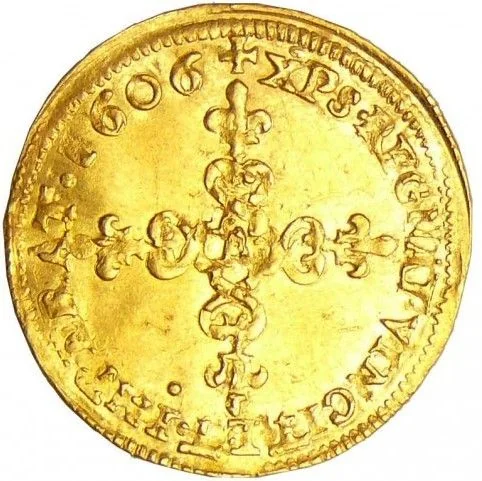
½ gold ecu – France
Add to wishlist
France
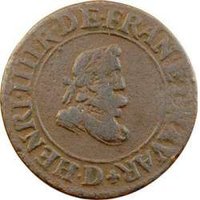
Obverse
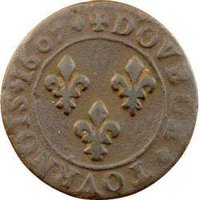
Reverse
Edge
Mints
| Name | Mark |
|---|---|
| Monnaie de Paris | A |
Historical background
In 1606, France was under the reign of Henry IV, a period of relative stability following the devastating Wars of Religion. The currency situation, however, was complex and fraught with challenges. The primary unit was the livre tournois (a money of account), divided into 20 sols, each of 12 deniers. The physical coins in circulation were incredibly diverse, including the gold écu, silver franc and teston, and a plethora of copper and billon (debased silver) coins. A critical problem was the widespread circulation of foreign coins and domestic counterfeits, which undermined trust and complicated commerce.
Monetary policy was a direct tool of the crown, and Henry IV, advised by his capable finance minister the Duke of Sully, was actively working to restore royal finances and monetary integrity. The period saw repeated attempts at revaluation and crying down the coinage—officially altering the exchange rate between the livre and the actual metal coins. This was done to generate seigniorage revenue for the state, attract bullion, or adjust to international metal flows, but it caused confusion and instability for merchants and the populace. The government issued frequent ordinances to fix legal exchange rates, attempting to impose order on a chaotic system.
For the average person, this instability meant prices and wages were in constant, confusing flux. A day's wage for a labourer, typically paid in small copper coins, might be officially 10 sols, but the purchasing power could change if the silver teston was suddenly revalued. The chaos benefited money changers and speculators but harmed long-distance trade and the poor. Thus, in 1606, France's currency was a patchwork of official and unofficial coins, subject to sudden royal decrees, representing a fragile system on the path to being strengthened, but still a source of daily economic uncertainty.
Monetary policy was a direct tool of the crown, and Henry IV, advised by his capable finance minister the Duke of Sully, was actively working to restore royal finances and monetary integrity. The period saw repeated attempts at revaluation and crying down the coinage—officially altering the exchange rate between the livre and the actual metal coins. This was done to generate seigniorage revenue for the state, attract bullion, or adjust to international metal flows, but it caused confusion and instability for merchants and the populace. The government issued frequent ordinances to fix legal exchange rates, attempting to impose order on a chaotic system.
For the average person, this instability meant prices and wages were in constant, confusing flux. A day's wage for a labourer, typically paid in small copper coins, might be officially 10 sols, but the purchasing power could change if the silver teston was suddenly revalued. The chaos benefited money changers and speculators but harmed long-distance trade and the poor. Thus, in 1606, France's currency was a patchwork of official and unofficial coins, subject to sudden royal decrees, representing a fragile system on the path to being strengthened, but still a source of daily economic uncertainty.
✨ Legendary