

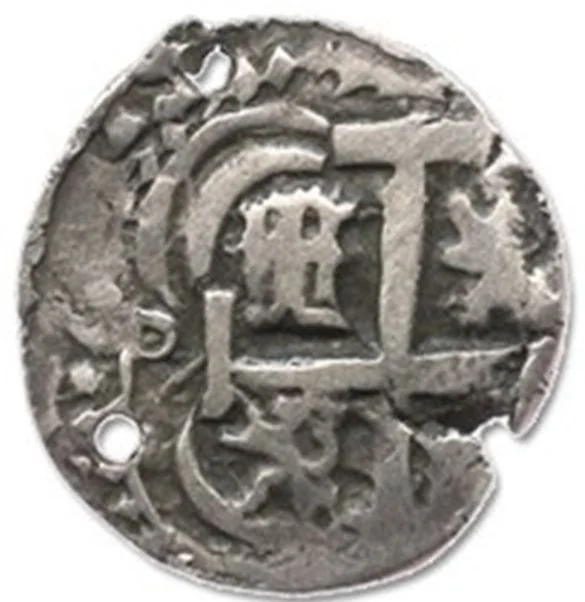
Obverse
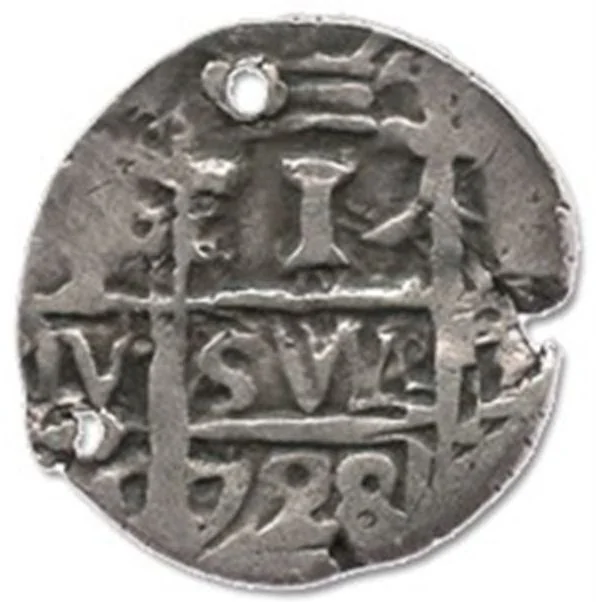
Reverse
Description:
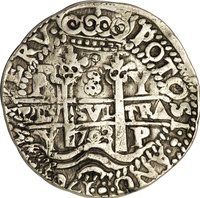
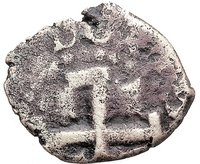
Pillars of Hercules crowned, waves below, value centered above.
Script: Latin
Edge
Mintings
| Year | Mint Mark | Mintage | Quality | Collection |
|---|---|---|---|---|
| 1702 | PY | — | ||
| 1703 | PY | — | ||
| 1704 | PY | — | ||
| 1705 | PY | — | ||
| 1706 | PY | — | ||
| 1707 | PY | — | ||
| 1708 | PY | — | ||
| 1709 | PY | — | ||
| 1710 | PY | — | ||
| 1711 | PY | — | ||
| 1712 | PY | — | ||
| 1713 | PY | — | ||
| 1714 | PY | — | ||
| 1715 | PY | — | ||
| 1716 | PY | — | ||
| 1717 | PY | — | ||
| 1718 | PY | — | ||
| 1719 | PY | — | ||
| 1720 | PY | — | ||
| 1721 | PY | — | ||
| 1722 | PY | — | ||
| 1723 | PY | — | ||
| 1724 | PY | — | ||
| 1728 | PM | — |
Historical background
In 1702, Bolivia, then known as the colonial Audiencia of Charcas within the Viceroyalty of Peru, operated within a complex and strained monetary system dominated by silver. The heart of this system was the Cerro Rico of Potosí, one of the world's richest silver mines, which supplied the raw material for the Spanish Empire's global trade. The royal mint, the Casa de la Moneda in Potosí, produced silver coins, primarily pesos and reales, which were the lifeblood of both local commerce and transatlantic finance. However, the mint was plagued by inefficiency, outdated technology, and persistent corruption, leading to irregular coinage and frequent shortages of official currency in the local markets.
This official scarcity was exacerbated by a severe lack of smaller denomination coins for everyday transactions, a chronic problem throughout Spanish America. To fill this void, a widespread informal economy of token money flourished. Locally produced moneda macuquina (crudely cut and hammered coins), indigenous coca leaves used as a barter unit, and even "tlacos" or lead tokens issued by merchants and hacienda owners served as the de facto currency for the majority of the population. This created a dual monetary system: one of official, assayed silver for large-scale and international trade, and another of heterogeneous, localized substitutes for daily survival.
Furthermore, the Spanish Crown's mercantilist policies strictly controlled the flow of wealth. Most of the silver mined in Potosí was required to be shipped to Spain, either as royal tax (the quinto real or "royal fifth") or as private remittances, draining the colony of its primary monetary metal. This external drain, combined with internal hoarding by elites and the Church, meant that despite sitting atop a mountain of silver, the local economy of Charcas in 1702 suffered from monetary insufficiency, relying on a fragile patchwork of official and unofficial currencies to function.
This official scarcity was exacerbated by a severe lack of smaller denomination coins for everyday transactions, a chronic problem throughout Spanish America. To fill this void, a widespread informal economy of token money flourished. Locally produced moneda macuquina (crudely cut and hammered coins), indigenous coca leaves used as a barter unit, and even "tlacos" or lead tokens issued by merchants and hacienda owners served as the de facto currency for the majority of the population. This created a dual monetary system: one of official, assayed silver for large-scale and international trade, and another of heterogeneous, localized substitutes for daily survival.
Furthermore, the Spanish Crown's mercantilist policies strictly controlled the flow of wealth. Most of the silver mined in Potosí was required to be shipped to Spain, either as royal tax (the quinto real or "royal fifth") or as private remittances, draining the colony of its primary monetary metal. This external drain, combined with internal hoarding by elites and the Church, meant that despite sitting atop a mountain of silver, the local economy of Charcas in 1702 suffered from monetary insufficiency, relying on a fragile patchwork of official and unofficial currencies to function.
💎 Extremely Rare