

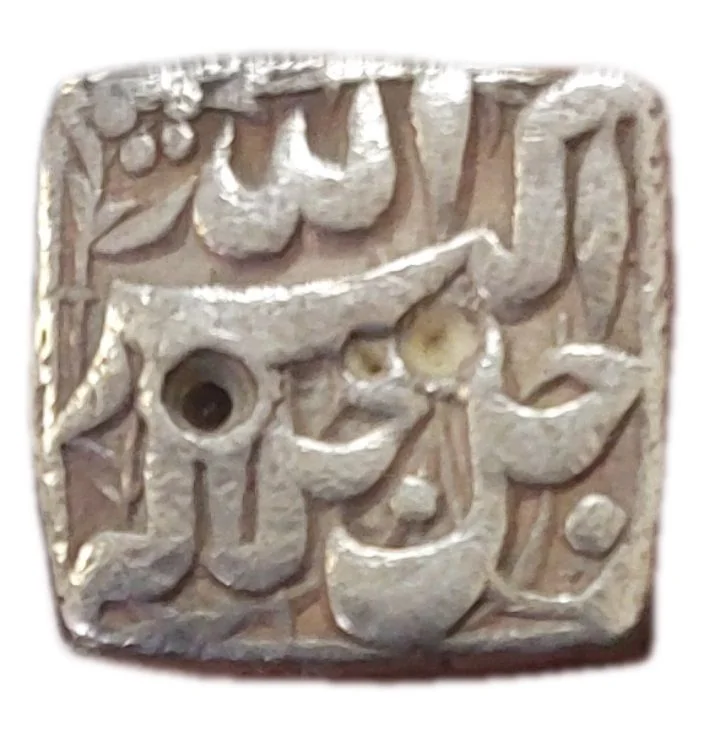
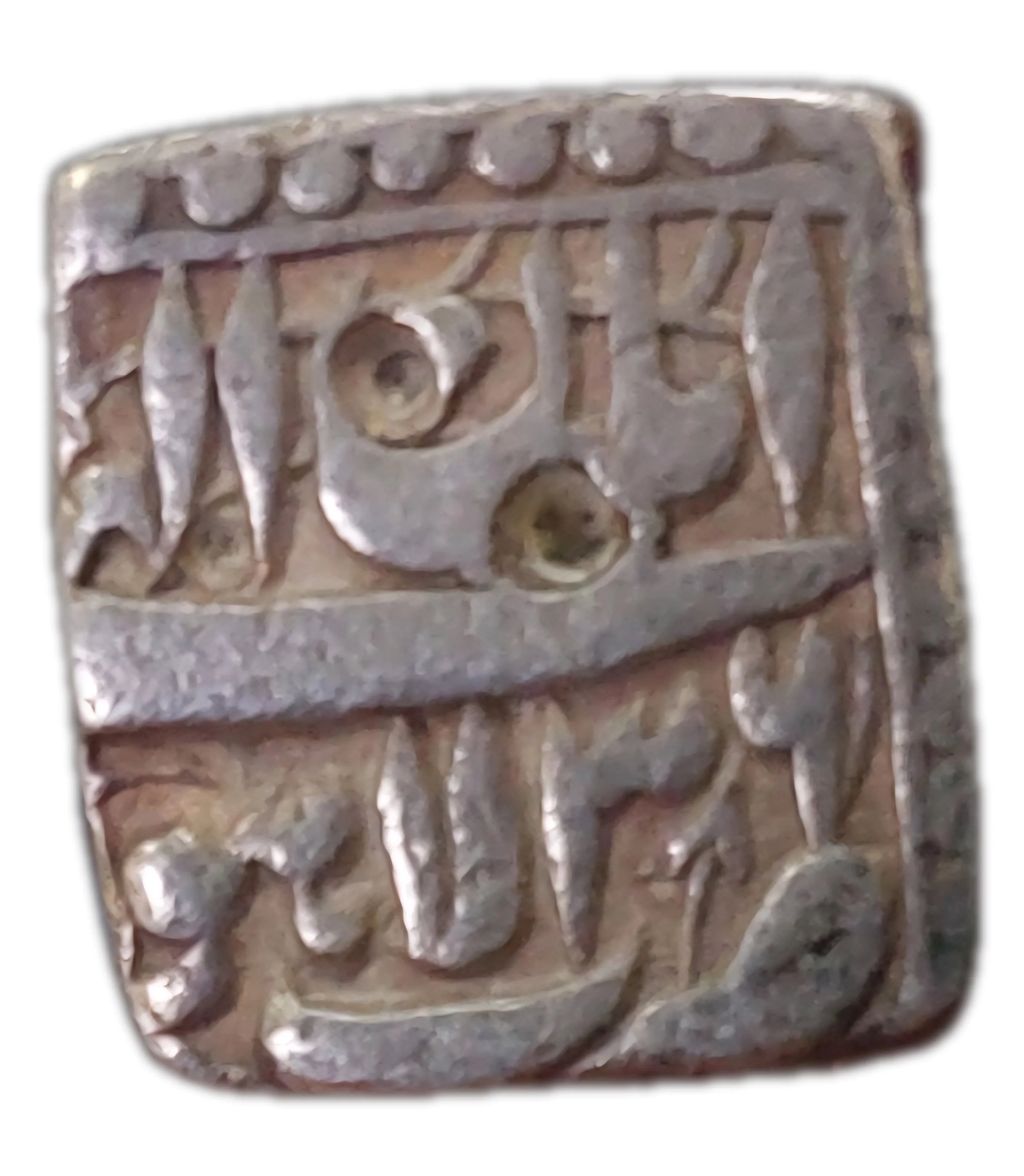
½ Rupee – Mughal Empire
India
Context
Years: 1591–1592
Country: India 
Issuer: Mughal Empire
Ruler: Akbar
Currency:
(1540—1842)
Demonetized: Yes
Material
Weight: 5.6 g
Silver weight: 5.60 g
Shape: Irregular square
Composition: Silver
Magnetic: No
Technique: Hammered
References
KM: #Click to copy to clipboard62.2
Numista: #416419
Value
Bullion value: $16.59
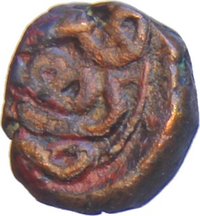
Obverse
Description:
Allahu Akbar, Glorious is He.
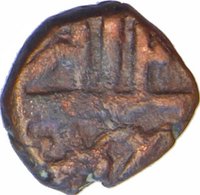
Reverse
Description:
Aban (Scorpio) RY 36, Lahore Mint
Edge
Plain
Mintings
| Year | Mint Mark | Mintage | Quality | Collection |
|---|---|---|---|---|
| — | — | — |
Historical background
In 1591, the Mughal Empire's currency system was a sophisticated and well-regulated bimetallic standard, a legacy significantly strengthened by Emperor Akbar's fiscal reforms. The empire minted two primary coins: the silver rupee and the gold mohur. The rupee, weighing approximately 11.5 grams of high-purity silver, served as the principal currency for land revenue, large trade, and state transactions. The gold mohur, while valuable, was less commonly used in everyday commerce and often functioned as a store of wealth or a high-denomination instrument for gifts and hoarding. Copper dams formed the essential small-change currency for daily market exchanges, with an official (though often fluctuating) exchange rate of 40 dams to one rupee.
This monetary stability was underpinned by strict central control. Akbar had established a network of imperial mints (dar al-zarb) across major cities like Lahore, Delhi, Ahmadabad, and Surat, ensuring standardized weight and fineness. The designs, inscribed with the ruler's name, mint mark, and Islamic calendar year, guaranteed authenticity. Crucially, the state maintained a near-monopoly on the coinage of silver and gold, drawing on bullion from extensive foreign trade, particularly with the Portuguese and through the vibrant markets of the Indian Ocean, which funneled New World and Japanese silver into the empire's coffers.
However, the system in 1591 was not without its pressures. The vastness of the empire and the sheer volume of trade meant that older regional coins and foreign currencies, like the Spanish real, still circulated alongside imperial issues. Furthermore, the fixed ratio between silver and gold was susceptible to market forces, and the value of the copper dam could be unstable, occasionally causing local inflationary distress. Nevertheless, at this zenith of Akbar's reign, the Mughal currency was renowned for its reliability, forming the robust financial backbone that supported the empire's administrative efficiency, monumental architecture, and military might.
This monetary stability was underpinned by strict central control. Akbar had established a network of imperial mints (dar al-zarb) across major cities like Lahore, Delhi, Ahmadabad, and Surat, ensuring standardized weight and fineness. The designs, inscribed with the ruler's name, mint mark, and Islamic calendar year, guaranteed authenticity. Crucially, the state maintained a near-monopoly on the coinage of silver and gold, drawing on bullion from extensive foreign trade, particularly with the Portuguese and through the vibrant markets of the Indian Ocean, which funneled New World and Japanese silver into the empire's coffers.
However, the system in 1591 was not without its pressures. The vastness of the empire and the sheer volume of trade meant that older regional coins and foreign currencies, like the Spanish real, still circulated alongside imperial issues. Furthermore, the fixed ratio between silver and gold was susceptible to market forces, and the value of the copper dam could be unstable, occasionally causing local inflationary distress. Nevertheless, at this zenith of Akbar's reign, the Mughal currency was renowned for its reliability, forming the robust financial backbone that supported the empire's administrative efficiency, monumental architecture, and military might.
✨ Legendary