

2 Franken – Liechtenstein
Liechtenstein
Context
Year: 1924
Issuer: Liechtenstein 
Ruler: John II
Currency:
(since 1924)
Demonetized: Yes
Total mintage: 50,000
Material
References
Y: #Click to copy to clipboard9
Numista: #11783
Value
Exchange value: 2 CHF = $2.59
Bullion value: $23.74
Obverse
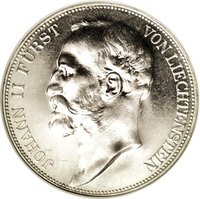
Description:
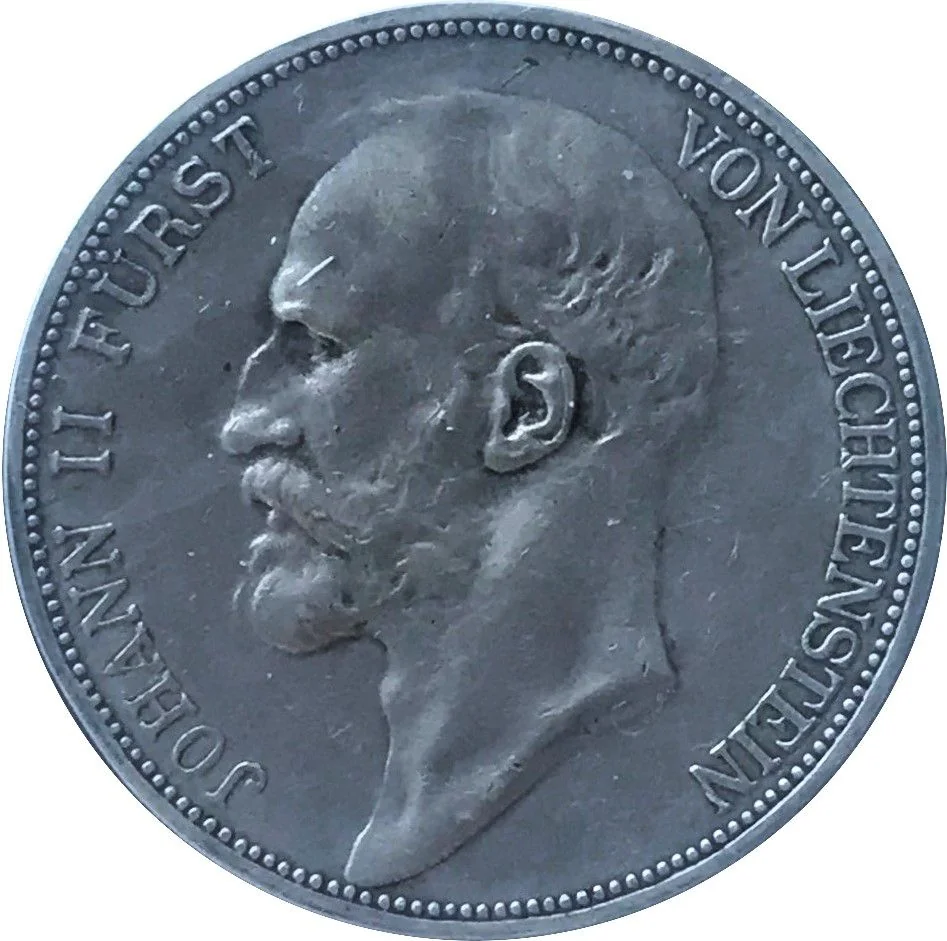
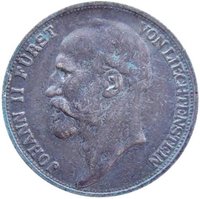
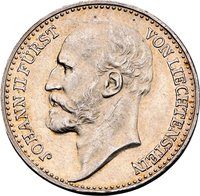
Johann II left-facing portrait with surrounding lettering.
Inscription:
JOHANN II FÜRST VON LIECHTENSTEIN
Translation:
John II, Prince of Liechtenstein
Script: Latin
Language: German
Engraver: Gustave Deloye
Reverse
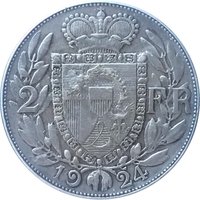
Description:
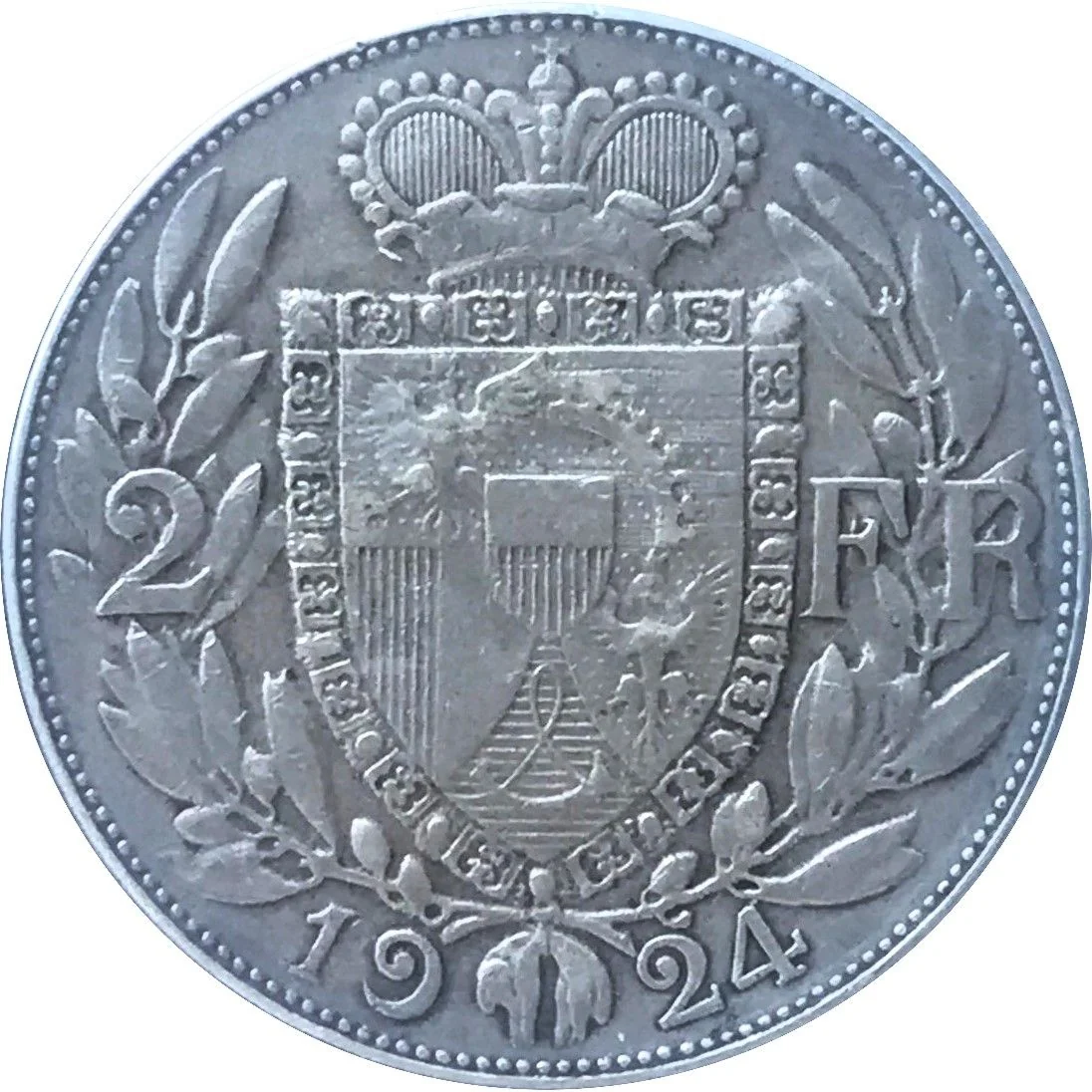
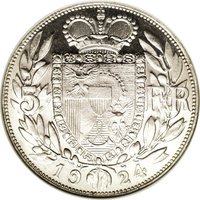
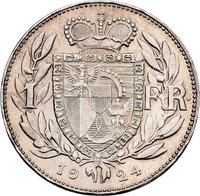
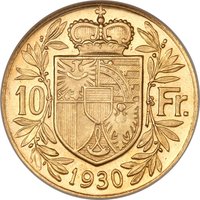
Liechtenstein coat of arms centered, flanked by branches with value and "FR" above, date below.
Inscription:
2 FR
19 24
19 24
Translation:
2 Francs
1924
1924
Script: Latin
Language: French
Engraver: Gustave Deloye
Edge
Categories
| Symbols> Coat of Arms |
| Person> Monarch |
Mints
| Name | Mark |
|---|---|
| Bern | — |
Mintings
| Year | Mint Mark | Mintage | Quality | Collection |
|---|---|---|---|---|
| 1924 | — | 50,000 |
Historical background
In 1924, Liechtenstein found itself at a critical monetary juncture, emerging from the economic turbulence of World War I and the dissolution of the Austro-Hungarian Empire. Prior to the war, the principality had been integrated into Austria’s economic sphere, using the Austrian krone as its de facto currency. The war's aftermath, however, brought hyperinflation to the Austrian krone, devastating its value and causing severe economic instability within Liechtenstein. This crisis forced the government to seek a new, stable monetary foundation to ensure its economic survival and future prosperity.
The definitive solution was enacted on May 26, 1924, when the Liechtenstein Parliament passed the "Currency Act." This landmark law formally adopted the Swiss franc as the official currency of Liechtenstein, replacing the defunct Austrian krone. The decision was pragmatic and strategic, driven by Switzerland's political neutrality and the exceptional stability of its currency and banking system. Crucially, the act also established a customs and monetary union with Switzerland, which was formally ratified in a treaty the following year, effectively anchoring Liechtenstein's economy to its powerful western neighbor.
This transition to the Swiss franc in 1924 was transformative, providing immediate monetary stability and ending the period of inflationary chaos. It laid the permanent cornerstone for Liechtenstein’s modern economic development, fostering the confidence necessary for its later emergence as a prosperous financial center. The 1924 Currency Act and the subsequent union with Switzerland remain the bedrock of Liechtenstein’s monetary policy, a relationship that continues unchanged to this day.
The definitive solution was enacted on May 26, 1924, when the Liechtenstein Parliament passed the "Currency Act." This landmark law formally adopted the Swiss franc as the official currency of Liechtenstein, replacing the defunct Austrian krone. The decision was pragmatic and strategic, driven by Switzerland's political neutrality and the exceptional stability of its currency and banking system. Crucially, the act also established a customs and monetary union with Switzerland, which was formally ratified in a treaty the following year, effectively anchoring Liechtenstein's economy to its powerful western neighbor.
This transition to the Swiss franc in 1924 was transformative, providing immediate monetary stability and ending the period of inflationary chaos. It laid the permanent cornerstone for Liechtenstein’s modern economic development, fostering the confidence necessary for its later emergence as a prosperous financial center. The 1924 Currency Act and the subsequent union with Switzerland remain the bedrock of Liechtenstein’s monetary policy, a relationship that continues unchanged to this day.
⭐ Rare