

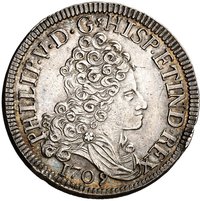
Obverse
Description:
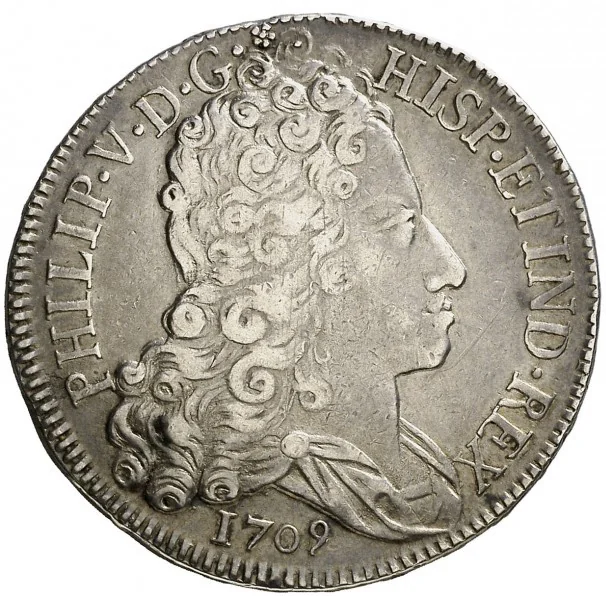
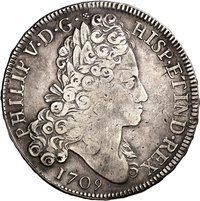
King Philip V's draped bust facing right.
Inscription:
PHILIP V · D · G · HISP · ET IND · REX
1709
1709
Script: Latin
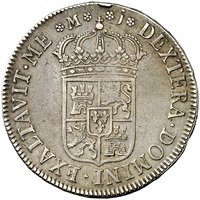
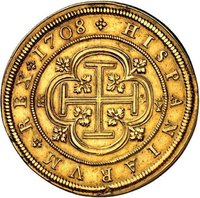
Reverse
Description:
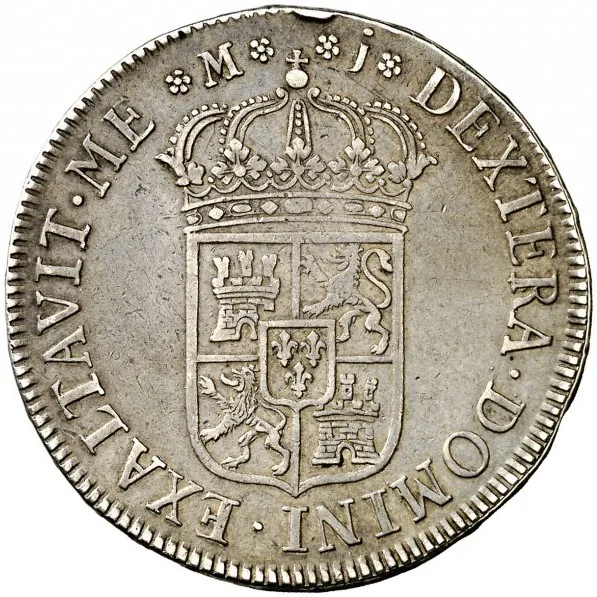
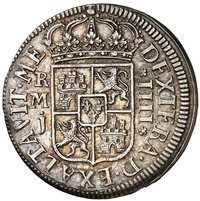
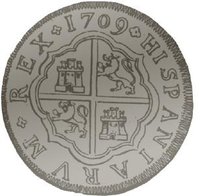
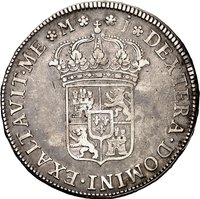
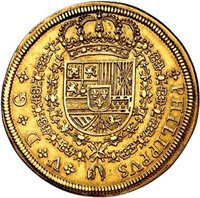
Royal arms of Spain.
Inscription:
DEXTERA · DOMINI · EXALTAVIT · ME ❀ M ❀ J ❀
Script: Latin
Edge
Categories
| Symbols> Coat of Arms |
Mints
| Name | Mark |
|---|---|
| Royal Mint of Madrid | (M) |
Mintings
| Year | Mint Mark | Mintage | Quality | Collection |
|---|---|---|---|---|
| 1709 | MJ | — |
Historical background
In 1709, Spain was embroiled in the War of the Spanish Succession (1701-1714), a devastating European-wide conflict over the throne of the Spanish Habsburgs. This war was the primary driver of a profound monetary and economic crisis. The royal treasury, under the claimant King Philip V, was exhausted from financing armies and subsidies to allies. To meet these colossal expenses, the government resorted to desperate fiscal measures, including repeated debasements of the coinage. The silver content of coins was systematically reduced, and vast quantities of low-quality copper vellón currency were minted, leading to severe inflation and a loss of public confidence in the currency's value.
The monetary chaos was compounded by regional fragmentation within Spain itself. Areas loyal to the rival claimant, Archduke Charles of Austria (such as Catalonia, Valencia, and Aragon), operated under a separate financial and monetary administration. This meant different currencies circulated in different zones of the country, disrupting internal trade and complicating the war economy further. Meanwhile, the inflow of precious metals from the American colonies, the traditional lifeblood of the Spanish monarchy, had become irregular and insufficient due to wartime disruptions to shipping and increased foreign control over the trade.
Consequently, the year 1709 represents a peak of financial distress within the larger crisis. The combination of rampant currency debasement, price inflation, and the physical devastation of the war brought the Spanish economy to a state of near collapse. The situation underscored the profound weakness of the Spanish state apparatus and set the stage for the extensive centralizing and reformist policies that the victorious Philip V would later implement after the war, aiming to stabilize the monarchy's finances and impose a unified monetary system across Spain.
The monetary chaos was compounded by regional fragmentation within Spain itself. Areas loyal to the rival claimant, Archduke Charles of Austria (such as Catalonia, Valencia, and Aragon), operated under a separate financial and monetary administration. This meant different currencies circulated in different zones of the country, disrupting internal trade and complicating the war economy further. Meanwhile, the inflow of precious metals from the American colonies, the traditional lifeblood of the Spanish monarchy, had become irregular and insufficient due to wartime disruptions to shipping and increased foreign control over the trade.
Consequently, the year 1709 represents a peak of financial distress within the larger crisis. The combination of rampant currency debasement, price inflation, and the physical devastation of the war brought the Spanish economy to a state of near collapse. The situation underscored the profound weakness of the Spanish state apparatus and set the stage for the extensive centralizing and reformist policies that the victorious Philip V would later implement after the war, aiming to stabilize the monarchy's finances and impose a unified monetary system across Spain.
✨ Legendary