


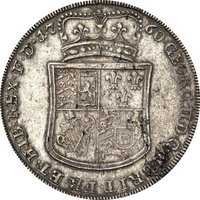
Obverse
Description:
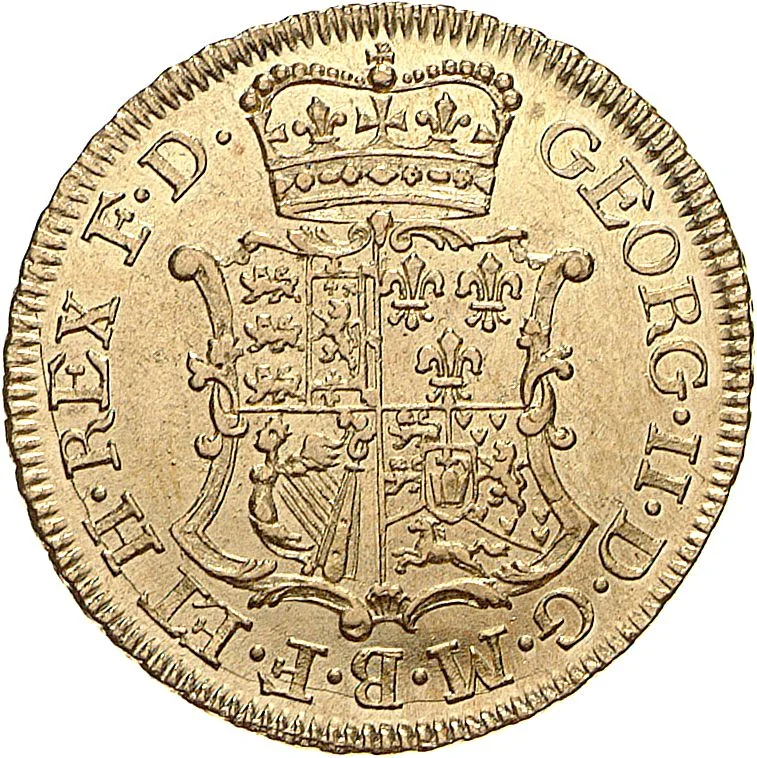
Quartered arms on an ornate shield.
Inscription:
GEORG • II • D • G • M • B • F • ET • H • REX F • D •
Script: Latin
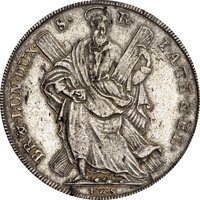
Reverse
Description:
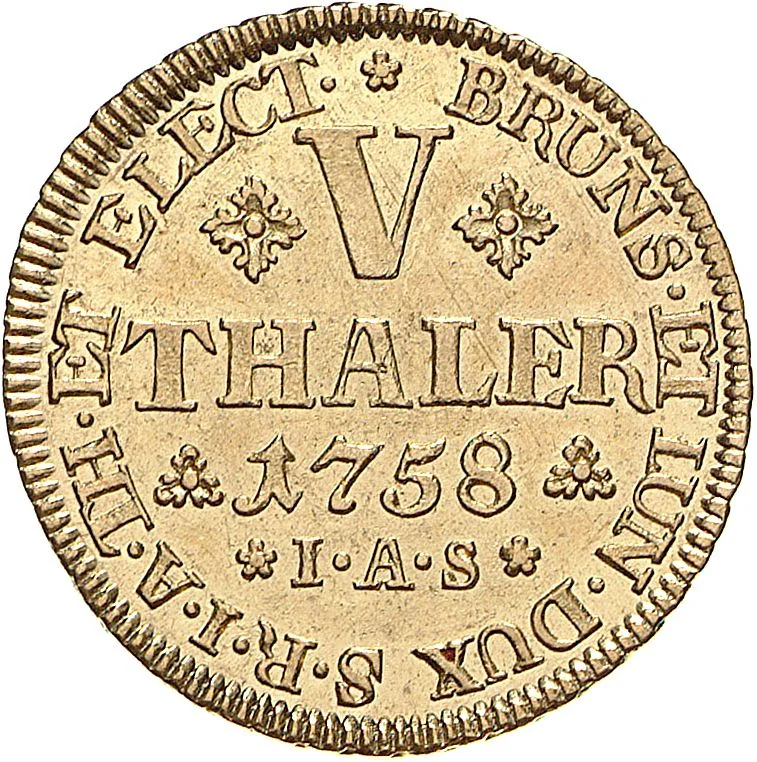
Value, date.
Inscription:
BRUNS • ET LUN • DUX S • R • I • A • H • ET ELECT •
V
THALER
1758
I • A • S
V
THALER
1758
I • A • S
Script: Latin
Edge
Mints
| Name | Mark |
|---|---|
| Hanover | — |
Mintings
| Year | Mint Mark | Mintage | Quality | Collection |
|---|---|---|---|---|
| 1758 | — | — |
Historical background
In 1758, the Electorate of Brunswick-Lüneburg (commonly known as Hanover) was a major belligerent in the Seven Years' War, a conflict that placed immense financial strain on its monetary system. The state, under the personal rule of King George II of Great Britain, was fighting to defend its territories from French invasion. To fund the enormous costs of warfare—including the payment and supply of a large Allied "Army of Observation"—the Hanoverian government, led by Field Marshal von Spörcken and the ducal treasury in Hanover, resorted to heavy borrowing and the expedient of issuing substantial quantities of low-value subsidiary coinage.
This period saw a marked deterioration in the currency, characterized by the proliferation of Kreditmünzen (credit coins) and Scheidemünzen (small change). These coins, including 6, 3, and 1 gute Groschen pieces, were minted from debased silver or base metals and their face value exceeded their intrinsic metal worth. Their legitimacy rested solely on government decree, and their over-issuance led to inflation, hoarding of older full-value specie, and widespread public distrust. The monetary landscape became a confusing patchwork of older Reichsthaler, Conventionsthaler, and the new, fluctuating credit coins.
Consequently, 1758 was a year of significant monetary instability within Hanover. The currency was effectively divided: large-scale trade and state finances struggled with a dual system of valued specie and depreciating credit money, while the common populace and soldiers faced rising prices and diminishing purchasing power with the devalued small change. This situation was a direct result of wartime fiscal emergency, creating economic hardship that would necessitate post-war currency reforms, most notably the major recoinage and standardization efforts undertaken after 1763 under the direction of the Hanoverian Chancellery.
This period saw a marked deterioration in the currency, characterized by the proliferation of Kreditmünzen (credit coins) and Scheidemünzen (small change). These coins, including 6, 3, and 1 gute Groschen pieces, were minted from debased silver or base metals and their face value exceeded their intrinsic metal worth. Their legitimacy rested solely on government decree, and their over-issuance led to inflation, hoarding of older full-value specie, and widespread public distrust. The monetary landscape became a confusing patchwork of older Reichsthaler, Conventionsthaler, and the new, fluctuating credit coins.
Consequently, 1758 was a year of significant monetary instability within Hanover. The currency was effectively divided: large-scale trade and state finances struggled with a dual system of valued specie and depreciating credit money, while the common populace and soldiers faced rising prices and diminishing purchasing power with the devalued small change. This situation was a direct result of wartime fiscal emergency, creating economic hardship that would necessitate post-war currency reforms, most notably the major recoinage and standardization efforts undertaken after 1763 under the direction of the Hanoverian Chancellery.
✨ Legendary