

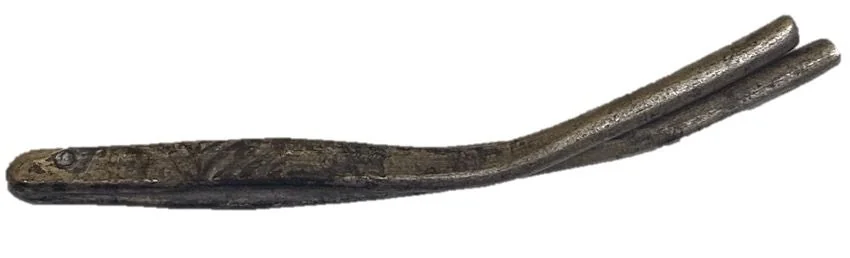
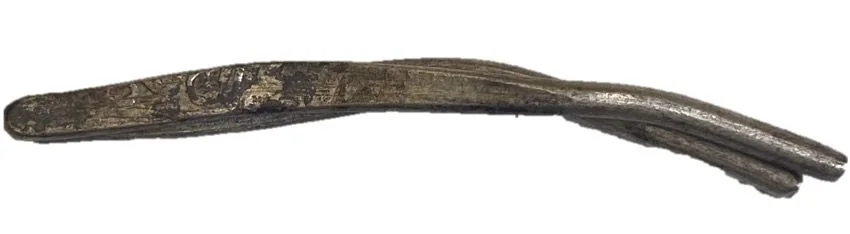
Larin – Basra Eyalet
Iraq
Context
Year: 1595
Islamic (Hijri) Year: 1003
Country: Iraq 
Issuer: Basra Eyalet
Ruler: Mehmed III
Currency:
(1535—1688)
Demonetized: Yes
References
KM: #Click to copy to clipboardUnlisted
Numista: #411265
Value
Bullion value: $13.61
Obverse
Reverse
Edge
Mints
| Name | Mark |
|---|---|
| Basra | — |
Mintings
| Year | Mint Mark | Mintage | Quality | Collection |
|---|---|---|---|---|
| 1595 | — | — |
Historical background
In 1595, the currency situation in Basra Eyalet, a strategically vital Ottoman province at the head of the Persian Gulf, was characterized by a complex and often chaotic multi-currency system. The official Ottoman currency, the silver akçe, served as the unit of account for imperial administration and taxation. However, its value was frequently unstable due to debasement and inflation emanating from the central mint in Istanbul, causing significant economic disruption in distant provinces like Basra. Alongside the akçe, the more reliable Spanish silver dollar (real de a ocho) and various other European and Indian coins circulated widely due to Basra's role as a major hub for regional and long-distance trade.
This monetary plurality was driven by Basra's position at the crossroads of overland caravan routes and maritime trade linking the Ottoman Empire with Safavid Persia, India, and beyond. Merchants engaged in the lucrative commerce of spices, textiles, dates, and coffee operated primarily using high-value, trusted foreign silver coins to settle large transactions. The persistent inflow of these currencies often sidelined the debased Ottoman coinage in everyday commercial life, creating a de facto bimetallic or even multi-metallic system that operated somewhat independently from imperial monetary policy.
Consequently, the local economy in Basra Eyalet functioned through a pragmatic adaptation to this fluid environment. Money changers (sarrafs) held crucial importance, facilitating exchange between the various coins and assessing their constantly fluctuating intrinsic silver content. This decentralized and market-driven system, while efficient for commerce, posed challenges for Ottoman governors who had to collect taxes in official currency, often requiring complex conversions that could lead to shortages and grievances. Thus, the currency situation reflected the broader tension between the centralized demands of the imperial state and the practical, globalized realities of a major trading frontier.
This monetary plurality was driven by Basra's position at the crossroads of overland caravan routes and maritime trade linking the Ottoman Empire with Safavid Persia, India, and beyond. Merchants engaged in the lucrative commerce of spices, textiles, dates, and coffee operated primarily using high-value, trusted foreign silver coins to settle large transactions. The persistent inflow of these currencies often sidelined the debased Ottoman coinage in everyday commercial life, creating a de facto bimetallic or even multi-metallic system that operated somewhat independently from imperial monetary policy.
Consequently, the local economy in Basra Eyalet functioned through a pragmatic adaptation to this fluid environment. Money changers (sarrafs) held crucial importance, facilitating exchange between the various coins and assessing their constantly fluctuating intrinsic silver content. This decentralized and market-driven system, while efficient for commerce, posed challenges for Ottoman governors who had to collect taxes in official currency, often requiring complex conversions that could lead to shortages and grievances. Thus, the currency situation reflected the broader tension between the centralized demands of the imperial state and the practical, globalized realities of a major trading frontier.


✨ Legendary