



Larin – Basra Eyalet
Iraq
Context
Year: 1574
Islamic (Hijri) Year: 982
Country: Iraq 
Issuer: Basra Eyalet
Ruler: Murad III
Currency:
(1535—1688)
Demonetized: Yes
References
KM: #Click to copy to clipboardUnlisted
Numista: #379444
Value
Bullion value: $13.48
Obverse
Description:
Impression from a şahi coin. Few letters are visible on known examples.
Script: Arabic
Reverse
Description:
Impression from a şahi coin. Few letters are visible on known examples.
Inscription:
[...] ٩٨٢
Script: Arabic
Edge
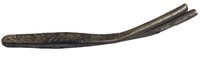
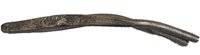
Hairpin larin
Mints
| Name | Mark |
|---|---|
| Basra | — |
Mintings
| Year | Mint Mark | Mintage | Quality | Collection |
|---|---|---|---|---|
| 1574 | — | — |
Historical background
In 1574, the currency situation in the Basra Eyalet of the Ottoman Empire was complex and transitional, reflecting both its integration into the imperial system and its unique position as a major port linking the Indian Ocean trade with the Anatolian and European markets. The official currency was the Ottoman silver akçe, which formed the backbone of taxation and military payrolls. However, its value and circulation were uneven, often struggling to compete with the flood of high-quality foreign coins that entered through commerce. The eyalet’s economy was fundamentally shaped by this constant influx, particularly Spanish reales and Portuguese cruzados, which arrived via trade routes from the Gulf and beyond.
The real drivers of Basra's mercantile life were large silver coins from the wider Islamic world, most notably the Persian Safavid dirham and, above all, the larin, a silver wire coin originating in the Persian Gulf region. These currencies were trusted for their consistent silver content and were essential for large-scale transactions, especially in the lucrative trade of spices, textiles, and dates. This created a dual monetary environment: the state operated nominally in akçe, while the bustling port and merchant classes dealt in a heterogeneous mix of international and regional silver coins, exchanged by money changers (sarrafs) who were vital to the functioning of the economy.
This monetary diversity presented significant challenges for Ottoman authorities. Fluctuations in the supply and purity of foreign coins, coupled with periodic debasements of the akçe itself, led to exchange rate instability and complicated revenue collection. The governor in Basra therefore had to navigate a delicate balance between enforcing imperial monetary policy and pragmatically accommodating the currency realities of a global trade hub. The situation underscored that while Basra was administratively Ottoman, its financial heartbeat was synchronized with the rhythms of Indian Ocean commerce far more than with Istanbul.
The real drivers of Basra's mercantile life were large silver coins from the wider Islamic world, most notably the Persian Safavid dirham and, above all, the larin, a silver wire coin originating in the Persian Gulf region. These currencies were trusted for their consistent silver content and were essential for large-scale transactions, especially in the lucrative trade of spices, textiles, and dates. This created a dual monetary environment: the state operated nominally in akçe, while the bustling port and merchant classes dealt in a heterogeneous mix of international and regional silver coins, exchanged by money changers (sarrafs) who were vital to the functioning of the economy.
This monetary diversity presented significant challenges for Ottoman authorities. Fluctuations in the supply and purity of foreign coins, coupled with periodic debasements of the akçe itself, led to exchange rate instability and complicated revenue collection. The governor in Basra therefore had to navigate a delicate balance between enforcing imperial monetary policy and pragmatically accommodating the currency realities of a global trade hub. The situation underscored that while Basra was administratively Ottoman, its financial heartbeat was synchronized with the rhythms of Indian Ocean commerce far more than with Istanbul.


✨ Legendary