

2 Kronen – Liechtenstein
Liechtenstein
Context
Years: 1912–1915
Issuer: Liechtenstein 
Ruler: John II
Currency:
(1898—1921)
Demonetization: 28 August 1920
Total mintage: 87,500
Material
References
Y: #Click to copy to clipboard3
Numista: #11779
Value
Bullion value: $23.74
Obverse
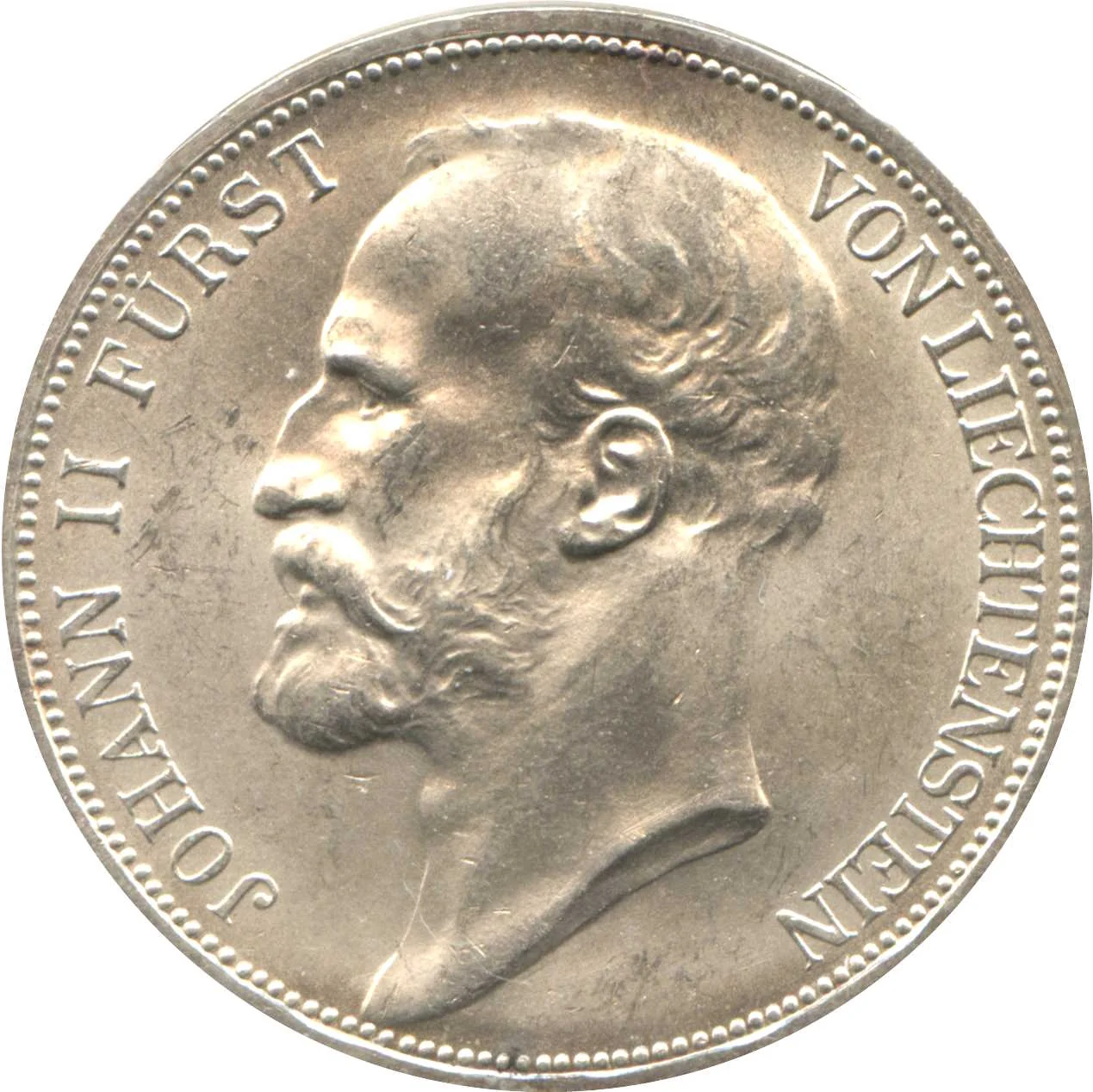
Description:
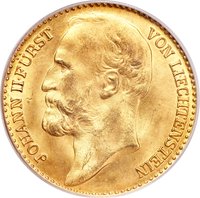
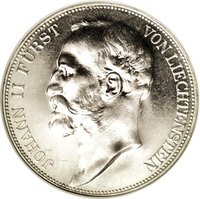
Johann II left-facing portrait with surrounding lettering.
Inscription:
JOHANN II FÜRST VON LIECHTENSTEIN
Translation:
John II, Prince of Liechtenstein
Script: Latin
Language: German
Engraver: Gustave Deloye
Reverse
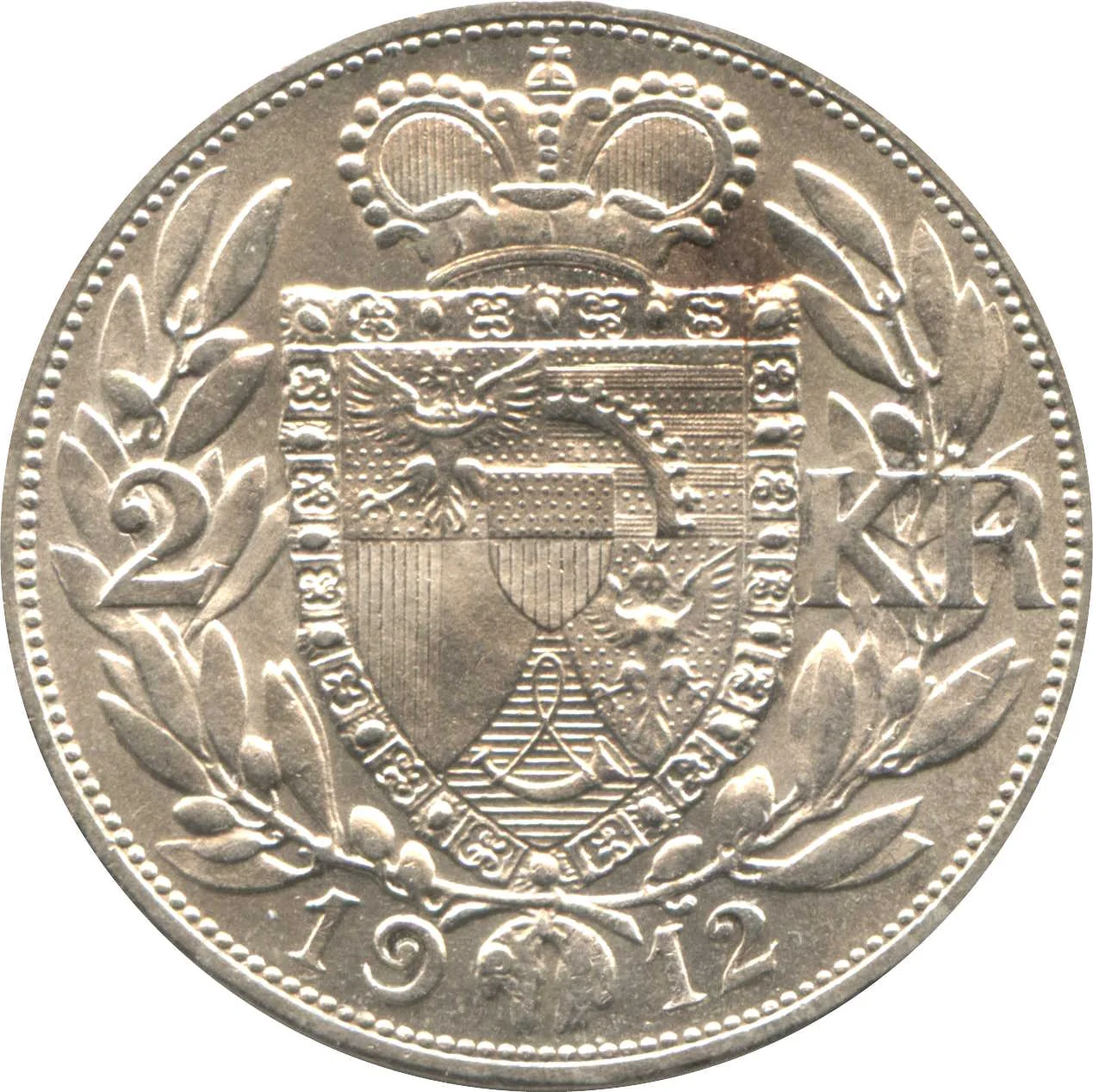
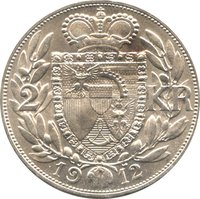
Description:
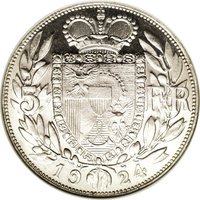
Liechtenstein coat of arms centered, flanked by branches with value and "KR·" above. Date below.
Inscription:
2 KR·
19 12
19 12
Translation:
2 Kroner
1912
1912
Script: Latin
Engraver: Gustave Deloye
Edge
Smooth with inscribed lettering
Legend:
* KLAR * UND * FEST * * *
Translation:
Clear and firm
Language: German
Categories
| Symbols> Coat of Arms |
| Person> Monarch |
Mintings
| Year | Mint Mark | Mintage | Quality | Collection |
|---|---|---|---|---|
| 1912 | — | 50,000 | ||
| 1915 | — | 37,500 |
Historical background
In 1912, Liechtenstein's currency situation was defined by its close economic and political integration with its neighbour, Austria-Hungary. The Principality, lacking its own central bank or mint, was part of the Latin Monetary Union in principle but was de facto within the Austrian monetary sphere. The official currency in circulation was the Austro-Hungarian krone (also known as the Austrian crown), which had replaced the gulden in 1892. Liechtenstein's economy was almost entirely tied to Vienna, and its financial system operated as an extension of Austria's, with Austrian banknotes and coins circulating freely.
This arrangement was formalised through a series of customs and monetary treaties with Austria-Hungary, the most significant being the Zollvertrag (Customs Treaty) of 1852. This treaty created a customs union and effectively delegated Liechtenstein's monetary sovereignty to Vienna. Consequently, Liechtenstein had no independent monetary policy; interest rates, money supply, and currency stability were all determined by the Austro-Hungarian Bank. For a small, agrarian state with limited industry, this integration provided crucial stability and access to a large economic area.
However, this dependence was not without risk. The Austro-Hungarian krone faced periods of instability and inflationary pressure in the early 20th century due to the empire's complex political tensions and military expenditures. By 1912, these underlying strains were present, though not yet critical. Liechtenstein's monetary fate was therefore hitched to an empire whose long-term viability was increasingly questioned, a vulnerability that would become starkly apparent just two years later with the outbreak of the First World War and the subsequent collapse of the Austro-Hungarian monetary system.
This arrangement was formalised through a series of customs and monetary treaties with Austria-Hungary, the most significant being the Zollvertrag (Customs Treaty) of 1852. This treaty created a customs union and effectively delegated Liechtenstein's monetary sovereignty to Vienna. Consequently, Liechtenstein had no independent monetary policy; interest rates, money supply, and currency stability were all determined by the Austro-Hungarian Bank. For a small, agrarian state with limited industry, this integration provided crucial stability and access to a large economic area.
However, this dependence was not without risk. The Austro-Hungarian krone faced periods of instability and inflationary pressure in the early 20th century due to the empire's complex political tensions and military expenditures. By 1912, these underlying strains were present, though not yet critical. Liechtenstein's monetary fate was therefore hitched to an empire whose long-term viability was increasingly questioned, a vulnerability that would become starkly apparent just two years later with the outbreak of the First World War and the subsequent collapse of the Austro-Hungarian monetary system.
🌟 Uncommon