

8 skilling – Denmark
Add to wishlist
Denmark
Context
Material
Diameter: 21.08 mm
Weight: 3.05 g
Silver Weight:: 1.71 g
Thickness: 1.18 mm
Shape: Round
Composition: 56.2% Silver
Standard: Gold tenth ounce
Magnetic: No
Alignment: Medal alignment
flip
References
KM: #
Numista: #40847
Value
Bullion value: $4.30
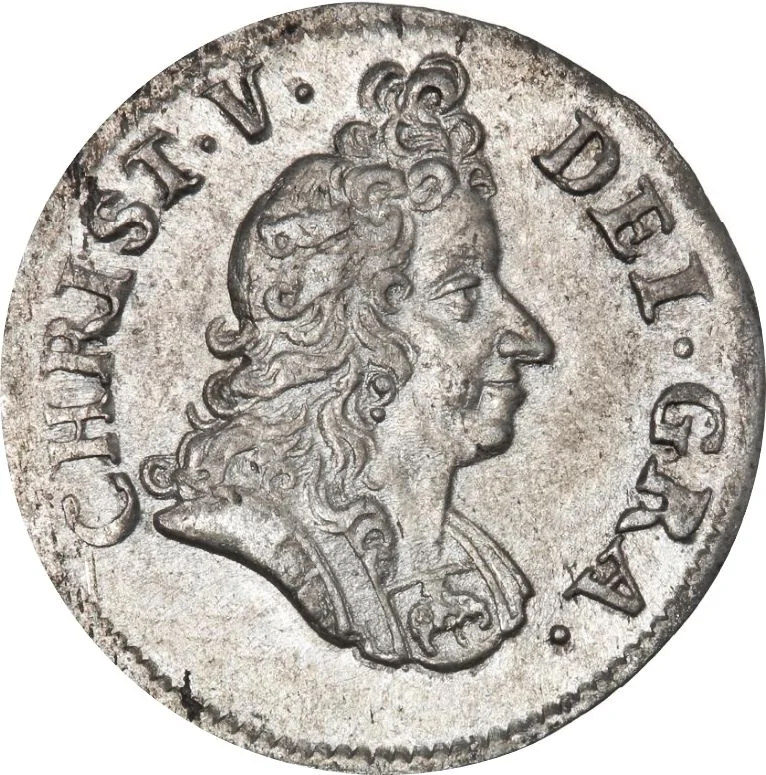
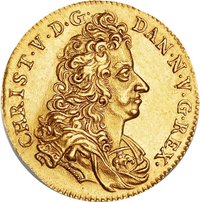
Obverse
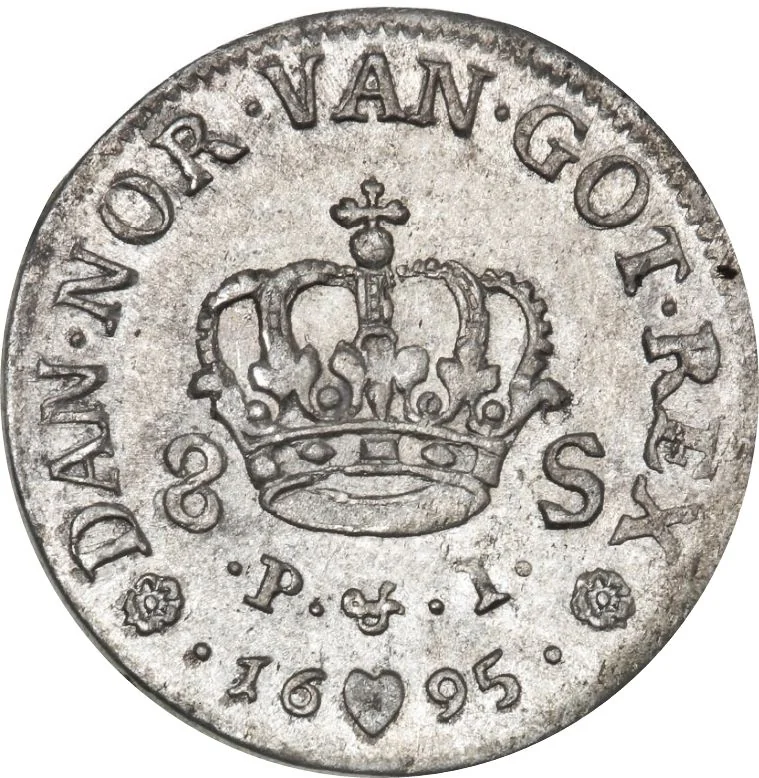
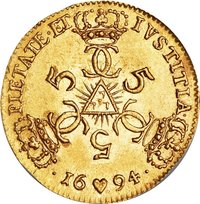
Reverse
Description:
Crown divides value. Below, the initials P.I. and a heart-divided date. Rim legend.
Inscription:
* DAN•NOR•VAN•GOT•REX *
8 | S
• P • & • I •
16 ♥ 95
8 | S
• P • & • I •
16 ♥ 95
Script: Latin
Edge
Plain
Mintings
| Year | Mint Mark | Mintage | Quality | Collection |
|---|---|---|---|---|
| 1695 | ♥ | — |
Historical background
In 1695, Denmark found itself in a precarious monetary crisis, a direct consequence of prolonged warfare and fiscal strain. The kingdom had been engaged in costly conflicts, most notably the Scanian War (1675-1679) against Sweden and its involvement in the Nine Years' War (1688-1697) on the side of the anti-French coalition. To finance these wars, the state had significantly debased its silver coinage, reducing its precious metal content while maintaining its face value. This practice flooded the economy with under-valued coins, leading to severe inflation and a collapse in public trust in the currency.
The situation was characterized by a chaotic dual-currency system. Good, full-weight silver coins from earlier periods were hoarded by the public or exported, following Gresham's Law where "bad money drives out good." Meanwhile, the circulating debased coins, known as klippe, were increasingly distrusted, causing market disorder and hindering trade. Prices soared as merchants demanded more of the poor-quality coins for goods, and the crown's attempts to legislate values failed to keep pace with market realities. This monetary instability crippled both commerce and state finances, as tax revenues collected in the debased currency held diminishing real value.
Recognizing the untenable situation, King Christian V and his government, under the guidance of Chancellor Conrad von Reventlow, initiated a major monetary reform in 1695. The state announced a drastic recall and demonetization of the old debased currency, to be replaced by new, full-value silver coins. This was a bold and risky move, effectively a state bankruptcy that aimed to restore confidence by re-establishing a stable silver standard. The success of this reform, however, hinged on the public's willingness to accept the short-term pain for long-term stability, a process that would unfold in the following years.
The situation was characterized by a chaotic dual-currency system. Good, full-weight silver coins from earlier periods were hoarded by the public or exported, following Gresham's Law where "bad money drives out good." Meanwhile, the circulating debased coins, known as klippe, were increasingly distrusted, causing market disorder and hindering trade. Prices soared as merchants demanded more of the poor-quality coins for goods, and the crown's attempts to legislate values failed to keep pace with market realities. This monetary instability crippled both commerce and state finances, as tax revenues collected in the debased currency held diminishing real value.
Recognizing the untenable situation, King Christian V and his government, under the guidance of Chancellor Conrad von Reventlow, initiated a major monetary reform in 1695. The state announced a drastic recall and demonetization of the old debased currency, to be replaced by new, full-value silver coins. This was a bold and risky move, effectively a state bankruptcy that aimed to restore confidence by re-establishing a stable silver standard. The success of this reform, however, hinged on the public's willingness to accept the short-term pain for long-term stability, a process that would unfold in the following years.
💎 Very Rare