

4 maravedis – Spain
Add to wishlist
Spain
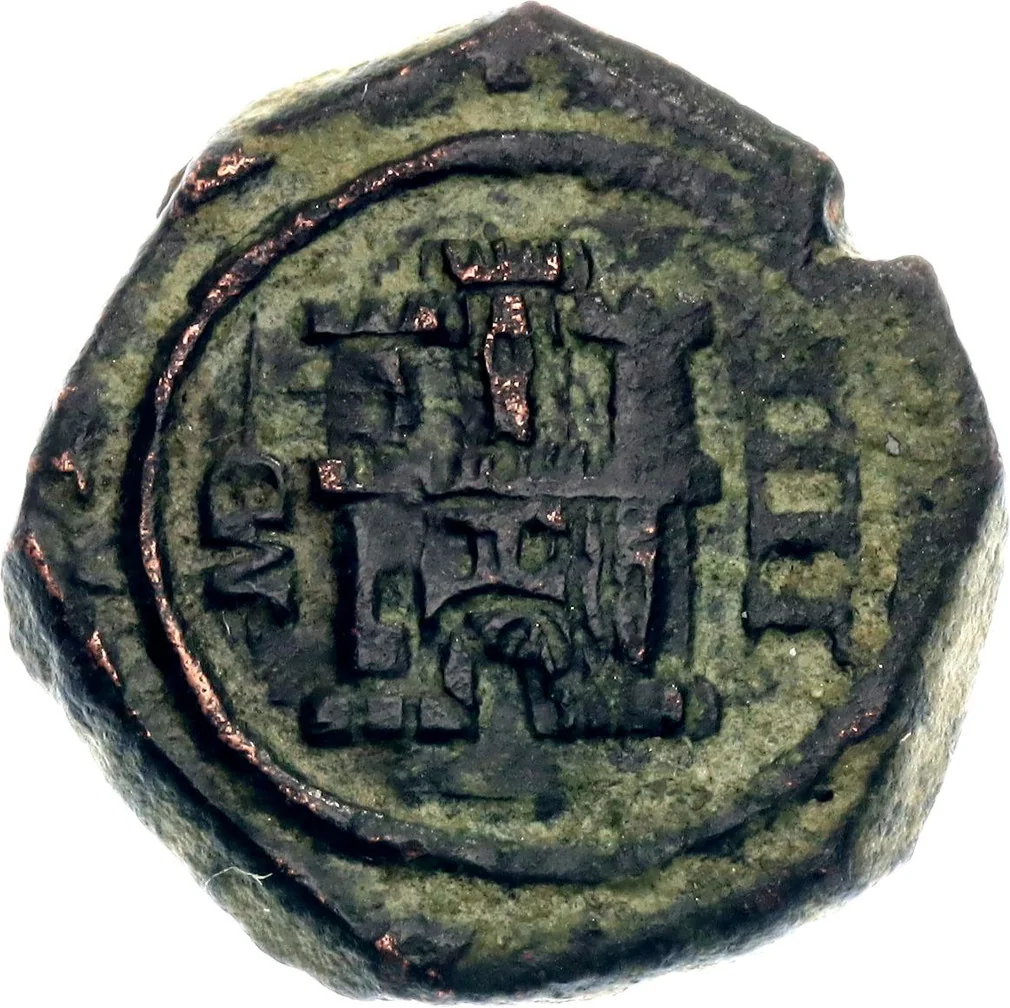
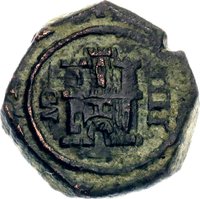
Obverse
Description:
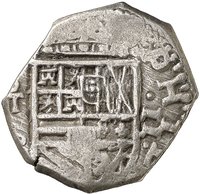
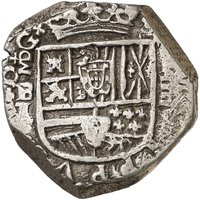
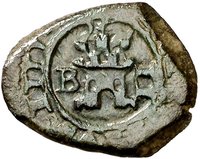
Castle and value within circle, mintmark left, legend around.
Inscription:
PHILIPPVS·IIII·D·G
MD IIII
MD IIII
Script: Latin
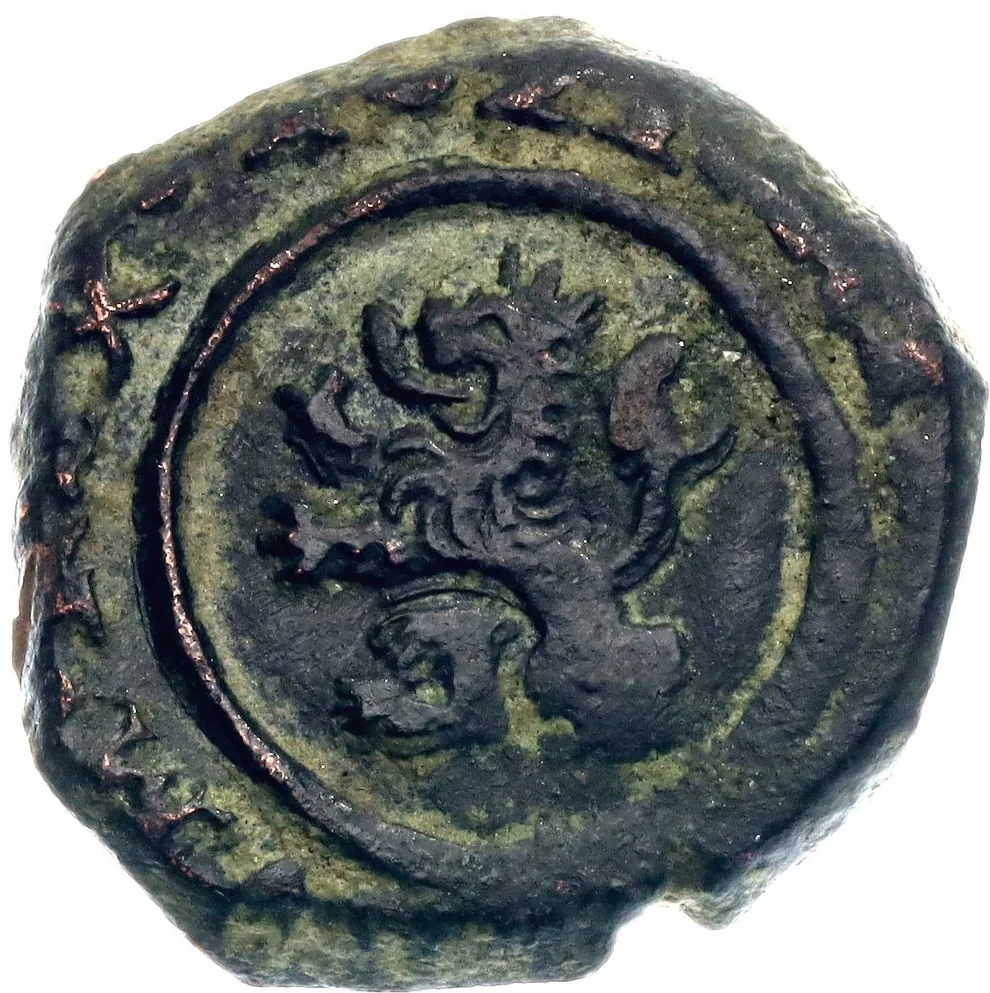
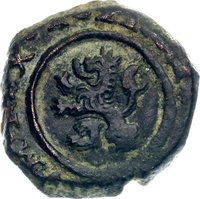
Reverse
Description:
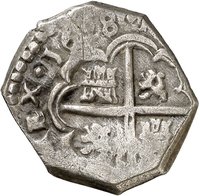
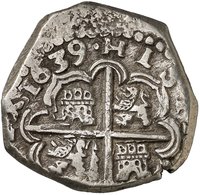
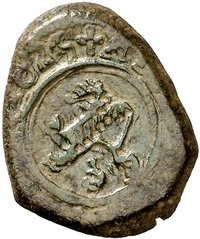
Lion left in circle. Legend with date around.
Inscription:
HISPANIARVM·REX
Script: Latin
Edge
Plain
Categories
| Animal> Feline |
| Building> Castle or fortification |
Mints
| Name | Mark |
|---|---|
| Casa vieja de Segovia | — |
| Cuenca | — |
| Royal Mint of Burgos | — |
| Royal Mint of Granada | — |
| Royal Mint of La Coruña | — |
| Royal Mint of Madrid | — |
| Royal Mint of Seville | — |
| Toledo | — |
| Valladolid | — |
Mintings
| Year | Mint Mark | Mintage | Quality | Collection |
|---|---|---|---|---|
| 1621 | — | — | ||
| 1621 | B | — | ||
| 1621 | C | — | ||
| 1621 | MD | — | ||
| 1621 | S | — | ||
| 1621 | T | — | ||
| 1622 | — | — | ||
| 1622 | B | — | ||
| 1622 | C | — | ||
| 1622 | MD | — | ||
| 1622 | S | — | ||
| 1622 | T | — | ||
| 1623 | — | — | ||
| 1623 | B | — | ||
| 1623 | C | — | ||
| 1623 | MD | — | ||
| 1623 | S | — | ||
| 1623 | T | — | ||
| 1624 | — | — | ||
| 1624 | B | — | ||
| 1624 | C | — | ||
| 1624 | MD | — | ||
| 1624 | S | — | ||
| 1624 | T | — | ||
| 1625 | — | — | ||
| 1625 | B | — | ||
| 1625 | C | — | ||
| 1625 | MD | — | ||
| 1625 | S | — | ||
| 1625 | T | — | ||
| 1626 | — | — | ||
| 1626 | B | — | ||
| 1626 | C | — | ||
| 1626 | MD | — | ||
| 1626 | S | — | ||
| 1626 | T | — |
Historical background
In 1621, Spain stood at a precarious financial crossroads, burdened by the immense costs of maintaining its global empire. The reign of Philip III had just ended, leaving the young Philip IV and his chief minister, the Count-Duke of Olivares, to inherit a treasury crippled by decades of warfare, particularly the ongoing Eighty Years' War in the Netherlands and conflicts with England and the Ottomans. The crown's primary response to this perpetual crisis was a relentless cycle of borrowing from foreign bankers, pledging future American silver shipments as collateral, and accumulating a staggering national debt. This structural deficit created a constant drain of specie (gold and silver) out of Spain to service debts, leaving the domestic economy starved of sound money.
The currency situation within Spain itself was one of profound instability and confusion. While vast quantities of silver and gold flowed from the Americas into Seville, the crown repeatedly resorted to currency manipulation to generate short-term liquidity. This included the repeated debasement of the ubiquitous vellón coinage—a fiduciary currency made of copper or billon (a base metal mixed with silver). By drastically increasing the minting of pure copper vellón and arbitrarily raising its face value by royal decree, the Crown sought to pay its domestic debts cheaply. However, this led to rampant inflation, as the real value of the coins plummeted, prices soared, and the public lost confidence. The economy suffered from a severe case of Gresham's Law, where "bad money drives out good," as people hoarded full-weight silver reales and gold escudos and passed on the inferior copper.
Consequently, Philip IV's government faced an immediate monetary crisis upon its accession. The inflationary spiral caused by the flood of vellón provoked social unrest and economic paralysis. One of Olivares' first major actions was to attempt a drastic monetary reform in 1621, which involved calling in all copper currency for restamping and a forced reduction in its nominal value—a policy that amounted to a partial default on the crown's own obligations. This failed to restore confidence and instead caused further economic disruption, setting a pattern for the rest of the century. Thus, in 1621, Spain's currency was not a tool of economic strength but a symptom of imperial overreach, reflecting a disconnect between the kingdom's vast nominal wealth and its bankrupt, inflation-ridden reality.
The currency situation within Spain itself was one of profound instability and confusion. While vast quantities of silver and gold flowed from the Americas into Seville, the crown repeatedly resorted to currency manipulation to generate short-term liquidity. This included the repeated debasement of the ubiquitous vellón coinage—a fiduciary currency made of copper or billon (a base metal mixed with silver). By drastically increasing the minting of pure copper vellón and arbitrarily raising its face value by royal decree, the Crown sought to pay its domestic debts cheaply. However, this led to rampant inflation, as the real value of the coins plummeted, prices soared, and the public lost confidence. The economy suffered from a severe case of Gresham's Law, where "bad money drives out good," as people hoarded full-weight silver reales and gold escudos and passed on the inferior copper.
Consequently, Philip IV's government faced an immediate monetary crisis upon its accession. The inflationary spiral caused by the flood of vellón provoked social unrest and economic paralysis. One of Olivares' first major actions was to attempt a drastic monetary reform in 1621, which involved calling in all copper currency for restamping and a forced reduction in its nominal value—a policy that amounted to a partial default on the crown's own obligations. This failed to restore confidence and instead caused further economic disruption, setting a pattern for the rest of the century. Thus, in 1621, Spain's currency was not a tool of economic strength but a symptom of imperial overreach, reflecting a disconnect between the kingdom's vast nominal wealth and its bankrupt, inflation-ridden reality.
Series: 1621 Spain circulation coins
⭐ Somewhat Rare