

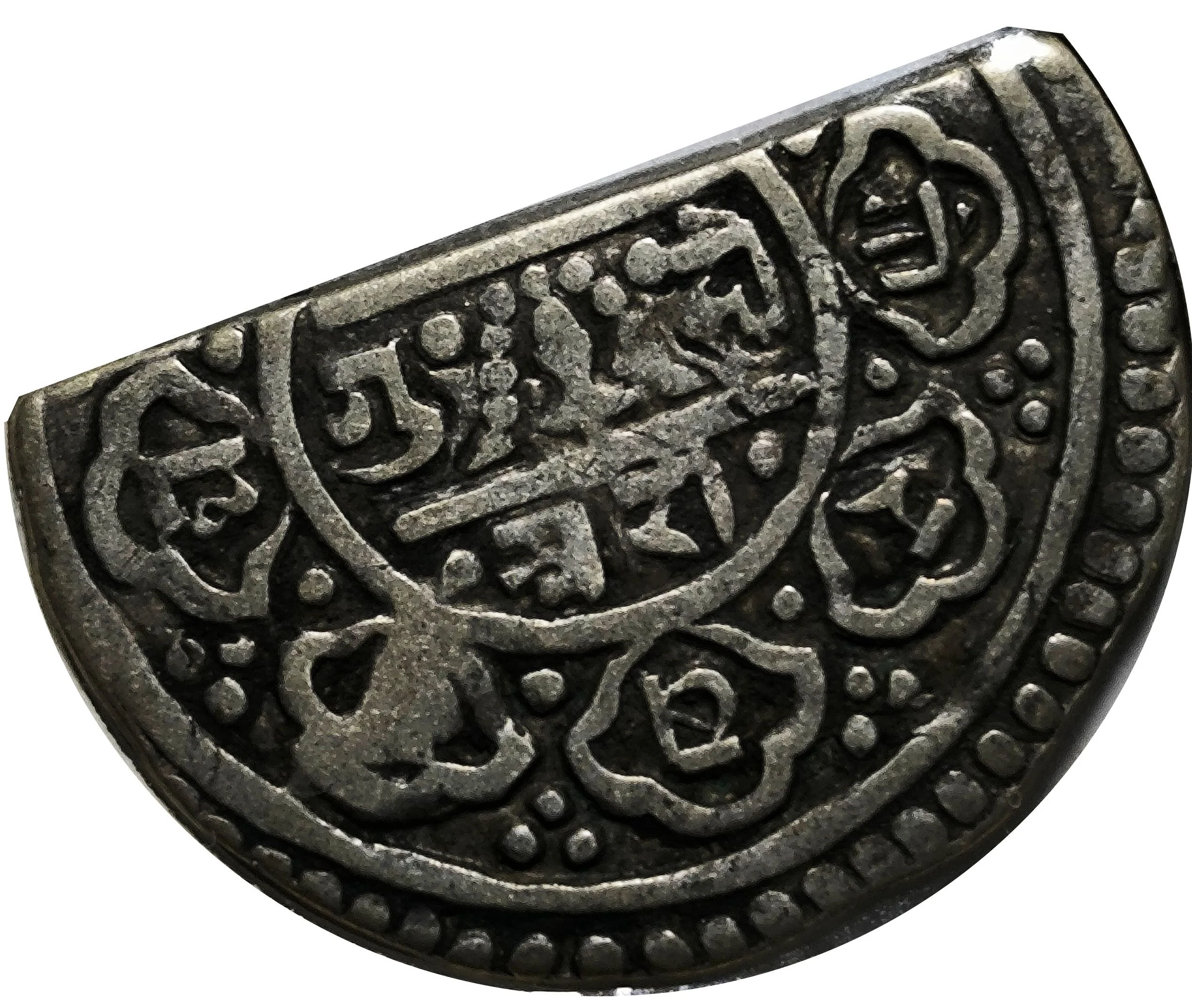
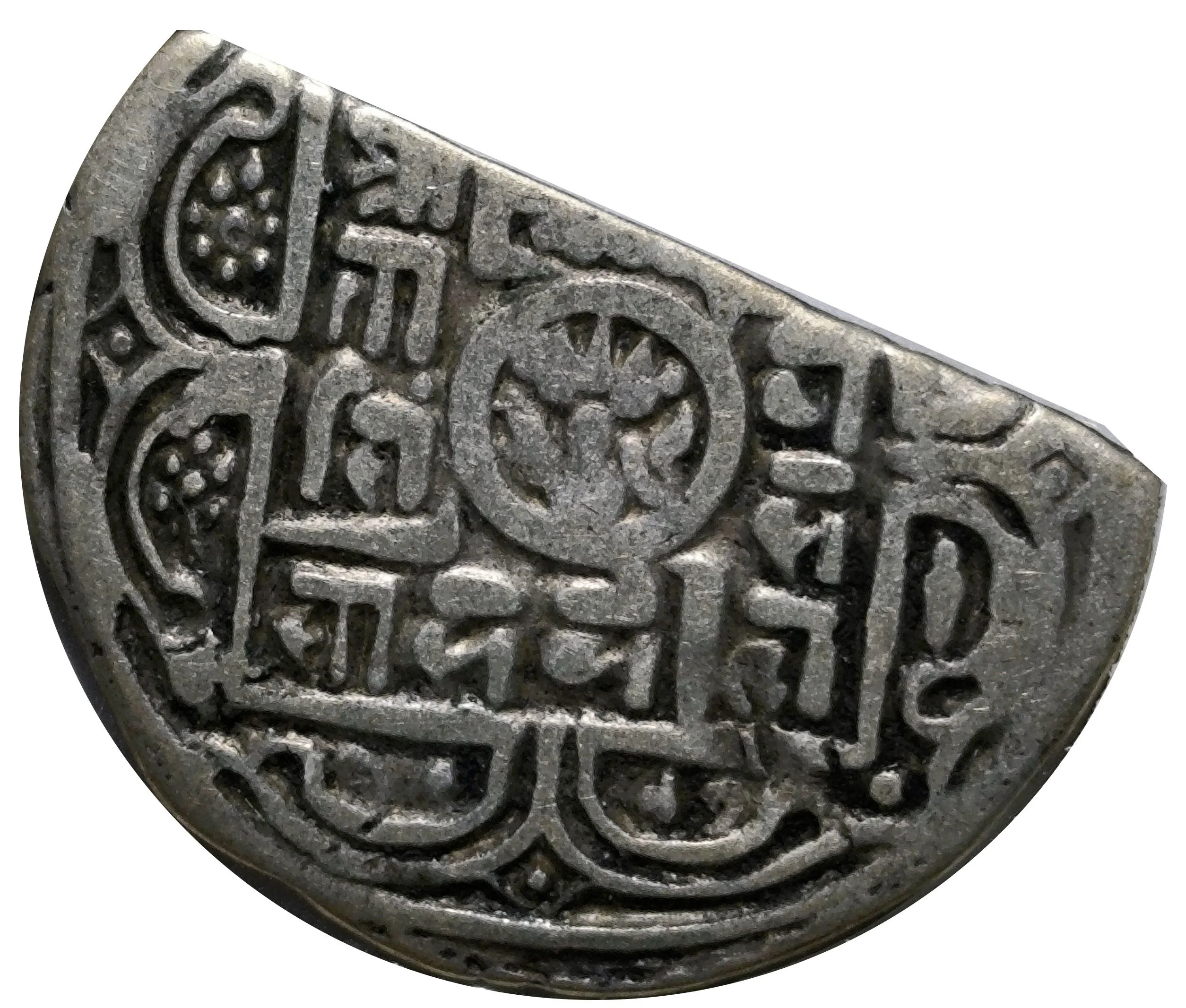
1 sho – Nepal
Add to wishlist
Nepal
Context
Year: 1775
Nepal - Saka era Year:: 1697
Issuer: Nepal
Ruler: Pratap Singh Shah
Currency:
(1546—1932)
Demonetized: Yes
Material
References
KM: #
Numista: #403672
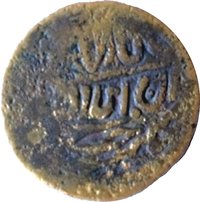
Obverse
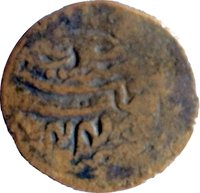
Reverse
Edge
Mintings
| Year | Mint Mark | Mintage | Quality | Collection |
|---|---|---|---|---|
| 1775 | — | — |
Historical background
In 1775, Nepal was not a unified nation but a patchwork of small, competing kingdoms, primarily the Gorkha Kingdom, the Kathmandu Valley kingdoms (Kathmandu, Patan, Bhaktapur), and numerous others to the east and west. There was no single, standardized currency system across these regions. The economic landscape was characterized by a complex mix of indigenous coinage, barter trade, and the circulation of foreign currencies, particularly from Tibet and the various states of Mughal India. The Kathmandu Valley kingdoms, richer due to the trans-Himalayan trade, minted their own distinct silver coins, like the Mohar, which often bore symbols of their respective deities and kings.
The Gorkha Kingdom under Prithvi Narayan Shah, who was in the final decade of his campaign to unify Nepal, faced significant monetary challenges. His realm was poorer in precious metals compared to the wealthy valley cities. To finance his military expansion, Gorkha relied heavily on plunder, tribute, and control of trade routes. They minted their own crude silver coins, but these were often of inferior weight and purity compared to the refined valley coinage. Furthermore, the widespread use of Tibetan Tangka coins and Indian Rupees in border trade created a multi-currency environment where exchange rates and values fluctuated, complicating administration and taxation.
Thus, the currency situation in 1775 was one of fragmentation and transition, mirroring the political turmoil. Prithvi Narayan Shah's conquest of Kathmandu in 1768-69 had begun a process of forced monetary integration, but by 1775, the assimilation was still incomplete. His vision was to create a unified economic space, and a key step would be to suppress the valley mints and impose a single Gorkhali currency over the conquered territories—a process that would consolidate only after his death in 1777, laying the foundation for the modern Nepalese monetary system.
The Gorkha Kingdom under Prithvi Narayan Shah, who was in the final decade of his campaign to unify Nepal, faced significant monetary challenges. His realm was poorer in precious metals compared to the wealthy valley cities. To finance his military expansion, Gorkha relied heavily on plunder, tribute, and control of trade routes. They minted their own crude silver coins, but these were often of inferior weight and purity compared to the refined valley coinage. Furthermore, the widespread use of Tibetan Tangka coins and Indian Rupees in border trade created a multi-currency environment where exchange rates and values fluctuated, complicating administration and taxation.
Thus, the currency situation in 1775 was one of fragmentation and transition, mirroring the political turmoil. Prithvi Narayan Shah's conquest of Kathmandu in 1768-69 had begun a process of forced monetary integration, but by 1775, the assimilation was still incomplete. His vision was to create a unified economic space, and a key step would be to suppress the valley mints and impose a single Gorkhali currency over the conquered territories—a process that would consolidate only after his death in 1777, laying the foundation for the modern Nepalese monetary system.
✨ Legendary