

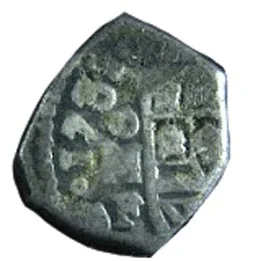
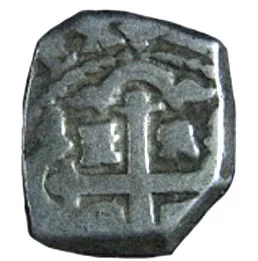
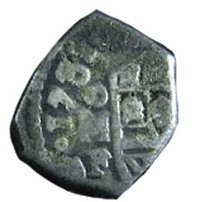
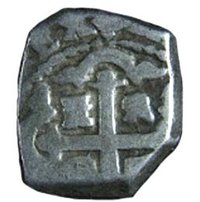
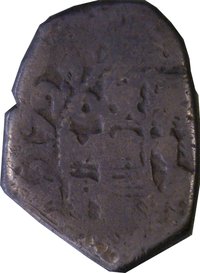
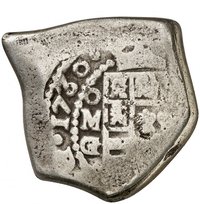
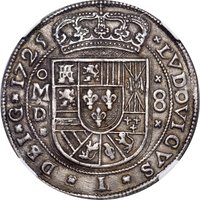
Obverse
Description:
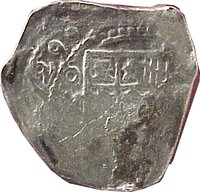
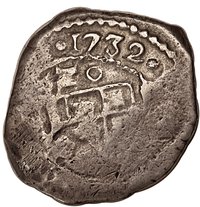
Legend of crowned PHILIPVS monogram.
Inscription:
PHILIPVS
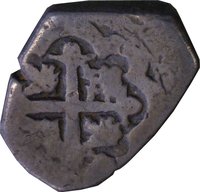
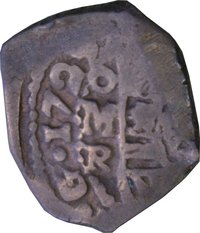
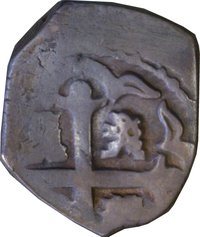
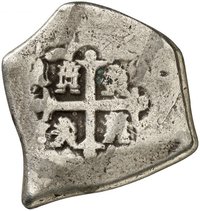
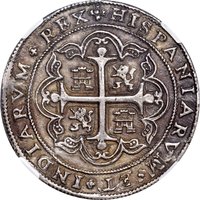
Reverse
Description:
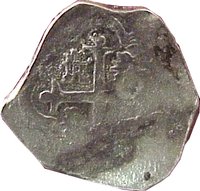
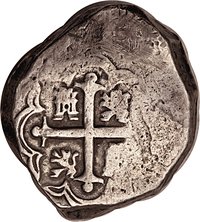
Cross, lions, castles.
Edge
Mintings
| Year | Mint Mark | Mintage | Quality | Collection |
|---|---|---|---|---|
| 1729 | R | — | ||
| 1730 | F | — | ||
| 1730 | R | — | ||
| 1731 | F | — | ||
| 1732 | F | — | ||
| 1733 | F | — |
Historical background
In 1729, the currency situation in the Kingdom of New Spain was one of profound instability and scarcity, rooted in systemic flaws. The primary circulating coin was the silver real, with eight reales making a "piece of eight." However, the colony suffered from a chronic shortage of small-denomination coins (moneda menuda), which crippled everyday market transactions for the majority of the population. This scarcity was exacerbated by the massive outflow of silver to Spain and the Orient, and the practice of hoarding or cutting coins to make change. While the Mexico City mint was the most prolific in the world, its output was dominated by high-value silver and gold coins for long-distance trade and remittances to the Crown, not for local subsistence economies.
The royal response to this crisis was the authorization, in 1728, for the minting of entirely new copper coins—tlacos and clacos—valued at 1/16 and 1/32 of a real, respectively. The year 1729 thus represented the fraught early phase of this experimental copper currency's introduction. The reform was deeply unpopular; the public, remembering the disastrous inflationary effects of earlier copper issues in the 17th century, was suspicious of the fiduciary coinage. Widespread reluctance to accept the coins, coupled with their easy counterfeiting, led to immediate implementation problems. The copper currency failed to circulate as intended, doing little to alleviate the small-change shortage that plagued markets, taverns, and shops.
Consequently, the monetary landscape in 1729 was a fractured one: a thriving, silver-based transatlantic economy coexisted with a stifled local economy starved of practical currency. The failure of the copper initiative reinforced reliance on inconvenient and inefficient substitutes like cacao beans, credit tokens from local merchants, and clipped silver fragments. This monetary dichotomy highlighted the colonial administration's struggle to manage an economy designed primarily for resource extraction, often at the expense of internal economic cohesion and the daily needs of its subjects.
The royal response to this crisis was the authorization, in 1728, for the minting of entirely new copper coins—tlacos and clacos—valued at 1/16 and 1/32 of a real, respectively. The year 1729 thus represented the fraught early phase of this experimental copper currency's introduction. The reform was deeply unpopular; the public, remembering the disastrous inflationary effects of earlier copper issues in the 17th century, was suspicious of the fiduciary coinage. Widespread reluctance to accept the coins, coupled with their easy counterfeiting, led to immediate implementation problems. The copper currency failed to circulate as intended, doing little to alleviate the small-change shortage that plagued markets, taverns, and shops.
Consequently, the monetary landscape in 1729 was a fractured one: a thriving, silver-based transatlantic economy coexisted with a stifled local economy starved of practical currency. The failure of the copper initiative reinforced reliance on inconvenient and inefficient substitutes like cacao beans, credit tokens from local merchants, and clipped silver fragments. This monetary dichotomy highlighted the colonial administration's struggle to manage an economy designed primarily for resource extraction, often at the expense of internal economic cohesion and the daily needs of its subjects.
Series: 1729 New Spain circulation coins
✨ Legendary