

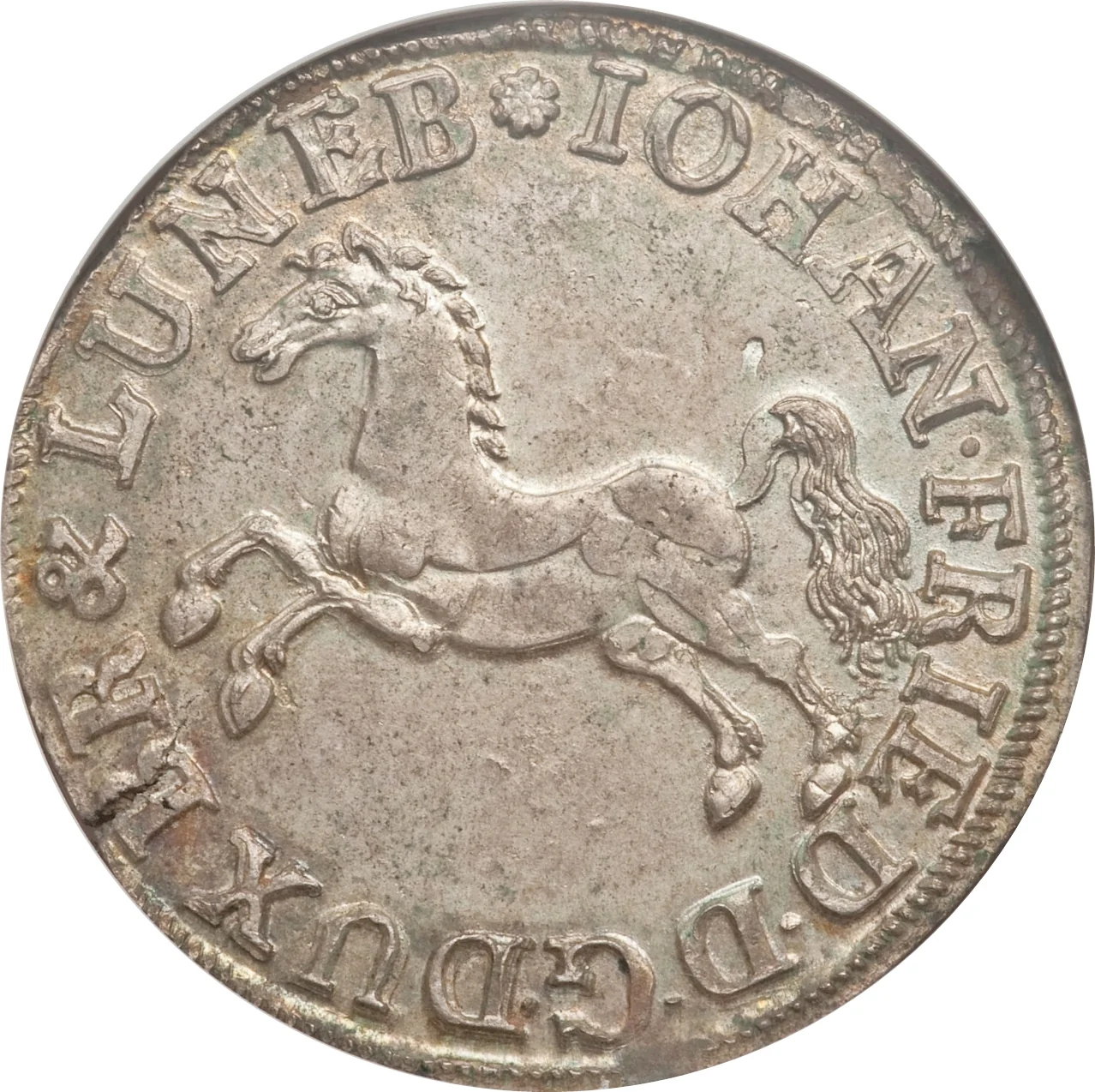
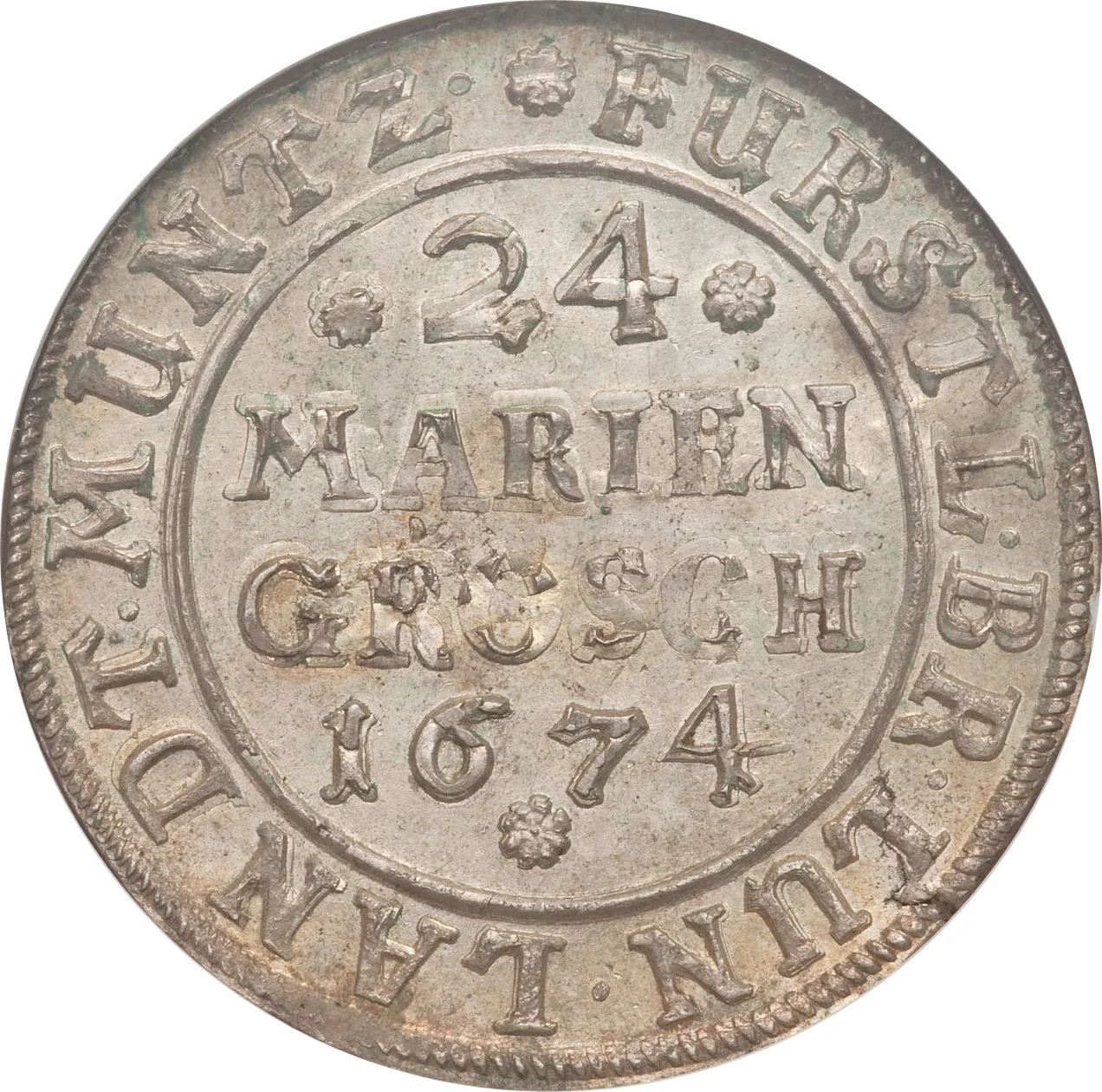
24 Mariengroschen – Brunswick-Lüneburg-Calenberg
Germany
Context
Years: 1672–1674
Country: Germany 
Issuer: Brunswick-Lüneburg-Calenberg
Ruler: John Frederick
Currency:
Demonetized: Yes
Material
References
KM: #Click to copy to clipboard139
Numista: #39905
Mintings
| Year | Mint Mark | Mintage | Quality | Collection |
|---|---|---|---|---|
| 1672 | — | — | ||
| 1673 | — | — | ||
| 1674 | — | — |
Historical background
In 1672, the Duchy of Brunswick-Lüneburg, specifically the Principality of Calenberg under Duke John Frederick, was entangled in the complex and debilitating monetary issues common across the Holy Roman Empire. The region operated within a fragmented system where multiple states issued coinage, leading to a proliferation of currencies of varying quality and value. A primary concern was the widespread circulation of debased Kipper und Wipper coinage from earlier decades, alongside better-quality coins, which caused severe inflation, eroded public trust, and disrupted trade. The monetary chaos was exacerbated by the need to finance the Duke's lavish court and political ambitions, including his conversion to Catholicism and ties to France, which strained the principality's finances.
The situation was further complicated by the outbreak of the Franco-Dutch War in 1672, in which Duke John Frederick was a reluctant participant due to his obligations to the Empire. The war increased fiscal pressures, threatening the need for further currency manipulation to pay for military needs. However, John Frederick, aware of the long-term economic damage, resisted the temptation of severe debasement. Instead, his administration attempted to manage the crisis through regulatory ordinances aimed at controlling the circulation of foreign and inferior coins within his territories, though enforcement against market forces and speculative trade remained a significant challenge.
Ultimately, the currency situation in Calenberg in 1672 was one of precarious stability amidst systemic fragility. While an acute crisis was temporarily averted, the underlying structural problems of multiple minting authorities and competing currencies persisted. This environment highlighted the tension between sovereign financial needs and the necessity for sound money, a problem that would only begin to find resolution in the following decades with moves toward more standardized Reichsthaler conventions and the later establishment of the Braunschweig-Lüneburg Bankogiro in the 18th century.
The situation was further complicated by the outbreak of the Franco-Dutch War in 1672, in which Duke John Frederick was a reluctant participant due to his obligations to the Empire. The war increased fiscal pressures, threatening the need for further currency manipulation to pay for military needs. However, John Frederick, aware of the long-term economic damage, resisted the temptation of severe debasement. Instead, his administration attempted to manage the crisis through regulatory ordinances aimed at controlling the circulation of foreign and inferior coins within his territories, though enforcement against market forces and speculative trade remained a significant challenge.
Ultimately, the currency situation in Calenberg in 1672 was one of precarious stability amidst systemic fragility. While an acute crisis was temporarily averted, the underlying structural problems of multiple minting authorities and competing currencies persisted. This environment highlighted the tension between sovereign financial needs and the necessity for sound money, a problem that would only begin to find resolution in the following decades with moves toward more standardized Reichsthaler conventions and the later establishment of the Braunschweig-Lüneburg Bankogiro in the 18th century.
✨ Legendary