

6 Mariengroschen – Brunswick-Lüneburg-Calenberg
Germany
Context
Years: 1680–1689
Country: Germany 
Issuer: Brunswick-Lüneburg-Calenberg
Ruler: Ernest Augustus
Currency:
Demonetized: Yes
Material
References
KM: #Click to copy to clipboard258
Numista: #39892
Obverse
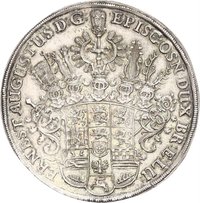
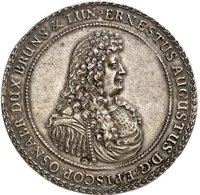
Description:
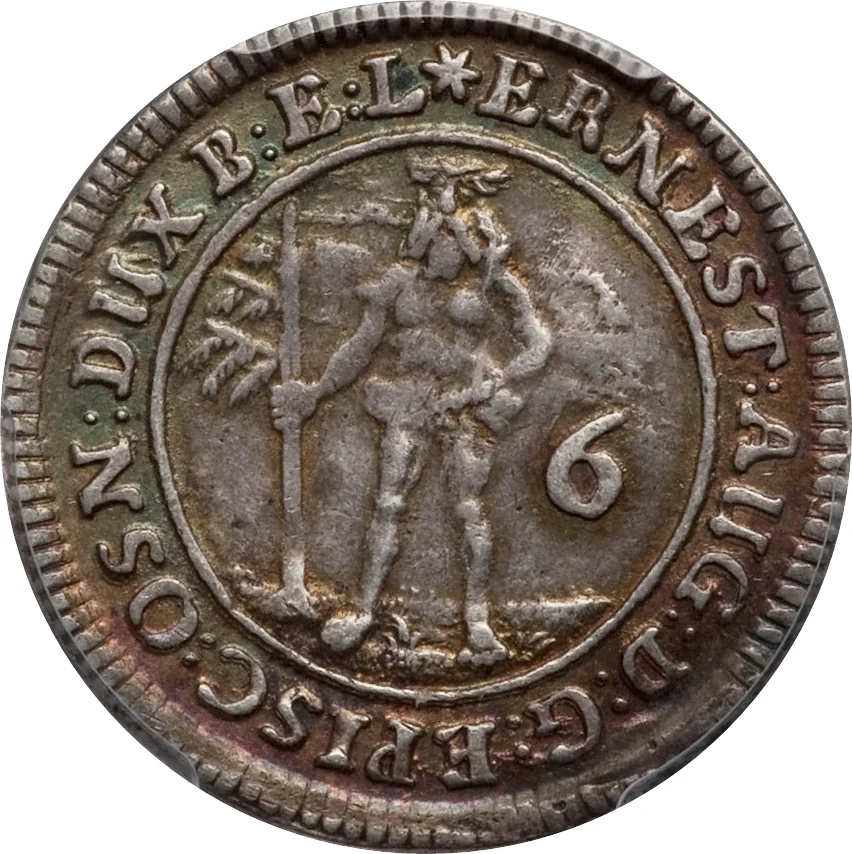
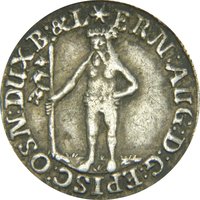
Wild man with tree, value, legend.
Inscription:
*ERNEST:AUG:D:G:EPISC:OSN:DUX B:E:L
6
6
Script: Latin
Reverse
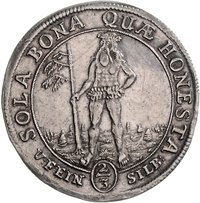
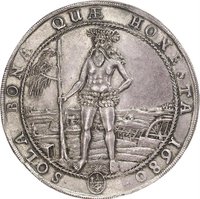
Description:
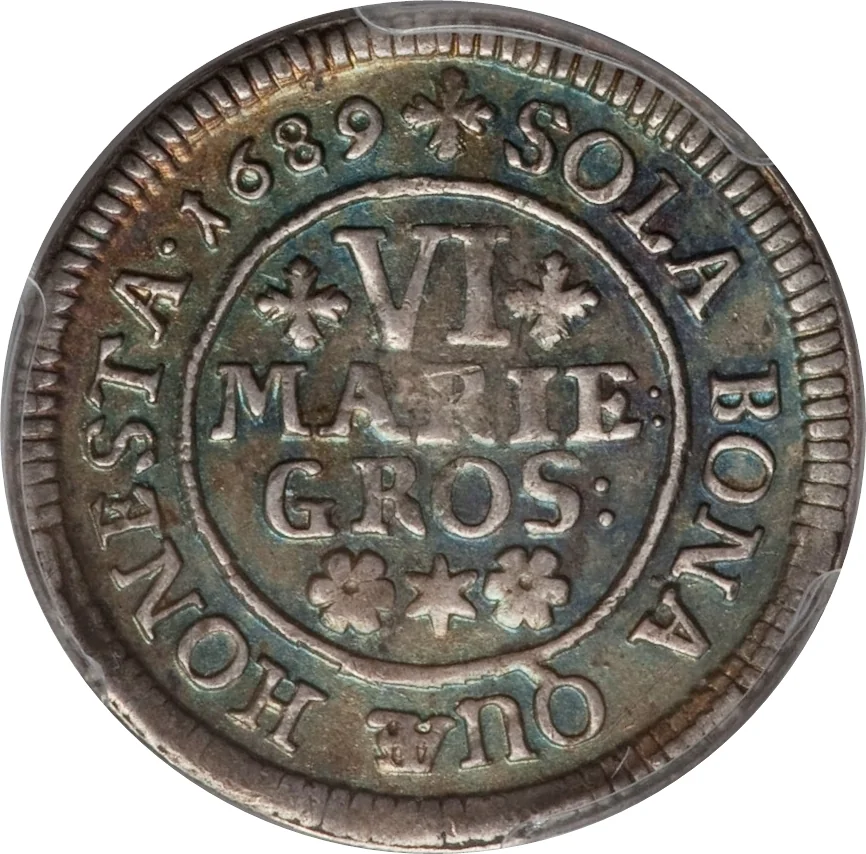
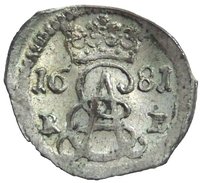
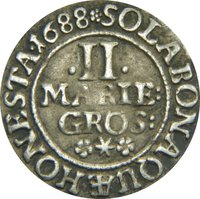
Center denomination, surrounded by date and legend.
Inscription:
*SOLA BONA QUÆ HONESTA·1689
*VI*
MARIE:
GROS:
***
*VI*
MARIE:
GROS:
***
Script: Latin
Edge
Mintings
| Year | Mint Mark | Mintage | Quality | Collection |
|---|---|---|---|---|
| 1680 | — | — | ||
| 1681 | — | — | ||
| 1682 | — | — | ||
| 1683 | — | — | ||
| 1687 | — | — | ||
| 1688 | — | — | ||
| 1689 | — | — |
Historical background
In 1680, the Duchy of Brunswick-Lüneburg, specifically the Principality of Calenberg under Duke Johann Friedrich, was grappling with the severe and chronic problems of monetary fragmentation and debasement that plagued the Holy Roman Empire. The region was part of a complex web of competing coinage systems, where numerous neighboring states and cities issued coins of varying weight and silver content. This led to a chaotic circulation of both good and heavily debased coins, causing significant uncertainty in trade, harming creditors, and distorting the local economy. The core issue was the "Kipper- und Wipperzeit," a period of rampant coin debasement earlier in the century, whose destabilizing effects were still being felt.
The monetary situation was directly tied to the fiscal needs of the state. Rulers, including those in the Brunswick-Lüneburg lineages, often resorted to reducing the silver content in their coinage to generate immediate profit, especially to finance military expenditures and courtly splendour. By 1680, Johann Friedrich, who had converted to Catholicism and maintained a lavish court, faced these same pressures. The result was a loss of public trust in the currency; older, full-weight coins were hoarded or melted down, while newer, inferior coins flooded the market. This Gresham's Law dynamic ("bad money drives out good") crippled commerce and created a constant tension between the state's short-term financial demands and the long-term health of the economy.
Consequently, there were growing calls for monetary reform and standardization. The year 1680 falls within a period where states began seeking bilateral or regional agreements to stabilize currency. While a comprehensive solution for the Empire, the Reichsmünzordnung, remained ineffective, individual territories like Calenberg were increasingly aware of the need to restore confidence. The situation set the stage for future attempts, both within the duchy and through broader alliances like the Zinnaische Münzvertrag (1667) and the later Leipziger Münzfuß (1690), to define a stable silver standard and limit the number of minting authorities, aiming to bring order to the monetary chaos.
The monetary situation was directly tied to the fiscal needs of the state. Rulers, including those in the Brunswick-Lüneburg lineages, often resorted to reducing the silver content in their coinage to generate immediate profit, especially to finance military expenditures and courtly splendour. By 1680, Johann Friedrich, who had converted to Catholicism and maintained a lavish court, faced these same pressures. The result was a loss of public trust in the currency; older, full-weight coins were hoarded or melted down, while newer, inferior coins flooded the market. This Gresham's Law dynamic ("bad money drives out good") crippled commerce and created a constant tension between the state's short-term financial demands and the long-term health of the economy.
Consequently, there were growing calls for monetary reform and standardization. The year 1680 falls within a period where states began seeking bilateral or regional agreements to stabilize currency. While a comprehensive solution for the Empire, the Reichsmünzordnung, remained ineffective, individual territories like Calenberg were increasingly aware of the need to restore confidence. The situation set the stage for future attempts, both within the duchy and through broader alliances like the Zinnaische Münzvertrag (1667) and the later Leipziger Münzfuß (1690), to define a stable silver standard and limit the number of minting authorities, aiming to bring order to the monetary chaos.

💎 Extremely Rare