

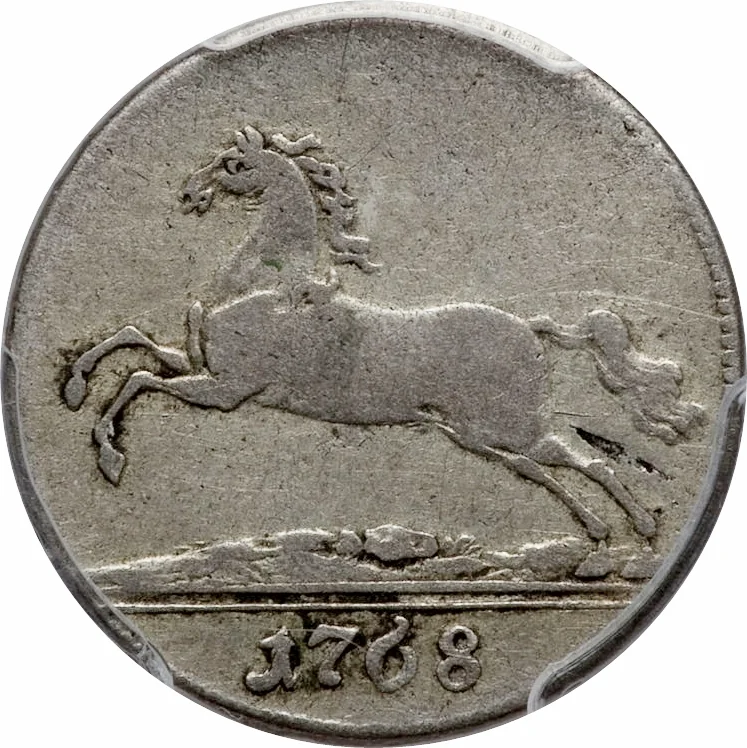
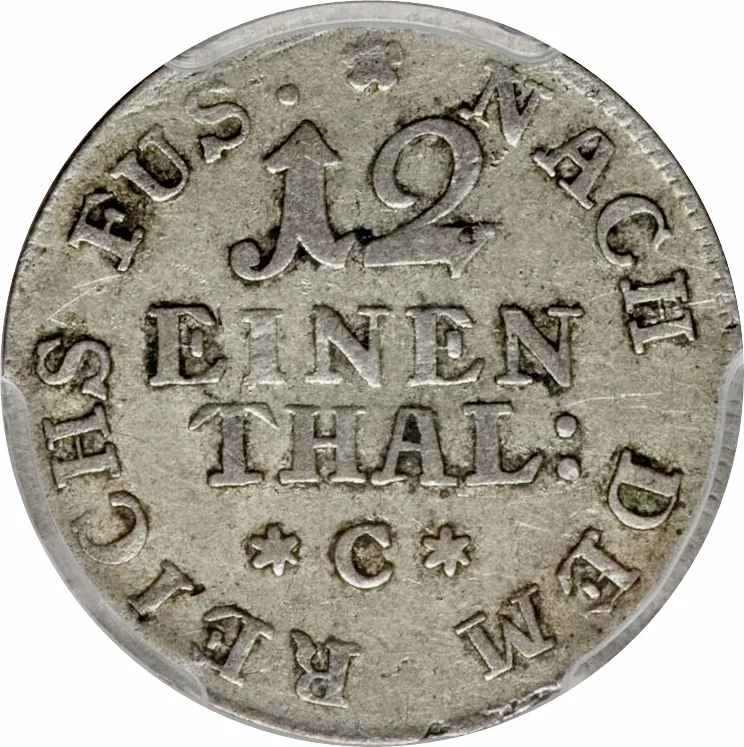
1⁄12 Thaler – Brunswick-Lüneburg-Calenberg-Hannover
Germany
Context

Material
References
KM: #Click to copy to clipboard336
Numista: #39884
Value
Bullion value: $8.56
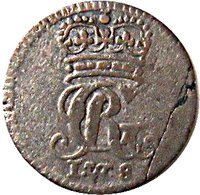
Obverse
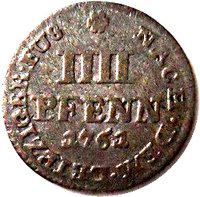
Reverse
Description:
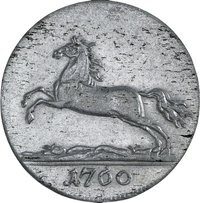
Center name and mark, encircled by legend.
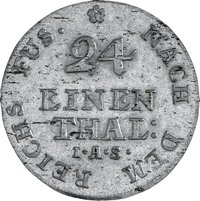
Inscription:
12
EINEN
THAL:
*C*
* NACH DEM REICHS FUS.
EINEN
THAL:
*C*
* NACH DEM REICHS FUS.
Script: Latin
Edge
Plain
Mintings
| Year | Mint Mark | Mintage | Quality | Collection |
|---|---|---|---|---|
| 1760 | — | — | ||
| 1761 | — | — | ||
| 1762 | — | — | ||
| 1763 | — | — | ||
| 1763 | .C. | — | ||
| 1764 | — | — | ||
| 1764 | .C. | — | ||
| 1765 | .C. | — | ||
| 1767 | .C. | — | ||
| 1768 | — | — | ||
| 1768 | .C. | — | ||
| 1769 | — | — | ||
| 1770 | — | — | ||
| 1771 | — | — | ||
| 1772 | — | — | ||
| 1773 | — | — | ||
| 1774 | — | — | ||
| 1775 | — | — | ||
| 1776 | — | — | ||
| 1777 | — | — | ||
| 1778 | — | — | ||
| 1779 | — | — | ||
| 1780 | — | — | ||
| 1781 | — | — | ||
| 1782 | — | — | ||
| 1783 | — | — | ||
| 1784 | — | — | ||
| 1785 | — | — | ||
| 1786 | — | — | ||
| 1787 | — | — | ||
| 1788 | — | — | ||
| 1789 | — | — | ||
| 1790 | .C. | — | ||
| 1791 | .C. | — | ||
| 1792 | .C. | — | ||
| 1792 | PLM | — | ||
| 1793 | PLM | — | ||
| 1794 | PLM | — | ||
| 1795 | PLM | — | ||
| 1796 | PLM | — | ||
| 1797 | PLM | — | ||
| 1798 | PLM | — | ||
| 1799 | PLM | — | ||
| 1800 | PLM | — | ||
| 1801 | EC | — | ||
| 1801 | PLM | — | ||
| 1801 | — | — | ||
| 1801 | .C. | — | ||
| 1802 | — | — | ||
| 1802 | .C. | — | ||
| 1803 | — | — | ||
| 1804 | — | — | ||
| 1805 | — | — | ||
| 1806 | — | — | ||
| 1807 | — | — |
Historical background
In 1760, the currency situation in the Duchy of Brunswick-Lüneburg, specifically the Principality of Calenberg (with its capital in Hanover), was characterized by significant complexity and instability. The region was deeply entangled in the Seven Years' War (1756-1763), and the financial demands of the conflict placed immense strain on its monetary system. The Hanoverian government, under the de facto rule of the British crown via the personal union with King George II (and from October 1760, George III), was forced to issue vast quantities of low-value Scheidemünzen (small change coins) to finance military expenditures and cover state debts, leading to severe inflation and a loss of public confidence in the coinage.
The monetary landscape was a chaotic patchwork. Alongside the official Reichsthaler and its subdivisions, a plethora of depreciated coins circulated, including French, Austrian, and various German state issues brought by armies moving through the strategically vital Electorate. Furthermore, the government had resorted to issuing Kreditmittel like Solascripts (pay certificates to soldiers and suppliers), which often traded below face value. This created a multi-tiered system where the intrinsic value of silver coins (like the Konventionsthaler) was hoarded, while the over-issued billon and copper coins flooded everyday transactions, causing prices to soar and crippling the local economy.
Efforts to manage the crisis, including periodic minting ordinances and mandates to fix exchange rates, proved largely futile in the wartime context. The fundamental problem was a lack of precious metal to back the currency, exacerbated by French occupation earlier in the war and ongoing subsidies paid to allied forces. Consequently, by 1760, the currency of Calenberg-Hannover was in a state of profound debasement and disorder, a direct reflection of the wider political and military turmoil of the Seven Years' War, with stabilization only becoming possible after the peace of 1763.
The monetary landscape was a chaotic patchwork. Alongside the official Reichsthaler and its subdivisions, a plethora of depreciated coins circulated, including French, Austrian, and various German state issues brought by armies moving through the strategically vital Electorate. Furthermore, the government had resorted to issuing Kreditmittel like Solascripts (pay certificates to soldiers and suppliers), which often traded below face value. This created a multi-tiered system where the intrinsic value of silver coins (like the Konventionsthaler) was hoarded, while the over-issued billon and copper coins flooded everyday transactions, causing prices to soar and crippling the local economy.
Efforts to manage the crisis, including periodic minting ordinances and mandates to fix exchange rates, proved largely futile in the wartime context. The fundamental problem was a lack of precious metal to back the currency, exacerbated by French occupation earlier in the war and ongoing subsidies paid to allied forces. Consequently, by 1760, the currency of Calenberg-Hannover was in a state of profound debasement and disorder, a direct reflection of the wider political and military turmoil of the Seven Years' War, with stabilization only becoming possible after the peace of 1763.
⭐ Somewhat Rare