

Schelling – Lordship of Reckheim
Belgium
Context
Years: 1603–1636
Country: Belgium 
Issuer: Lordship of Reckheim
Currency:
(1553—1665)
Demonetized: Yes
Material
Weight: 3.9 g
Silver weight: 3.90 g
Shape: Irregular round
Composition: Silver
Magnetic: No
Technique: Hammered
References
KM: #Click to copy to clipboard10
Numista: #397258
Value
Bullion value: $10.81
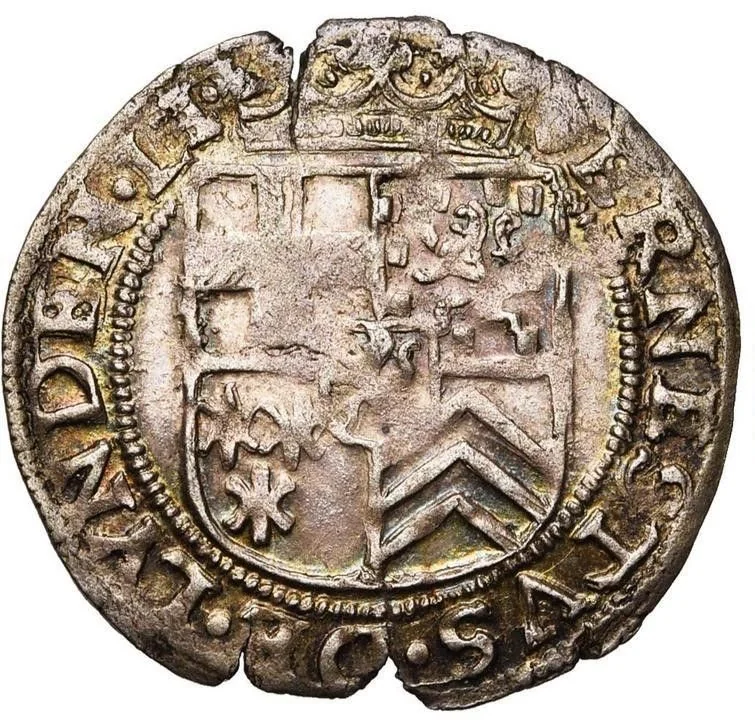
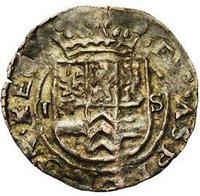
Obverse
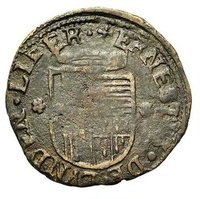
Description:
Quartered arms crowned within beaded circle.
Inscription:
ERNESTVS • DE • LYNDEN • LI
Script: Latin
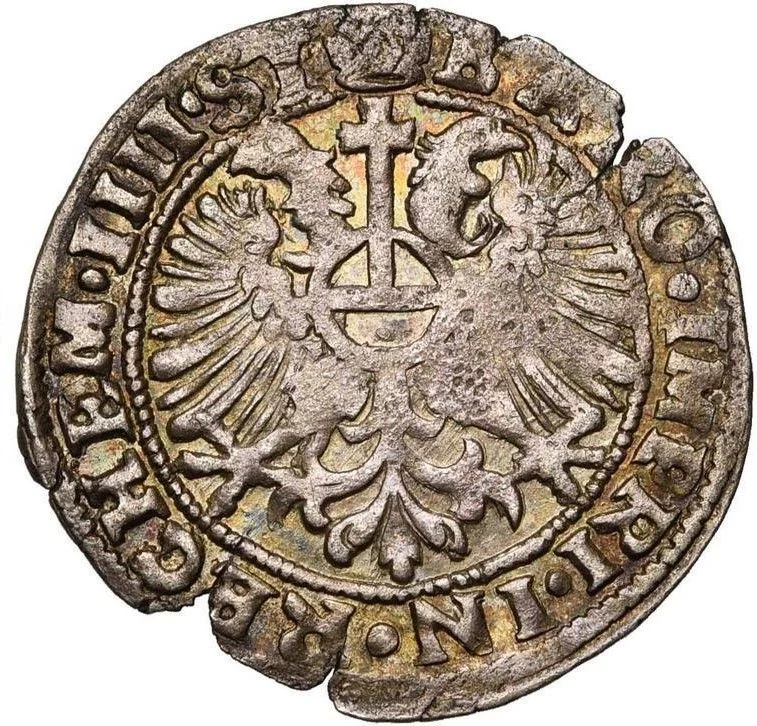
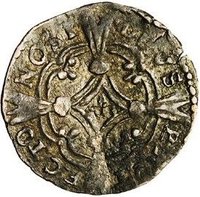
Reverse
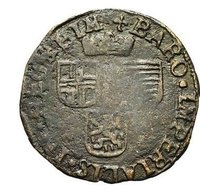
Description:
Double-headed crowned eagle holding an imperial orb.
Inscription:
BARO • IMPRI • IN • RECKHEM • IIII • ST
Script: Latin
Edge
Categories
| Symbols> Coat of Arms |
| Symbol> Double-headed eagle |
Mints
| Name | Mark |
|---|---|
| Rekem, Reckheim | — |
Mintings
| Year | Mint Mark | Mintage | Quality | Collection |
|---|---|---|---|---|
| — | — | — |
Historical background
In 1603, the Lordship of Reckheim, a minor German territory within the complex patchwork of the Holy Roman Empire, faced a challenging and fragmented currency situation. Like most principalities of the era, it did not possess the sovereign right to mint its own imperial coins (Reichsmünzen), such as the silver Reichsthaler. Instead, its monetary system was dominated by a confusing mix of foreign and regional currencies circulating simultaneously. The most trusted large-denomination coins were those from neighboring powerful states like the Spanish Netherlands (Philippusdaalders), the nearby episcopal mint of Liège, and various German states, leading to a constant inflow and outflow of silver that Reckheim could not control.
This circulation was further complicated by the widespread use of low-value, billon (debased silver) Landmünzen or "regional coins." While some smaller lordships issued these for local trade, their value was unstable and often arbitrarily set by proclamation (Kurant). For Reckheim's peasants and merchants, daily transactions were a calculus involving unfamiliar coins from dozens of mints, each with fluctuating metal content and exchange rates. Counterfeiting and clipping of coins were rampant, eroding trust in the already chaotic system and creating constant petty disputes in the marketplace.
The underlying economic pressure was a Europe-wide phenomenon: the "Price Revolution" driven by silver from the New World, which caused steady inflation. For Reckheim's lord, this meant his fixed feudal revenues were worth less in real terms each year, while the cost of maintaining his household and influence rose. The currency chaos directly impacted his ability to levy taxes and pay debts, as obligations specified in one type of coin might be paid in another of lesser intrinsic value. Thus, in 1603, the monetary landscape was not merely an inconvenience but a significant threat to the lordship's economic stability and administrative authority, reflecting the broader weaknesses of imperial political structure on the eve of the Thirty Years' War.
This circulation was further complicated by the widespread use of low-value, billon (debased silver) Landmünzen or "regional coins." While some smaller lordships issued these for local trade, their value was unstable and often arbitrarily set by proclamation (Kurant). For Reckheim's peasants and merchants, daily transactions were a calculus involving unfamiliar coins from dozens of mints, each with fluctuating metal content and exchange rates. Counterfeiting and clipping of coins were rampant, eroding trust in the already chaotic system and creating constant petty disputes in the marketplace.
The underlying economic pressure was a Europe-wide phenomenon: the "Price Revolution" driven by silver from the New World, which caused steady inflation. For Reckheim's lord, this meant his fixed feudal revenues were worth less in real terms each year, while the cost of maintaining his household and influence rose. The currency chaos directly impacted his ability to levy taxes and pay debts, as obligations specified in one type of coin might be paid in another of lesser intrinsic value. Thus, in 1603, the monetary landscape was not merely an inconvenience but a significant threat to the lordship's economic stability and administrative authority, reflecting the broader weaknesses of imperial political structure on the eve of the Thirty Years' War.
✨ Legendary