

5 baiocchi – Gubbio
Add to wishlist
Italy
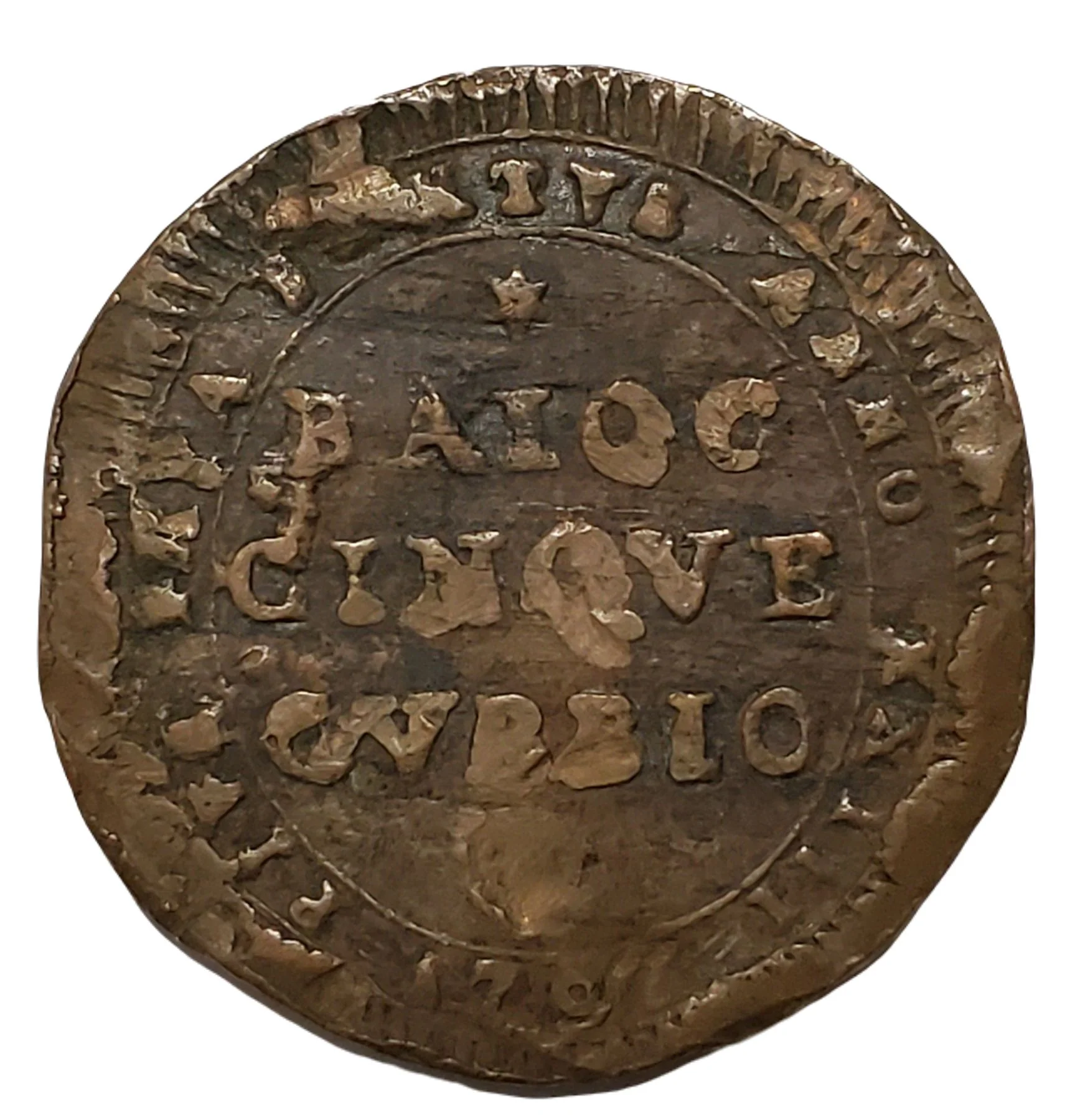
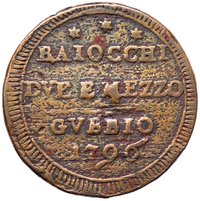
Obverse
Description:
Inscription: three lines inside, legend around.
Inscription:
PIVS PAPA SEXTVS ANNO XXIII 1797
🟌
BAIOC
CINQVE
GVBBIO
🟌
BAIOC
CINQVE
GVBBIO
Script: Latin
Engraver: Tommaso Mercandetti
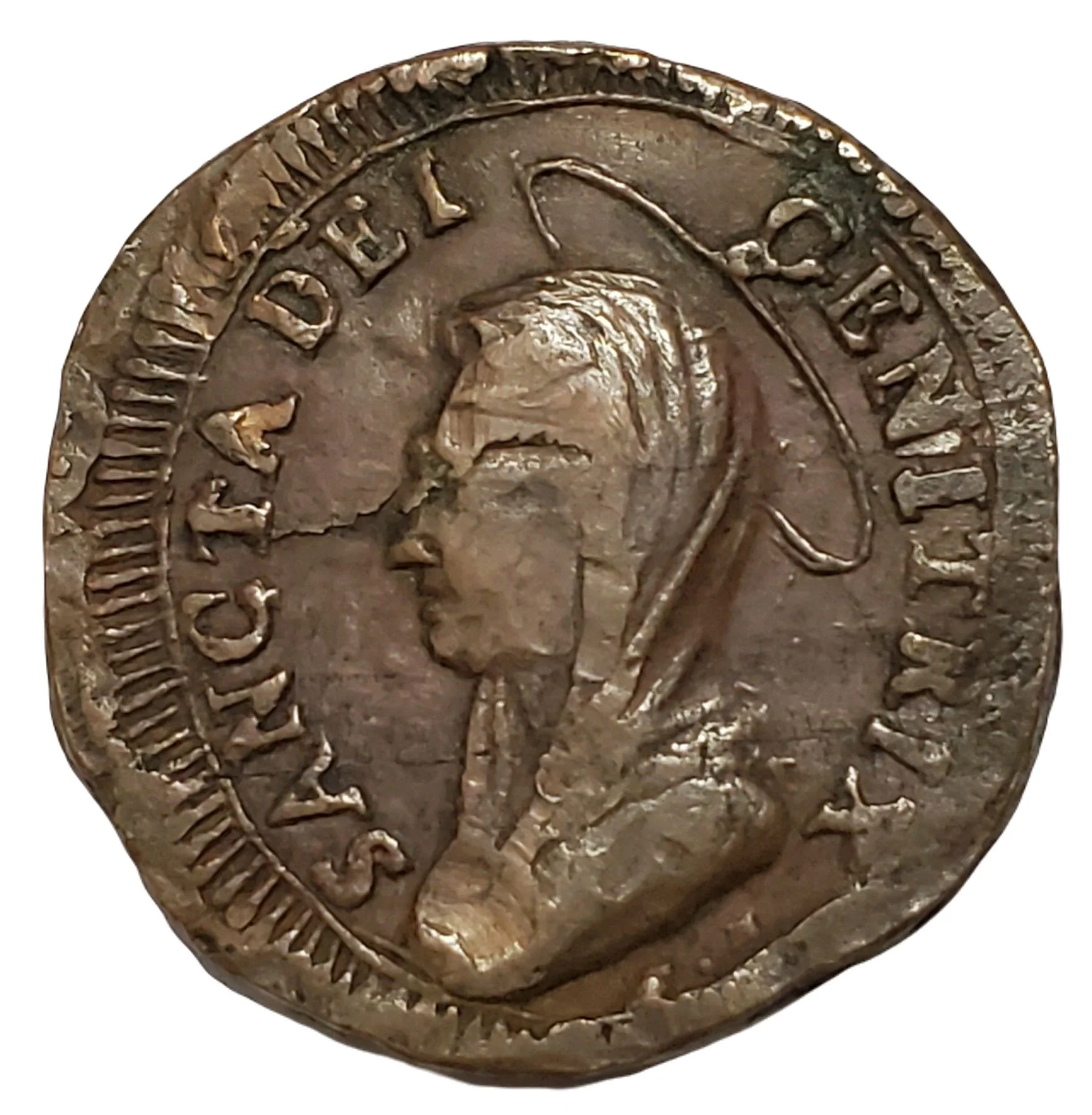
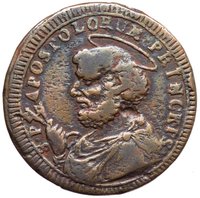
Reverse
Description:
Mary, left-facing bust
Inscription:
SANCTA DEI GENITRIX
T.M.
T.M.
Script: Latin
Engraver: Tommaso Mercandetti
Edge
Categories
| Person> Religious figure |
Mints
| Name | Mark |
|---|---|
| Gubbio | — |
Mintings
| Year | Mint Mark | Mintage | Quality | Collection |
|---|---|---|---|---|
| 1797 | — | — |
Historical background
In 1797, the ancient Umbrian hill town of Gubbio found itself caught in the turbulent currency transition following the French invasion of Italy. The Papal States, of which Gubbio was a part, had been occupied by French troops in early 1797, leading to the establishment of the short-lived Roman Republic. This political upheaval directly disrupted the monetary system, as the traditional Papal scudo and its subsidiary coins faced competition and devaluation from the influx of French-assigned currency, including the new republican lira.
The local economy, primarily based on agriculture and artisan crafts, suffered from severe inflation and confusion. French authorities mandated the use of their decimal-based currency for official transactions, but the population, distrustful of the occupying forces and the unstable new regime, often clung to the familiar Papal coinage or resorted to barter. This created a chaotic dual-currency environment where exchange rates fluctuated wildly, harming merchants and peasants alike who struggled to ascertain the real value of their goods and savings.
Ultimately, the currency situation in Gubbio in 1797 was a microcosm of the collapse of the old order. It was characterized by monetary fragmentation, scarcity of sound coin, and the coercive introduction of an unfamiliar currency by an unpopular revolutionary government. This instability only compounded the general economic hardship and political uncertainty that marked the town's experience during the tumultuous triennio rivoluzionario (1796-1799).
The local economy, primarily based on agriculture and artisan crafts, suffered from severe inflation and confusion. French authorities mandated the use of their decimal-based currency for official transactions, but the population, distrustful of the occupying forces and the unstable new regime, often clung to the familiar Papal coinage or resorted to barter. This created a chaotic dual-currency environment where exchange rates fluctuated wildly, harming merchants and peasants alike who struggled to ascertain the real value of their goods and savings.
Ultimately, the currency situation in Gubbio in 1797 was a microcosm of the collapse of the old order. It was characterized by monetary fragmentation, scarcity of sound coin, and the coercive introduction of an unfamiliar currency by an unpopular revolutionary government. This instability only compounded the general economic hardship and political uncertainty that marked the town's experience during the tumultuous triennio rivoluzionario (1796-1799).
✨ Legendary