

2½ baiocchi – Gubbio
Add to wishlist
Italy
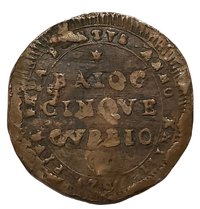
Obverse
Description:
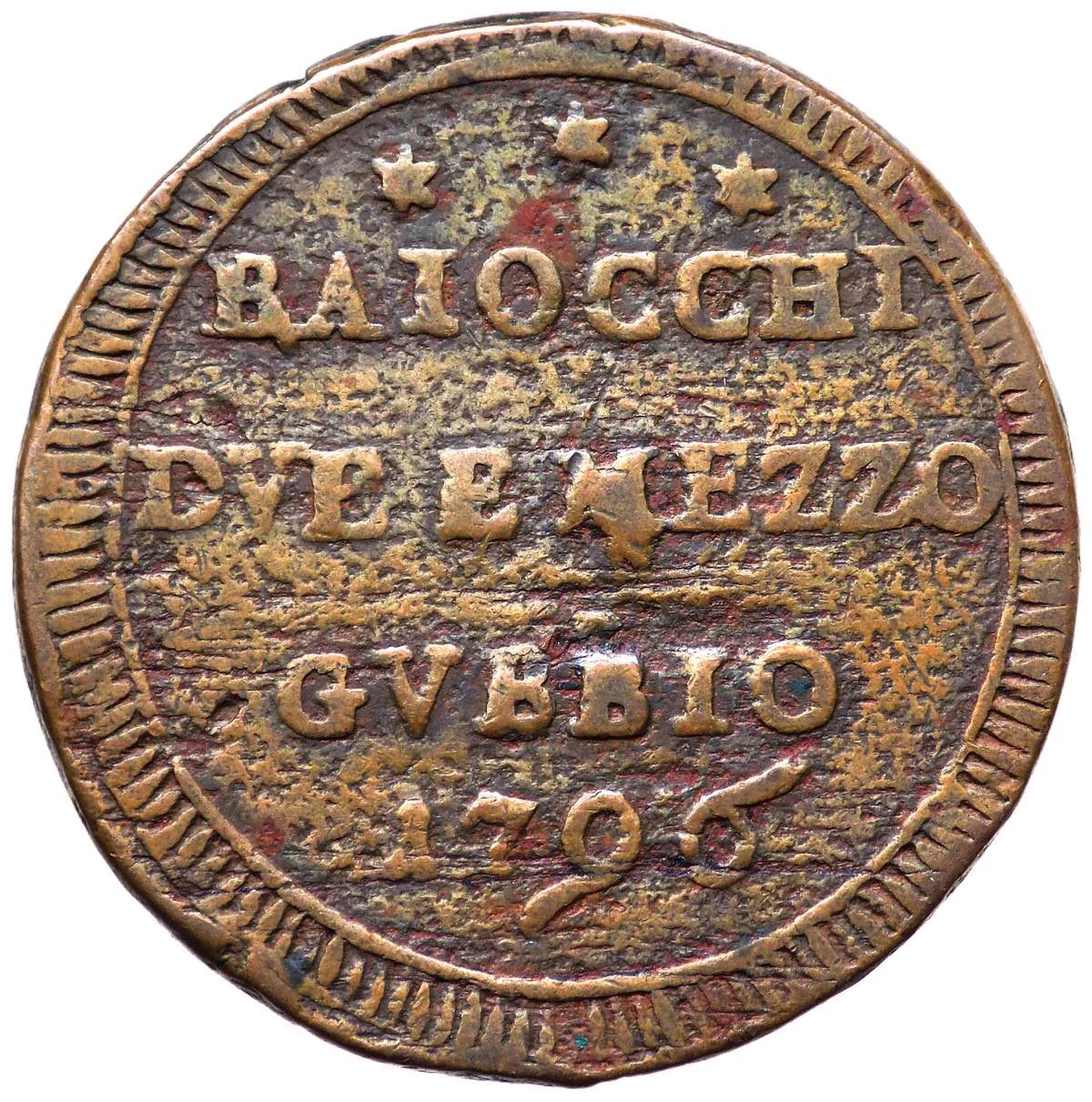
Value above, date below stars.
Inscription:
BAIOCCHI
DVE E MEZZO
GVBBIO
1796
DVE E MEZZO
GVBBIO
1796
Script: Latin
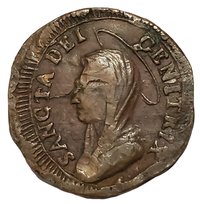
Reverse
Edge
Categories
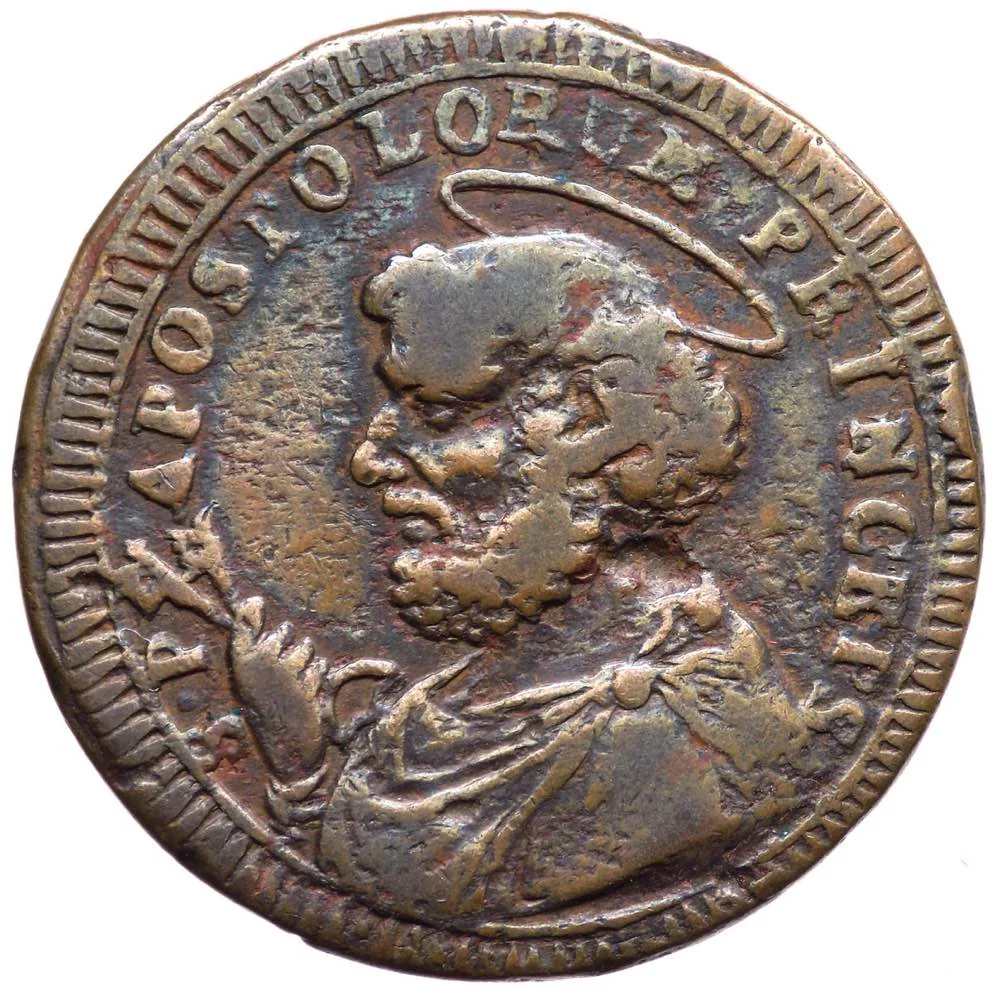
| Person> Religious figure |
| Mustache/Beard |
Mints
| Name | Mark |
|---|---|
| Gubbio | — |
Mintings
| Year | Mint Mark | Mintage | Quality | Collection |
|---|---|---|---|---|
| 1796 | — | — |
Historical background
In 1796, the Italian city-state of Gubbio, like much of the Papal States, was grappling with severe monetary instability and a complex, degraded currency system. The primary unit was the Papal scudo, but its value and physical composition were under immense pressure. Decades of budgetary shortfalls had led the papal authorities to repeatedly debase the coinage, reducing the silver content in coins like the giulio and baiocco. Consequently, a confusing mix of underweight official coins, older full-weight coins (hoarded or traded at a premium), and a flood of counterfeit and foreign specie circulated simultaneously, creating widespread confusion and eroding public trust in the money.
This monetary crisis was acutely exacerbated by the geopolitical shockwaves of the French Revolutionary Wars. Following Napoleon Bonaparte's invasion of northern Italy in 1796, the French imposed massive war indemnities and requisitions on the Papal States after defeating papal forces at the Battle of Fort Urban. While the initial Armistice of Bologna spared Gubbio the immediate horror of looting, the financial drain on the central treasury in Rome was catastrophic. To meet these forced payments, papal authorities resorted to even more extreme fiscal measures, including the confiscation and melting of church silver, which further disrupted the already fragile monetary supply and accelerated inflation.
Within Gubbio itself, this translated into daily hardship and commercial difficulty. Merchants and market-goers faced erratic pricing as the value of coins could change almost daily, and transactions were slowed by constant haggling over the acceptability of each piece of money. The instability punished the poor most severely, as wages failed to keep pace with rising food prices. Thus, in 1796, Gubbio's currency situation was not merely an economic issue but a profound social crisis, reflecting the collapse of old political and financial orders under the strain of revolution and war.
This monetary crisis was acutely exacerbated by the geopolitical shockwaves of the French Revolutionary Wars. Following Napoleon Bonaparte's invasion of northern Italy in 1796, the French imposed massive war indemnities and requisitions on the Papal States after defeating papal forces at the Battle of Fort Urban. While the initial Armistice of Bologna spared Gubbio the immediate horror of looting, the financial drain on the central treasury in Rome was catastrophic. To meet these forced payments, papal authorities resorted to even more extreme fiscal measures, including the confiscation and melting of church silver, which further disrupted the already fragile monetary supply and accelerated inflation.
Within Gubbio itself, this translated into daily hardship and commercial difficulty. Merchants and market-goers faced erratic pricing as the value of coins could change almost daily, and transactions were slowed by constant haggling over the acceptability of each piece of money. The instability punished the poor most severely, as wages failed to keep pace with rising food prices. Thus, in 1796, Gubbio's currency situation was not merely an economic issue but a profound social crisis, reflecting the collapse of old political and financial orders under the strain of revolution and war.
✨ Legendary