

2 schilling – Swedish dominion of Pomerania
Add to wishlist
Sweden
Context
Years: 1656–1660
Country: Sweden
Issuer: Swedish dominion of Pomerania
Ruler: Charles X Gustav
Currency:
(1630—1815)
Demonetized: Yes
Material
References
KM: #
Numista: #396116
Value
Bullion value: $3.13
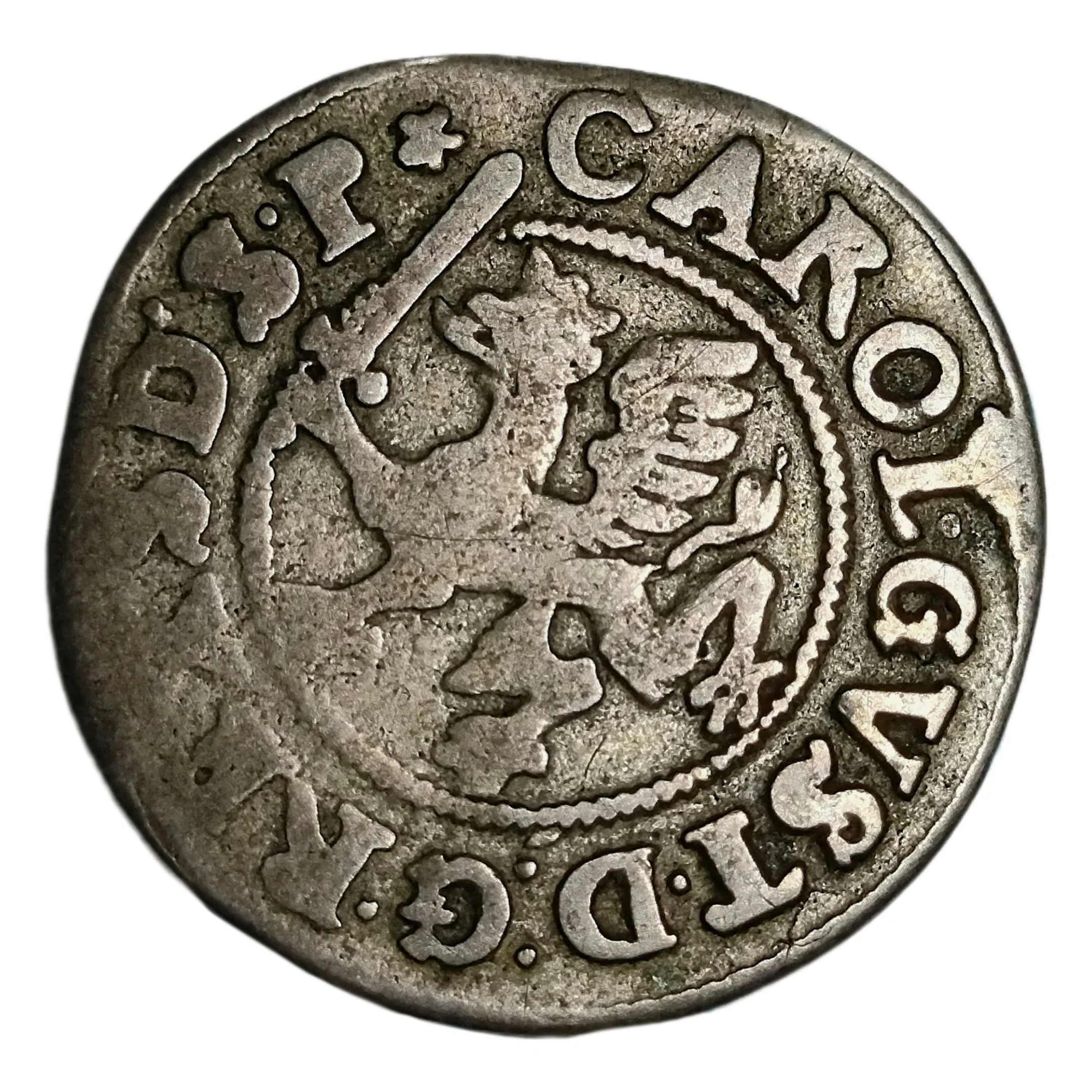
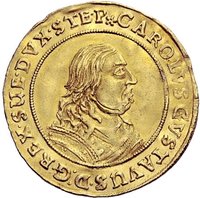
Obverse
Description:
Crowned griffin with sword lettering.
Inscription:
CAROL • GVST • T • D : G • REX • S • D • S • P
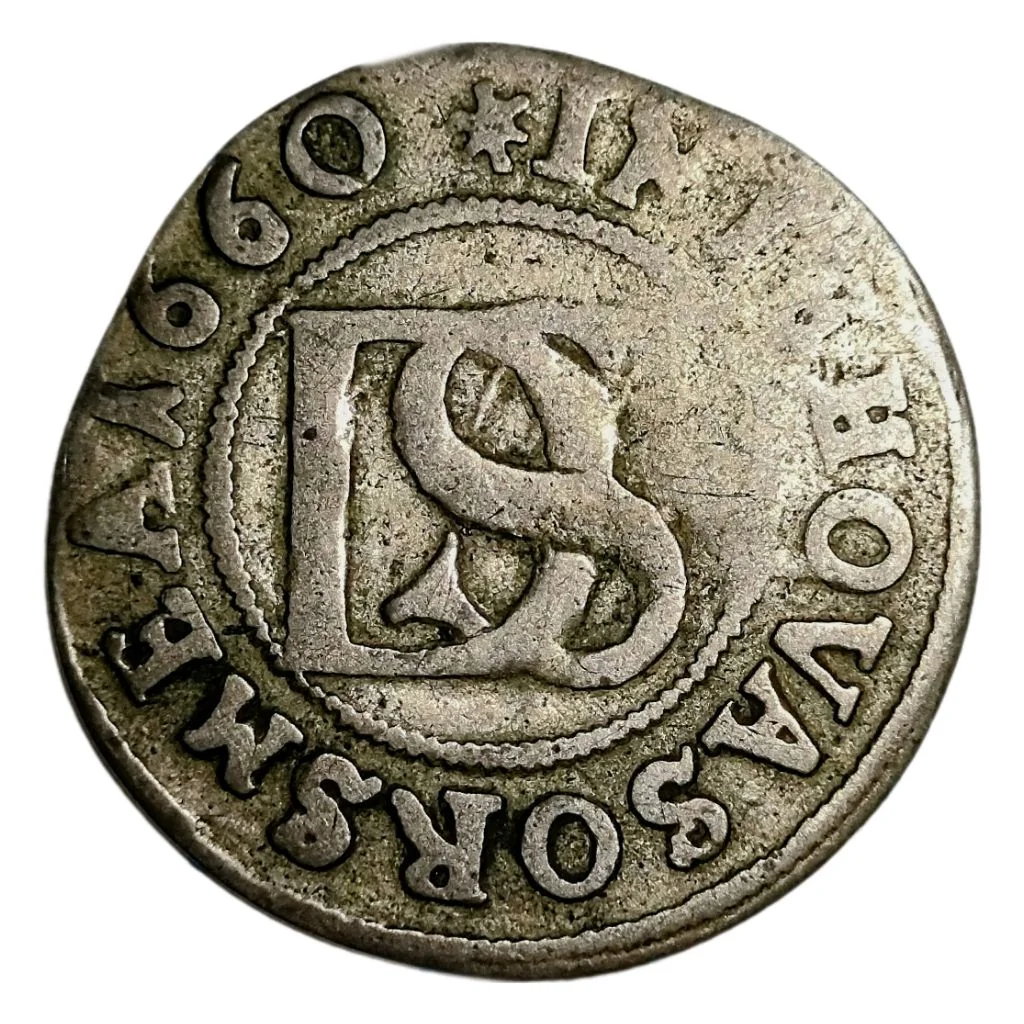
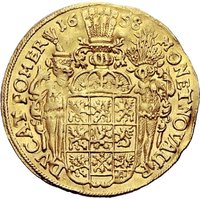
Reverse
Description:
Monogram DS centered.
Inscription:
IN IEHOVA SORS MEA 1660
Edge
Plain
Mintings
| Year | Mint Mark | Mintage | Quality | Collection |
|---|---|---|---|---|
| 1656 | — | — | ||
| 1657 | — | — | ||
| 1658 | — | — | ||
| 1659 | — | — | ||
| 1660 | — | — |
Historical background
In 1656, Swedish Pomerania was embroiled in the economic turmoil of the Second Northern War (1655-1660). The Swedish crown, under Charles X Gustav, was engaged in a costly military campaign in Poland-Lithuania, and the Pomeranian territory served as a crucial logistical and financial base. To fund these extensive operations, Swedish authorities imposed heavy war contributions and taxes on the local population, draining the duchy of specie and creating severe liquidity problems. This fiscal pressure destabilized the existing monetary system, which was already a complex mosaic of circulating coins from various German states and the Holy Roman Empire.
The currency situation was further exacerbated by deliberate Swedish policy. Facing a shortage of silver, Sweden began the practice of minting and circulating large quantities of debased copper coinage within its dominions, a system already infamous in Sweden itself as the kopparmynt. These low-value coins were often mandated to be accepted at par with higher-value silver coins, effectively forcing a devaluation and causing inflation. For the merchants and inhabitants of Pomeranian cities like Stralsund and Stettin, this led to a loss of confidence in the currency, disrupted trade, and increased the cost of essential goods, as the intrinsic value of the coins in their hands plummeted.
Consequently, the Pomeranian economy in 1656 was characterized by a severe dual crisis: a scarcity of reliable silver currency due to wartime extraction and an influx of artificially mandated, inferior money. This created widespread economic distress, social resentment, and a thriving black market for stable currency. The situation weakened the duchy's economic resilience and highlighted the extractive nature of Swedish wartime rule, where the province's financial stability was sacrificed to fund the broader military ambitions of the Swedish Empire.
The currency situation was further exacerbated by deliberate Swedish policy. Facing a shortage of silver, Sweden began the practice of minting and circulating large quantities of debased copper coinage within its dominions, a system already infamous in Sweden itself as the kopparmynt. These low-value coins were often mandated to be accepted at par with higher-value silver coins, effectively forcing a devaluation and causing inflation. For the merchants and inhabitants of Pomeranian cities like Stralsund and Stettin, this led to a loss of confidence in the currency, disrupted trade, and increased the cost of essential goods, as the intrinsic value of the coins in their hands plummeted.
Consequently, the Pomeranian economy in 1656 was characterized by a severe dual crisis: a scarcity of reliable silver currency due to wartime extraction and an influx of artificially mandated, inferior money. This created widespread economic distress, social resentment, and a thriving black market for stable currency. The situation weakened the duchy's economic resilience and highlighted the extractive nature of Swedish wartime rule, where the province's financial stability was sacrificed to fund the broader military ambitions of the Swedish Empire.
✨ Legendary