

1 sovereign – Spanish Netherlands
Add to wishlist
Netherlands
Context
Year: 1710
Country: Netherlands
Issuer: Spanish Netherlands
Ruler: Charles III
Currency:
(1506—1713)
Demonetized: Yes
Total mintage: 2,350
Material
References
KM: #
Numista: #395338
Value
Bullion value: $791.21
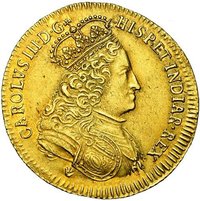
Obverse
Description:
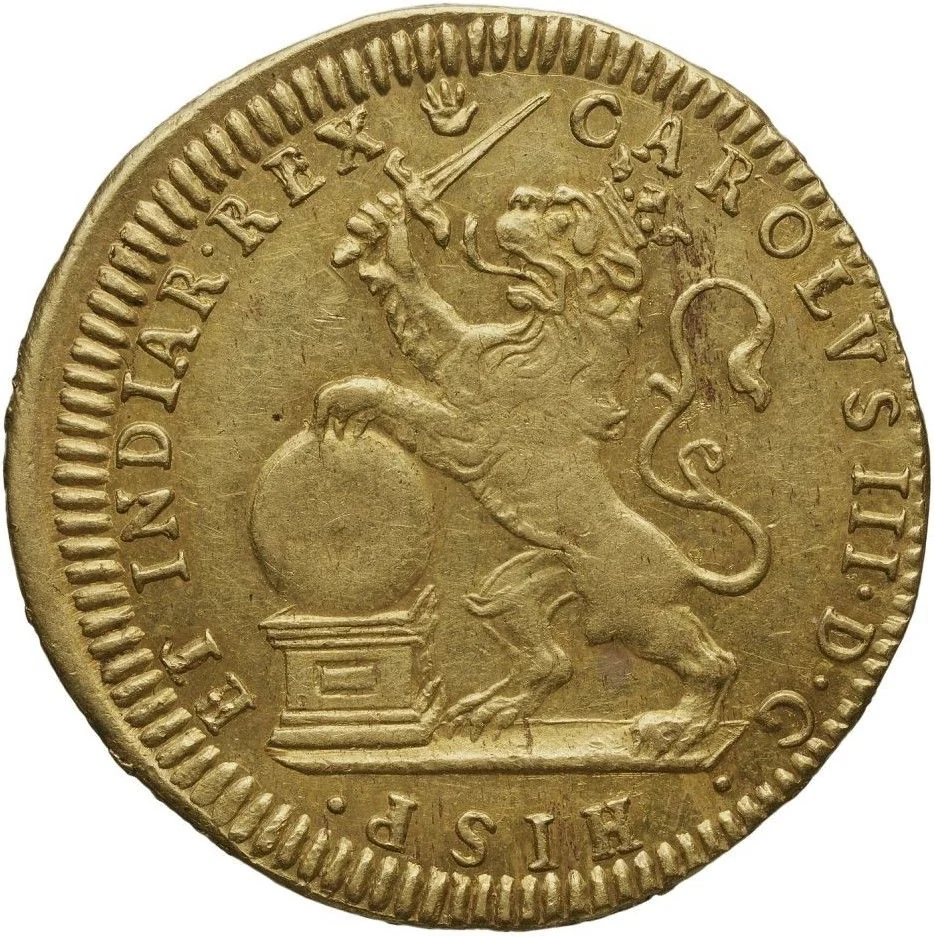
Lion left, sword raised, paw on globe.
Inscription:
CAROLVS III • D • G • HISP • ET INDIAR • REX •
Script: Latin
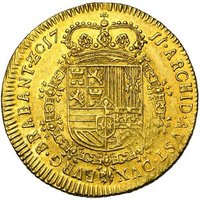
Reverse
Description:
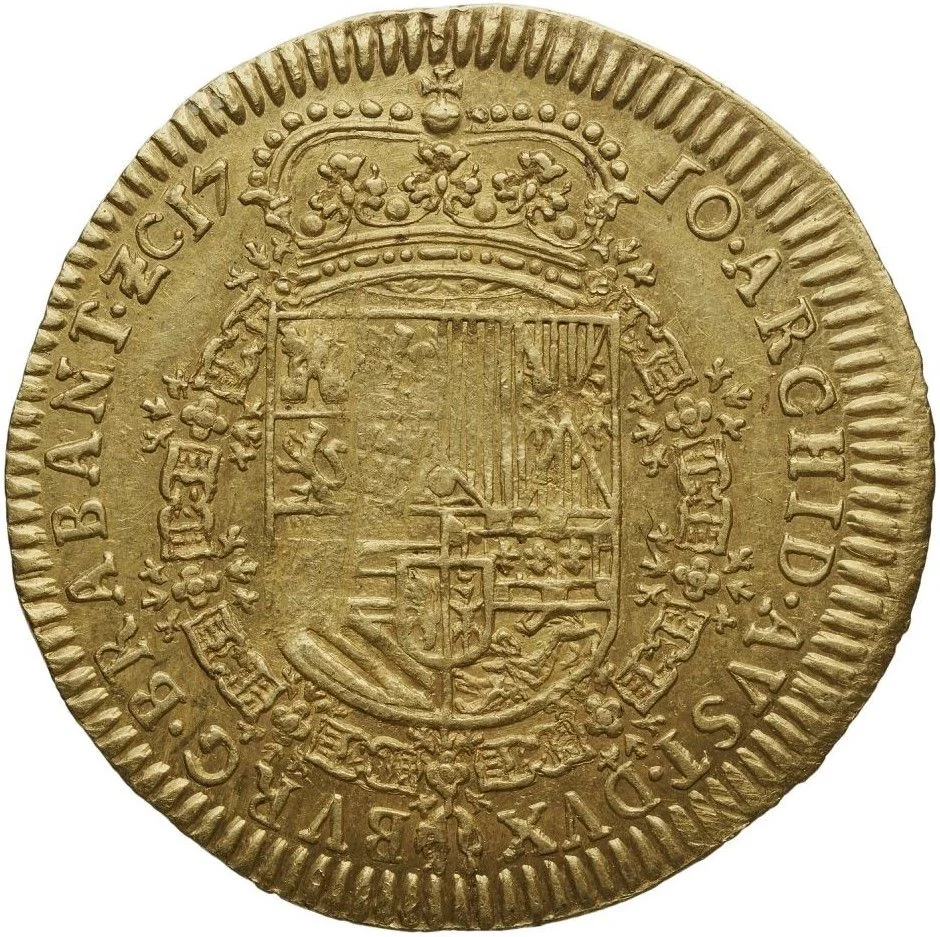
Crowned arms within Golden Fleece chain, date above.
Inscription:
ARCHID • AVST • DVX • BVRG • BRABANT • Zc 17 10
Script: Latin
Edge
Mints
| Name | Mark |
|---|---|
| Antwerp | Hand |
Mintings
| Year | Mint Mark | Mintage | Quality | Collection |
|---|---|---|---|---|
| 1710 | — | 2,350 |
Historical background
In 1710, the Spanish Netherlands was in a state of profound monetary disorder, a direct consequence of the ongoing War of the Spanish Succession (1701-1714). The region, a crucial battleground between the Franco-Spanish alliance and the Grand Alliance led by Britain and the Dutch Republic, suffered from severe economic strain. Military expenditures were colossal, and the competing armies often financed themselves by extracting contributions from the local population, draining the economy of specie (gold and silver coin). This scarcity of precious metals created a vacuum filled by a chaotic mix of debased and foreign currencies.
The currency system itself had become a bewildering patchwork. The official unit of account was the florin or guilder, but in practice, a multitude of physical coins circulated. These included not only clipped and worn domestic issues but also French louis d'or, Dutch ducatons, and German thalers, all valued at fluctuating and often arbitrary exchange rates set by local authorities. The Spanish government, desperate for revenue, repeatedly authorized the minting of low-quality, overvalued coinage, such as the patagon, which drove sound money out of circulation according to Gresham's Law. This debasement eroded public trust and caused rampant price inflation, crippling daily commerce.
Attempts at regulation were largely futile. While the Habsburg authorities in Brussels issued ordinances to fix exchange rates and prohibit the circulation of certain foreign coins, these edicts were impossible to enforce uniformly across a war-torn landscape. Merchants and money-changers operated in a climate of uncertainty, and the general population bore the brunt of the instability through unpredictable prices and the diminished purchasing power of their wages. Thus, in 1710, the currency situation was less a unified system and more a symptom of the broader political and military collapse, reflecting a territory stripped of its wealth and awaiting a decisive political settlement to restore monetary order.
The currency system itself had become a bewildering patchwork. The official unit of account was the florin or guilder, but in practice, a multitude of physical coins circulated. These included not only clipped and worn domestic issues but also French louis d'or, Dutch ducatons, and German thalers, all valued at fluctuating and often arbitrary exchange rates set by local authorities. The Spanish government, desperate for revenue, repeatedly authorized the minting of low-quality, overvalued coinage, such as the patagon, which drove sound money out of circulation according to Gresham's Law. This debasement eroded public trust and caused rampant price inflation, crippling daily commerce.
Attempts at regulation were largely futile. While the Habsburg authorities in Brussels issued ordinances to fix exchange rates and prohibit the circulation of certain foreign coins, these edicts were impossible to enforce uniformly across a war-torn landscape. Merchants and money-changers operated in a climate of uncertainty, and the general population bore the brunt of the instability through unpredictable prices and the diminished purchasing power of their wages. Thus, in 1710, the currency situation was less a unified system and more a symptom of the broader political and military collapse, reflecting a territory stripped of its wealth and awaiting a decisive political settlement to restore monetary order.
✨ Legendary