

2000 réis – Portugal
Add to wishlist
Portugal
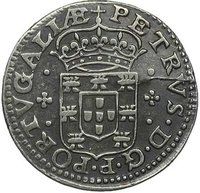
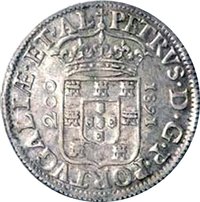
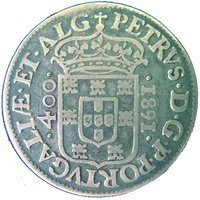
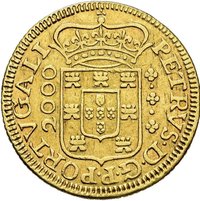
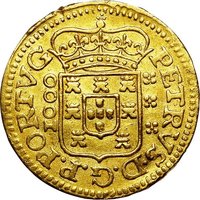
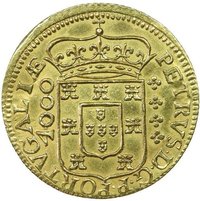
Obverse
Description:
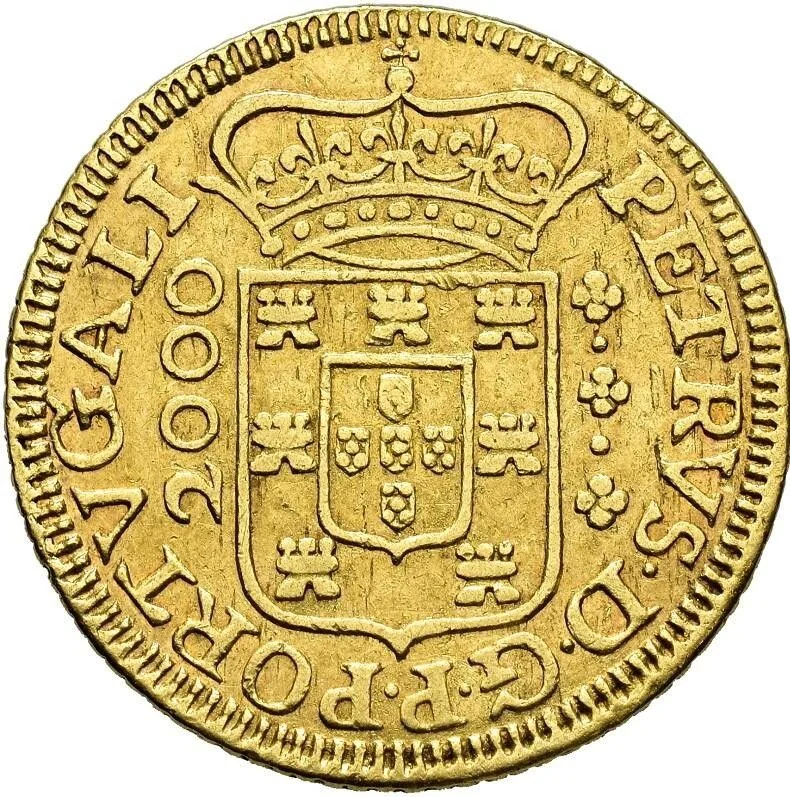
Portuguese coat of arms, value left.
Inscription:
PETRVS · D · G · P · PORTVGALI
2000
2000
Script: Latin
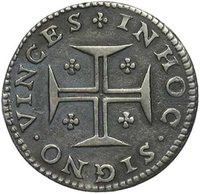
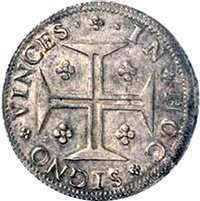
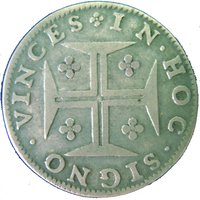
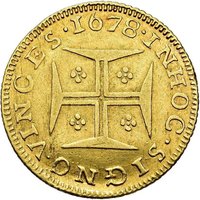
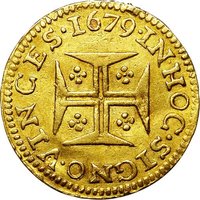
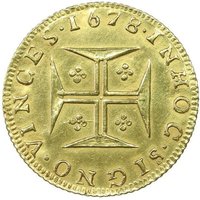
Reverse
Description:
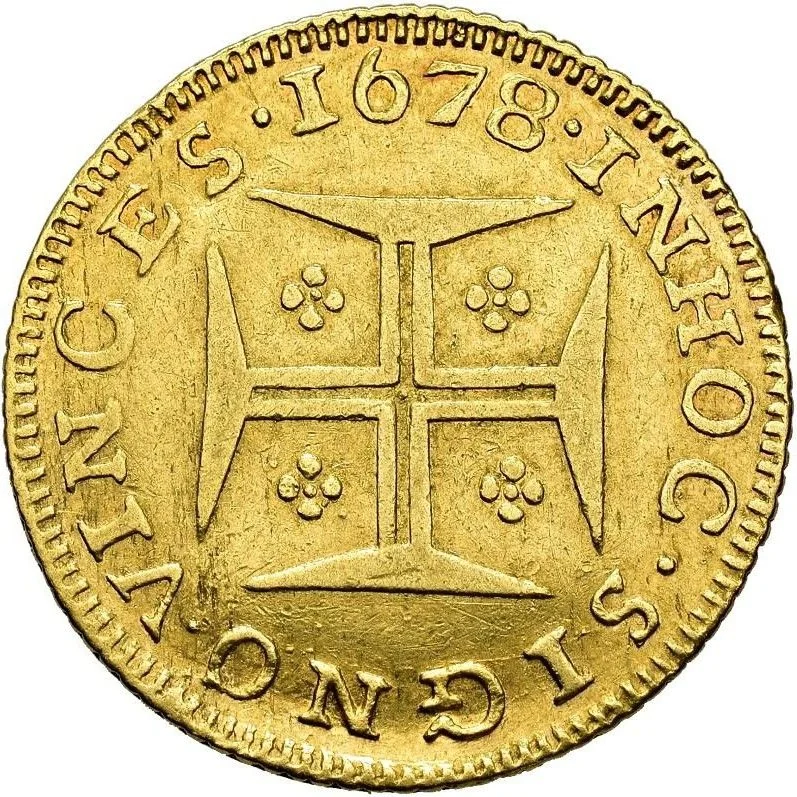
Voided cross pattée with corner crosslets.
Inscription:
IN · HOC · SIGNO · VINCES · 1681 ·
Script: Latin
Edge
Rope shaped
Mints
| Name | Mark |
|---|---|
| Imprensa Nacional - Casa da Moeda | — |
Mintings
| Year | Mint Mark | Mintage | Quality | Collection |
|---|---|---|---|---|
| 1677 | — | — | ||
| 1678 | — | — | ||
| 1680 | — | — | ||
| 1681 | — | — | ||
| 1682 | — | — |
Historical background
In 1677, Portugal's currency situation was defined by the profound monetary instability of the Cunho Velho (Old Coinage) period. The kingdom was still grappling with the severe economic and fiscal consequences of the Restoration War (1640-1668) against Spain, which had drained the treasury. To finance the conflict, the Crown, under King Afonso VI and the influential Count of Castelo Melhor, had heavily debased the silver real, reducing its precious metal content and causing rampant inflation. This period was marked by a chaotic circulation of coins of varying intrinsic values, both domestic and foreign, severely undermining public confidence in the currency and disrupting trade.
The primary response to this crisis was the ambitious monetary reform already being planned for 1688, known as the Cunho Novo (New Coinage). Therefore, 1677 represents a pivotal year in the lead-up to this reform, a moment of assessment and preparation. The government, increasingly under the influence of the future King Pedro II, recognized that restoring the currency's stability and credibility was essential for economic recovery and for financing Portugal's expanding global empire, particularly the wealth flowing from Brazilian gold, which was just beginning to arrive in significant quantities.
Consequently, the currency situation in 1677 was one of transition from crisis to managed reform. While inflation and monetary confusion persisted in daily transactions, the state was moving toward a definitive solution. The key challenge was to stabilize the value of money, curb inflation, and re-establish a reliable standard to facilitate commerce and state finance, setting the stage for the introduction of a new, stronger silver real that would define the Cunho Novo era.
The primary response to this crisis was the ambitious monetary reform already being planned for 1688, known as the Cunho Novo (New Coinage). Therefore, 1677 represents a pivotal year in the lead-up to this reform, a moment of assessment and preparation. The government, increasingly under the influence of the future King Pedro II, recognized that restoring the currency's stability and credibility was essential for economic recovery and for financing Portugal's expanding global empire, particularly the wealth flowing from Brazilian gold, which was just beginning to arrive in significant quantities.
Consequently, the currency situation in 1677 was one of transition from crisis to managed reform. While inflation and monetary confusion persisted in daily transactions, the state was moving toward a definitive solution. The key challenge was to stabilize the value of money, curb inflation, and re-establish a reliable standard to facilitate commerce and state finance, setting the stage for the introduction of a new, stronger silver real that would define the Cunho Novo era.
Series: 1677 Portugal circulation coins
✨ Legendary