

1 Rupee – Mughal Empire
India
Context
Years: 1603–1604
Country: India 
Issuer: Mughal Empire
Ruler: Akbar
Currency:
(1540—1842)
Demonetized: Yes
Material
Diameter: 20.28 mm
Weight: 11.37 g
Silver weight: 11.37 g
Shape: Irregular round
Composition: Silver
Magnetic: No
Technique: Hammered
References
KM: #Click to copy to clipboard94.3
Numista: #393374
Value
Bullion value: $33.04
Obverse
Description:
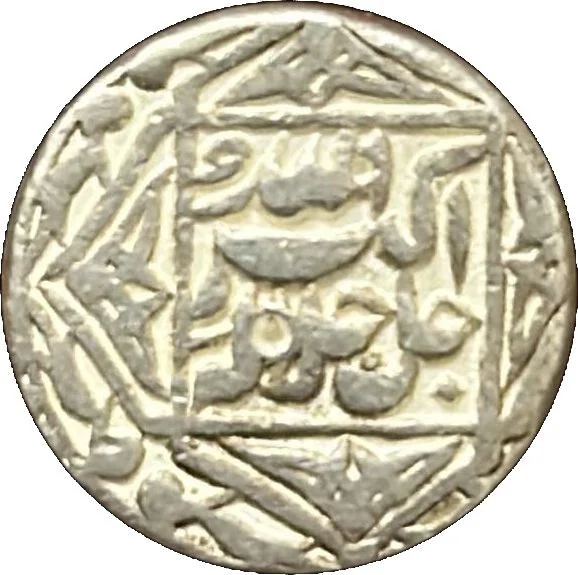
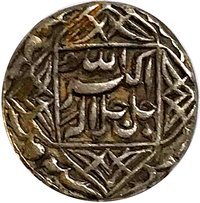
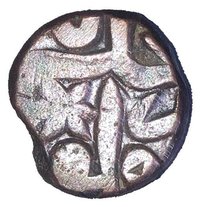
"Jalla Jalalahu Allahu Akbar" in a lozenge star.
Reverse
Description:
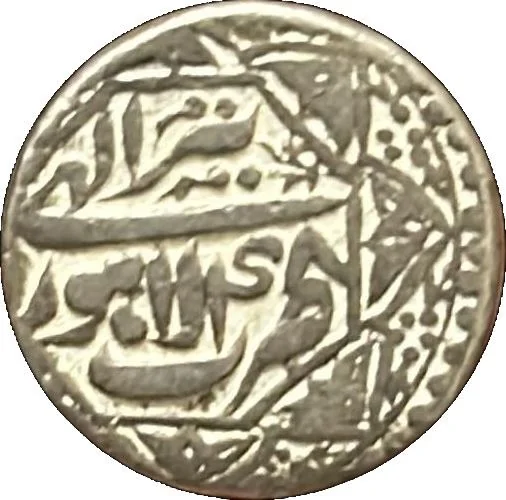
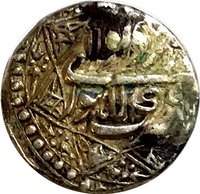
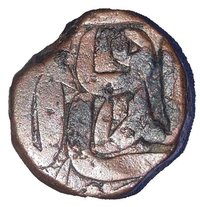
"Tir" (Persian month) above, "zarb Lahore" and "Elahi 48" below, within a lozenge star.
Edge
Mintings
| Year | Mint Mark | Mintage | Quality | Collection |
|---|---|---|---|---|
| — | — | — |
Historical background
In 1603, the Mughal Empire's currency system under Emperor Akbar was a sophisticated and highly regulated bimetallic standard, crucial for administering one of the world's largest and most prosperous economies. The primary units were the silver rupee (rupaya) and the gold mohur, with a vast array of copper dam coins forming the backbone of everyday small-scale trade and taxation. Akbar had implemented sweeping monetary reforms, centralizing mint operations and standardizing coin weights, designs, and purity across the empire to ensure uniformity and bolster state authority. The imperial mint towns (dar al-zarb) were strategic economic nodes, and the entire system was meticulously documented by the Darogha-i-Dak and other officials to prevent forgery and maintain fiscal control.
The currency was not merely economic but also a powerful tool of political propaganda and legitimacy. Akbar's coins, especially from this late period of his reign, often featured intricate calligraphy with his name, titles, and the Islamic calendar mint date, but notably excluded the traditional Kalima. This reflected his syncretic religious policies and assertion of temporal authority. The wide circulation of these coins, from Bengal to Kabul, facilitated not only immense land revenue (zabt) collections but also a thriving commercial economy, linking Indian markets to global trade networks. Merchants and the hundi (bills of exchange) system relied on the trusted uniformity of Mughal coinage.
However, the system faced underlying challenges. While stable in 1603, the empire's vast size meant that older regional coins sometimes remained in local circulation. Furthermore, the reliance on imported silver, particularly from the New World via European traders, introduced a vulnerability to external supply fluctuations. The death of Akbar in 1605 would soon test the system's resilience, as his successor Jahangir would begin to experiment more freely with coin shapes and imagery, shifting the monetary landscape. Thus, in 1603, the currency stood at a peak of imperial standardization, serving as both an economic engine and a symbol of Akbar's centralized power.
The currency was not merely economic but also a powerful tool of political propaganda and legitimacy. Akbar's coins, especially from this late period of his reign, often featured intricate calligraphy with his name, titles, and the Islamic calendar mint date, but notably excluded the traditional Kalima. This reflected his syncretic religious policies and assertion of temporal authority. The wide circulation of these coins, from Bengal to Kabul, facilitated not only immense land revenue (zabt) collections but also a thriving commercial economy, linking Indian markets to global trade networks. Merchants and the hundi (bills of exchange) system relied on the trusted uniformity of Mughal coinage.
However, the system faced underlying challenges. While stable in 1603, the empire's vast size meant that older regional coins sometimes remained in local circulation. Furthermore, the reliance on imported silver, particularly from the New World via European traders, introduced a vulnerability to external supply fluctuations. The death of Akbar in 1605 would soon test the system's resilience, as his successor Jahangir would begin to experiment more freely with coin shapes and imagery, shifting the monetary landscape. Thus, in 1603, the currency stood at a peak of imperial standardization, serving as both an economic engine and a symbol of Akbar's centralized power.
✨ Legendary