

1 Dam – Mughal Empire
India
Context
Years: 1604–1605
Country: India 
Issuer: Mughal Empire
Ruler: Akbar
Currency:
(1540—1842)
Demonetized: Yes
Material
References
KM: #Click to copy to clipboard32.13
Numista: #330726
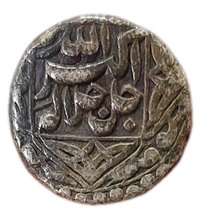
Obverse
Description:
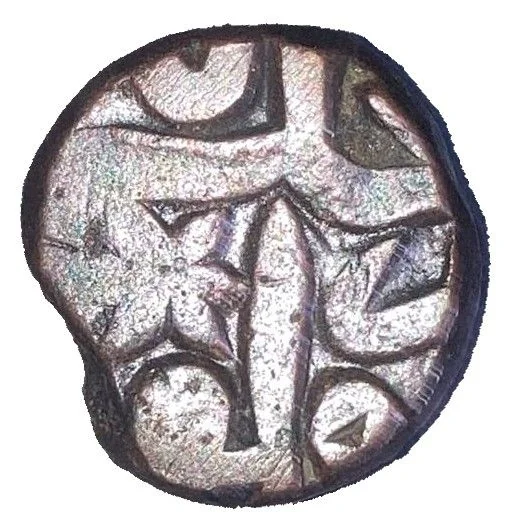
Tanka Akbar Shahi above, Gorakhpur mint symbol (six-pointed star) below, separated by a line.
Inscription:
دار الخلافت
ناصر الدین
ناصر الدین
Script: Arabic
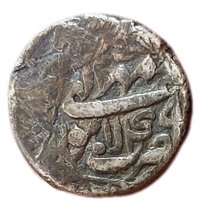
Reverse
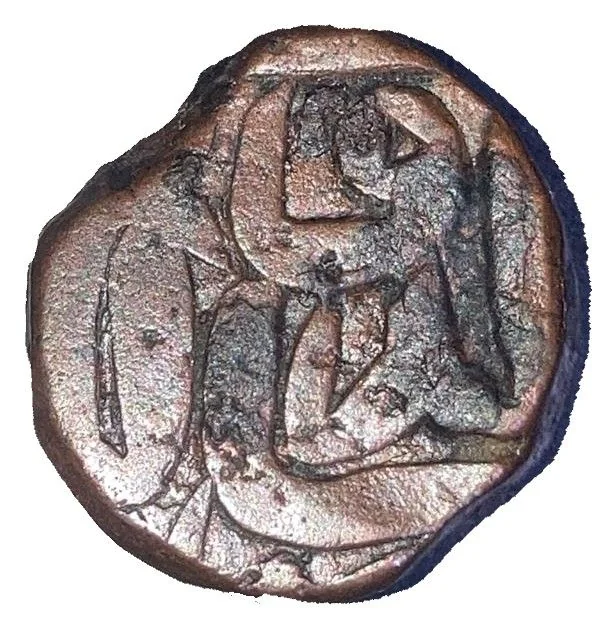
Description:
Year above, month below.
Script: Arabic
Edge
Plain (irregular)
Mintings
| Year | Mint Mark | Mintage | Quality | Collection |
|---|---|---|---|---|
| 1604 | — | — | ||
| 1605 | — | — |
Historical background
In 1604, the Mughal Empire under Emperor Jahangir enjoyed a remarkably stable and sophisticated monetary system, largely inherited and refined from his father, Akbar. The empire operated on a bimetallic standard, with the silver rupee and the gold mohur as the primary coins, alongside a vast array of copper dam used for smaller, everyday transactions. This tri-metallic hierarchy was effectively managed, with the rupee established as the principal unit of account for revenue assessment, trade, and imperial treasuries. The system's integrity was upheld through strict imperial control over mints (sikkas), standardized weights and purity, and the iconic Persian inscriptions that authenticated each coin, making Mughal currency highly trusted across South Asia and in Indian Ocean trade networks.
The year 1604 falls within a period of exceptional currency stability, as the empire reaped the economic benefits of Akbar's administrative reforms and territorial consolidation. The massive inflow of silver bullion, primarily from the New World via European trade, provided the essential metal to mint rupees in vast quantities, facilitating a commercial boom and a deepening cash economy. This liquidity allowed for the efficient collection of land revenue (zabt) in cash, which in turn funded the elaborate Mughal state apparatus and its monumental projects. The uniformity of the currency, circulated from mints in Lahore, Delhi, Ahmedabad, and elsewhere, knitted the vast empire into a cohesive economic zone.
However, this stability was not without underlying pressures. The empire's heavy reliance on imported silver made its currency vulnerable to global bullion flows, a dependency that would cause significant strain in later centuries. Furthermore, while the imperial coinage was supreme, older regional coinages and barter still persisted in remote areas. Jahangir, who would soon ascend the throne in 1605, would later indulge in issuing ornate commemorative coins with zodiacal motifs, but in 1604, the system remained fundamentally robust, pragmatic, and a key pillar of Mughal power, enabling both grand imperial patronage and the flourishing of markets, artisans, and merchants across the subcontinent.
The year 1604 falls within a period of exceptional currency stability, as the empire reaped the economic benefits of Akbar's administrative reforms and territorial consolidation. The massive inflow of silver bullion, primarily from the New World via European trade, provided the essential metal to mint rupees in vast quantities, facilitating a commercial boom and a deepening cash economy. This liquidity allowed for the efficient collection of land revenue (zabt) in cash, which in turn funded the elaborate Mughal state apparatus and its monumental projects. The uniformity of the currency, circulated from mints in Lahore, Delhi, Ahmedabad, and elsewhere, knitted the vast empire into a cohesive economic zone.
However, this stability was not without underlying pressures. The empire's heavy reliance on imported silver made its currency vulnerable to global bullion flows, a dependency that would cause significant strain in later centuries. Furthermore, while the imperial coinage was supreme, older regional coinages and barter still persisted in remote areas. Jahangir, who would soon ascend the throne in 1605, would later indulge in issuing ornate commemorative coins with zodiacal motifs, but in 1604, the system remained fundamentally robust, pragmatic, and a key pillar of Mughal power, enabling both grand imperial patronage and the flourishing of markets, artisans, and merchants across the subcontinent.
✨ Legendary