

½ real – Bolivia
Add to wishlist
Bolivia
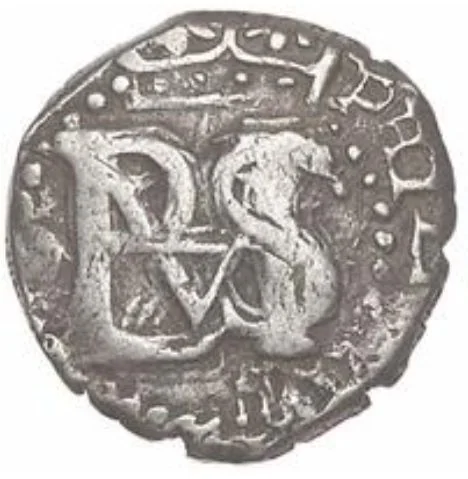
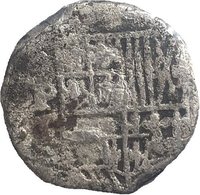
Obverse
Description:
Assayer's initials and mint mark left of monogram.
Inscription:
PHILIPPVS III DG
Script: Latin
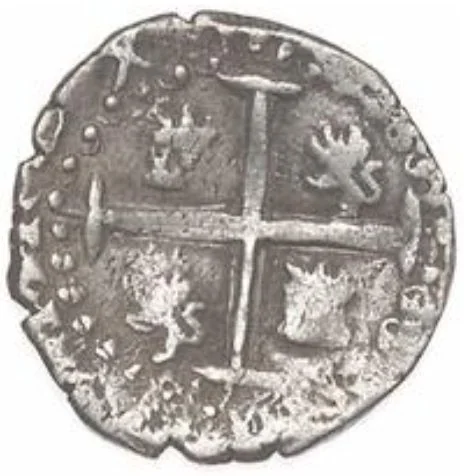
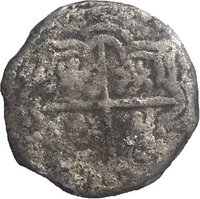
Reverse
Description:
Spanish coat of arms featuring the Jerusalem cross.
Edge
Mints
| Name | Mark |
|---|---|
| Potosi | P |
Mintings
| Year | Mint Mark | Mintage | Quality | Collection |
|---|---|---|---|---|
| — | P | — |
Historical background
In 1603, Bolivia, then known as the colonial Audiencia of Charcas within the Viceroyalty of Peru, was at the heart of a profound monetary transformation driven by the Spanish Empire. The discovery of the Cerro Rico mountain at Potosí in 1545 had unleashed a flood of silver that reshaped the global economy. By the turn of the 17th century, Potosí was the world's largest silver producer, and its mint, the Casa de la Moneda (established in 1572), was the epicenter of coinage for the Spanish realm. The primary currency being produced was the silver real, with eight reales making the famous "piece of eight" (real de a ocho), a coin that would become a de facto global currency.
The currency situation was, however, fraught with systemic issues. A significant problem was the widespread practice of debasement and clipping. To maximize profit, silver was often alloyed with less valuable metals before coining, and the edges of coins were shaved off for their precious metal content, undermining trust in their stated value. Furthermore, the sheer volume of silver flowing to Spain and across the Pacific via the Manila Galleon created persistent local shortages of circulating coinage within Charcas itself. This led to a dual economy where official Spanish coinage coexisted with a vibrant system of barter and the continued use of indigenous commodities like coca leaves and textiles for local and regional trade.
Administratively, the Spanish Crown was attempting to assert greater control. The year 1603 fell within a period of attempted monetary reform following the ordinances of King Philip II. Authorities grappled with enforcing standards at the mint, combating fraud, and managing the economic distortions caused by Potosí's immense wealth. Thus, the currency situation was one of immense global importance coupled with local instability, defined by the tension between the colony's role as a monetary powerhouse and the practical challenges of maintaining a sound and trustworthy medium of exchange in its own territory.
The currency situation was, however, fraught with systemic issues. A significant problem was the widespread practice of debasement and clipping. To maximize profit, silver was often alloyed with less valuable metals before coining, and the edges of coins were shaved off for their precious metal content, undermining trust in their stated value. Furthermore, the sheer volume of silver flowing to Spain and across the Pacific via the Manila Galleon created persistent local shortages of circulating coinage within Charcas itself. This led to a dual economy where official Spanish coinage coexisted with a vibrant system of barter and the continued use of indigenous commodities like coca leaves and textiles for local and regional trade.
Administratively, the Spanish Crown was attempting to assert greater control. The year 1603 fell within a period of attempted monetary reform following the ordinances of King Philip II. Authorities grappled with enforcing standards at the mint, combating fraud, and managing the economic distortions caused by Potosí's immense wealth. Thus, the currency situation was one of immense global importance coupled with local instability, defined by the tension between the colony's role as a monetary powerhouse and the practical challenges of maintaining a sound and trustworthy medium of exchange in its own territory.
✨ Legendary