

½ Portugaloser – Denmark
Denmark
Context
Years: 1653–1661
Issuer: Denmark 
Ruler: Frederick III
Currency:
(1625—1813)
Subdivision: ½ Portugaloser = 5 Ducat
Demonetized: Yes
Material
References
KM: #Click to copy to clipboardPn10
Numista: #386549
Value
Bullion value: $2874.90
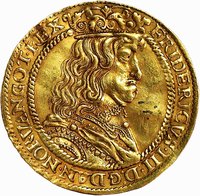
Obverse
Description:
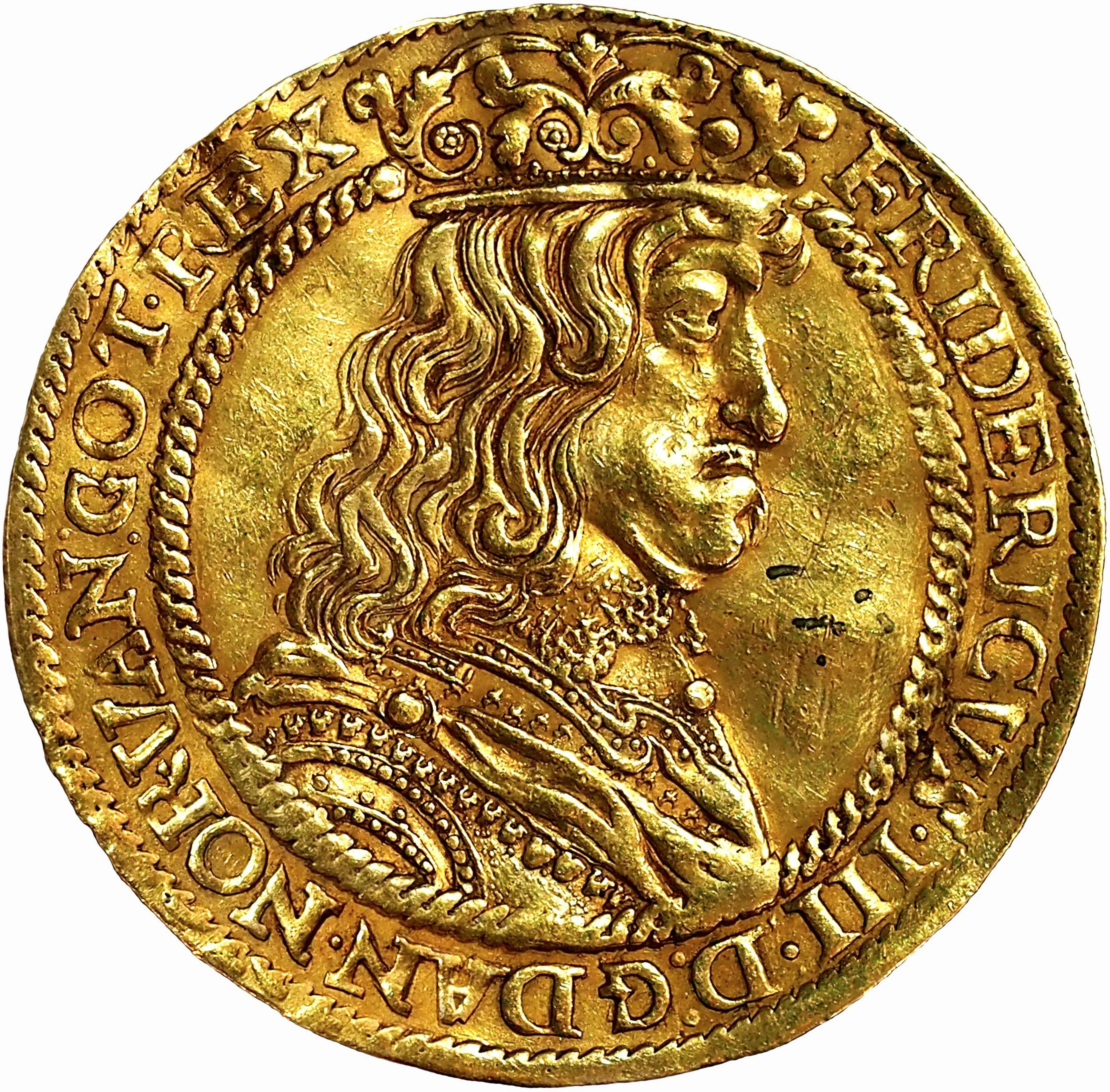
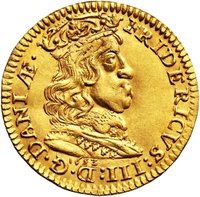
King’s armored bust with long hair, facing right within a rope circle touching his crown. Outer legend.
Inscription:
FRIDERICVS • III • D : GDAN • NOR • VAN : GOT • REX
Script: Latin
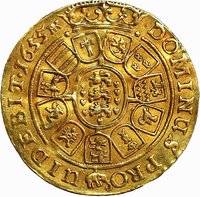
Reverse
Description:
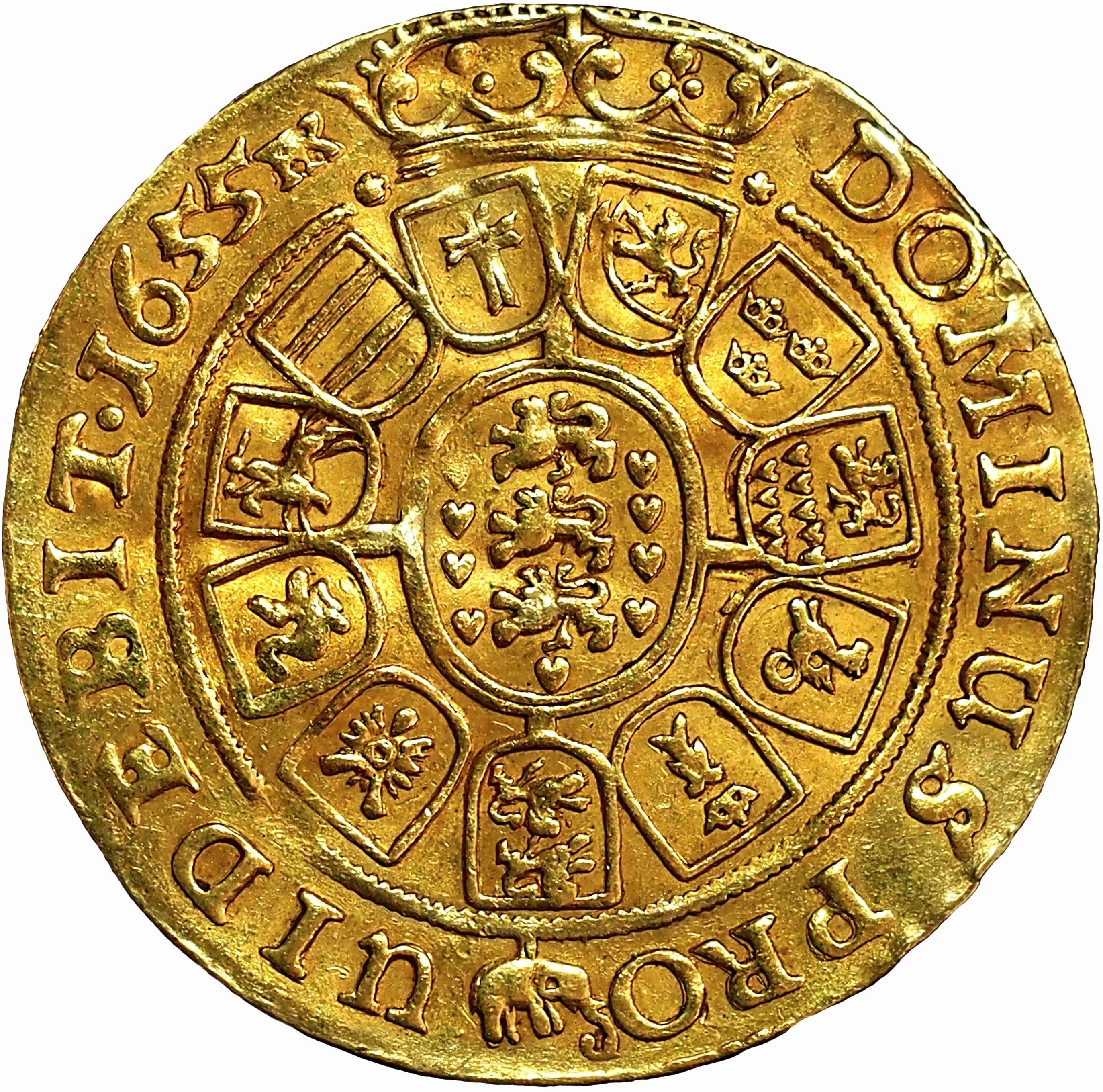
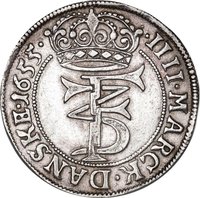
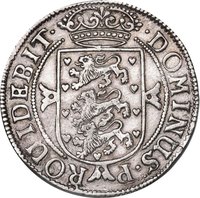
Denmark's arms at center, encircled by eleven provincial shields. Above, the Danish Crown rests on a rope encircling the shields, from which hangs the Order of the Elephant. Date and mintmark conclude the legend.
Inscription:
DOMINUS PRO UIDEBIT • 1655 HK
Script: Latin
Edge
Mints
| Name | Mark |
|---|---|
| Copenhagen | HK |
Mintings
| Year | Mint Mark | Mintage | Quality | Collection |
|---|---|---|---|---|
| 1653 | — | — | ||
| 1655 | — | — | ||
| 1656 | — | — | ||
| 1657 | — | — | ||
| 1661 | — | — |
Historical background
In 1653, Denmark operated under a bimetallic monetary system, a legacy of the 1625 ordinance that established both silver rigsdaler and copper dalen as official currencies. However, the system was under significant strain. The Thirty Years' War (1618-1648) had severely depleted the royal treasury, leading King Frederik III's government to engage in repeated currency debasements. By lowering the silver content in coins while maintaining their face value, the crown sought to generate short-term revenue, but this eroded public trust and sparked inflation, harming both commerce and ordinary citizens.
The situation was further complicated by the widespread circulation of foreign coins, particularly German and Dutch, which were often of more reliable weight and purity than the debased domestic issues. This led to Gresham's Law in practice, where "bad money drives out good"; people hoarded the older, full-value Danish coins and foreign specie, using the poorer new coins for daily transactions. The result was a chaotic and inefficient market where the actual value of a coin depended heavily on its minting date and origin, hindering trade and economic stability.
This monetary instability occurred against a backdrop of deepening political and financial crisis for the Danish monarchy. The costly wars and the crown's growing debts would culminate just a few years later, in 1660, in a dramatic political revolution where the estates, frustrated by the economic mismanagement, would nonetheless grant Frederik III absolute power. The chaotic currency situation of 1653 was thus a key symptom of the broader state crisis that ultimately transformed Denmark from an elective monarchy into an absolute monarchy.
The situation was further complicated by the widespread circulation of foreign coins, particularly German and Dutch, which were often of more reliable weight and purity than the debased domestic issues. This led to Gresham's Law in practice, where "bad money drives out good"; people hoarded the older, full-value Danish coins and foreign specie, using the poorer new coins for daily transactions. The result was a chaotic and inefficient market where the actual value of a coin depended heavily on its minting date and origin, hindering trade and economic stability.
This monetary instability occurred against a backdrop of deepening political and financial crisis for the Danish monarchy. The costly wars and the crown's growing debts would culminate just a few years later, in 1660, in a dramatic political revolution where the estates, frustrated by the economic mismanagement, would nonetheless grant Frederik III absolute power. The chaotic currency situation of 1653 was thus a key symptom of the broader state crisis that ultimately transformed Denmark from an elective monarchy into an absolute monarchy.
Series: 1653 Denmark circulation coins
✨ Legendary