

5 réis – Azores
Add to wishlist
Portugal
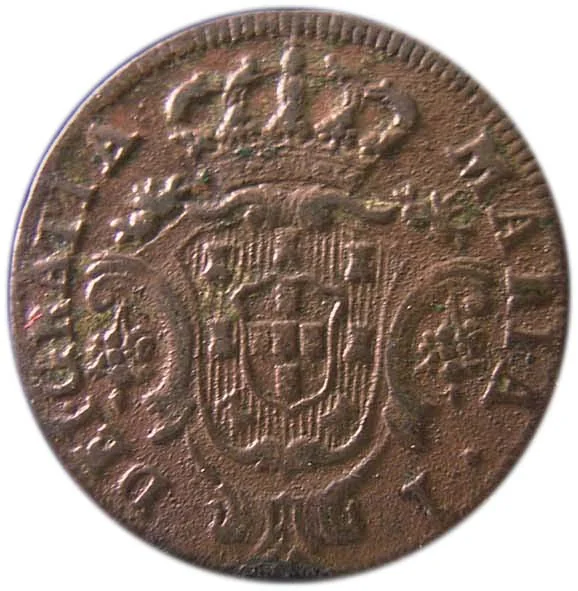
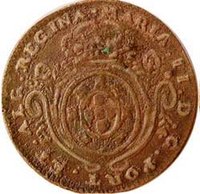
Obverse
Inscription:
MARIA . I DEI . GRATIA
Script: Latin
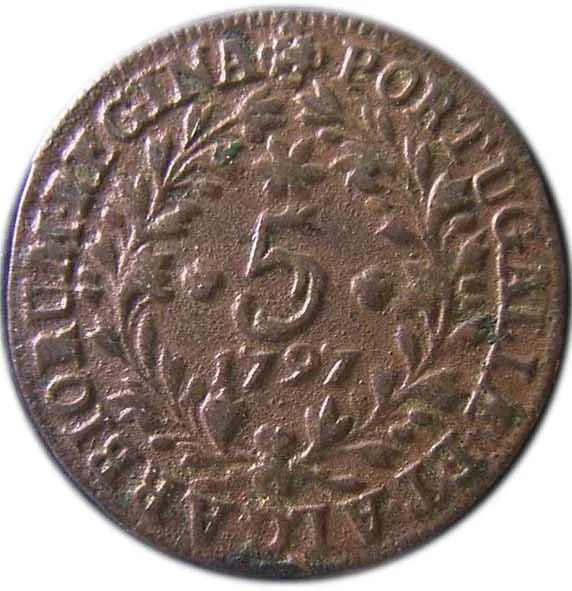
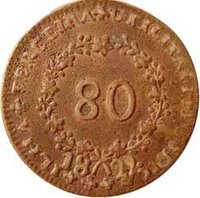
Reverse
Inscription:
PORTUGALIÆ ET ALGARBIORUM REGINA
5/1797
5/1797
Script: Latin
Edge
Categories
| Symbols> Coat of Arms |
Mintings
| Year | Mint Mark | Mintage | Quality | Collection |
|---|---|---|---|---|
| 1795 | — | 300,788 | ||
| 1797 | — | — | ||
| 1798 | — | — |
Historical background
In 1795, the Azores archipelago operated under the complex and often strained monetary system of the Portuguese Empire. The official currency was the Portuguese real (plural: réis), a system of account that was chronically unstable due to centuries of royal debasement and a severe shortage of physical coinage, especially in remote provinces like the Azores. This scarcity was exacerbated by the islands' geographic isolation and their role as a mid-Atlantic waystation, which saw many foreign coins—particularly Spanish pieces of eight, British guineas, and Brazilian gold coins—circulate unofficially to facilitate trade and supply visiting ships.
The local economy, heavily dependent on agriculture (wine, wheat, and dyestuffs) and its strategic position for Atlantic shipping, suffered from this unreliable currency. Merchants and farmers faced difficulties in transacting business, as the value and authenticity of the mixed coins in circulation were constantly in question. The problem was so acute that regional authorities and commercial councils often had to set ad-hoc exchange rates for the various foreign coins, and there are records of local entities issuing token currency or promissory notes to lubricate commerce within the islands themselves.
This monetary confusion unfolded against a backdrop of wider imperial crisis. Portugal, under Queen Maria I (whose regent was Prince John due to her illness), was deeply entangled in the Napoleonic Wars, aligning with Britain. The Azores, a key naval outpost, felt the economic pressures of war, including privateering and disrupted trade routes, which further strained its fragile currency system. The situation would only begin to find resolution years later, after the Portuguese court's flight to Brazil in 1807-1808, which shifted imperial financial policies and eventually led to more structured monetary reforms.
The local economy, heavily dependent on agriculture (wine, wheat, and dyestuffs) and its strategic position for Atlantic shipping, suffered from this unreliable currency. Merchants and farmers faced difficulties in transacting business, as the value and authenticity of the mixed coins in circulation were constantly in question. The problem was so acute that regional authorities and commercial councils often had to set ad-hoc exchange rates for the various foreign coins, and there are records of local entities issuing token currency or promissory notes to lubricate commerce within the islands themselves.
This monetary confusion unfolded against a backdrop of wider imperial crisis. Portugal, under Queen Maria I (whose regent was Prince John due to her illness), was deeply entangled in the Napoleonic Wars, aligning with Britain. The Azores, a key naval outpost, felt the economic pressures of war, including privateering and disrupted trade routes, which further strained its fragile currency system. The situation would only begin to find resolution years later, after the Portuguese court's flight to Brazil in 1807-1808, which shifted imperial financial policies and eventually led to more structured monetary reforms.
⭐ Somewhat Rare