

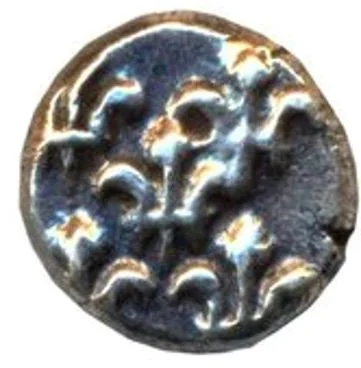
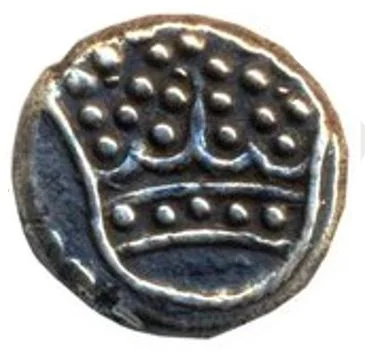
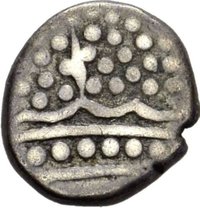
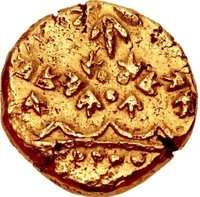
Obverse
Description:
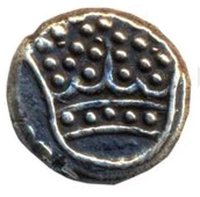
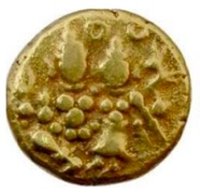
Pearled tiara.
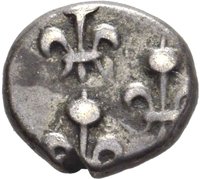
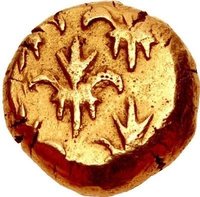
Reverse
Description:
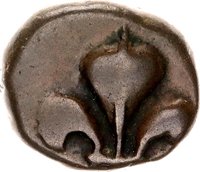
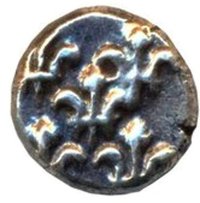
Five fleurs-de-lis.
Edge
Mintings
| Year | Mint Mark | Mintage | Quality | Collection |
|---|---|---|---|---|
| — | — | — |
Historical background
In 1715, Puducherry (then known as Pondicherry) was a burgeoning French colonial enclave on the Coromandel Coast, and its currency situation was a complex tapestry of local and international mediums of exchange. The French East India Company, which administered the settlement, operated within a vibrant South Indian economy dominated by the gold pagoda and the silver fanam. However, the primary official currency for major Company transactions and trade with Europe was the French livre, though its physical presence in the form of coinage was limited. The Company's own trade was heavily conducted through bills of exchange and accountancy in livres, creating a dual monetary system.
In daily commerce, the reality was a bazaar economy saturated with a variety of physical currencies. Alongside the ubiquitous Mughal silver rupees (from the north) and the Arcot rupees (struck by the Nawabs of the Carnatic), a multitude of South Indian gold pagodas and their fractional fanams circulated freely. Spanish silver dollars (pieces of eight) and other European trade coins also flowed through the port, used in regional maritime trade. This created a constant need for money changers (shroffs), who were essential for assessing the weight, purity, and complex exchange rates between these coins.
The French authorities, seeking to impose order and fiscal control, attempted to standardize this chaos by issuing official exchange rates (tariffs) that fixed the value of the livre against the local pagoda and rupee. These proclamations, however, often struggled against market forces. The intrinsic value of silver and gold in the coins themselves, their physical condition, and regional demand frequently dictated actual value more than colonial decree. Thus, in 1715, Puducherry’s currency landscape was one of pragmatic hybridity: a European accounting system layered uneasily atop a deeply rooted and diverse Indian monetary ecosystem, with the shroff’s scales being the final arbiter of most transactions.
In daily commerce, the reality was a bazaar economy saturated with a variety of physical currencies. Alongside the ubiquitous Mughal silver rupees (from the north) and the Arcot rupees (struck by the Nawabs of the Carnatic), a multitude of South Indian gold pagodas and their fractional fanams circulated freely. Spanish silver dollars (pieces of eight) and other European trade coins also flowed through the port, used in regional maritime trade. This created a constant need for money changers (shroffs), who were essential for assessing the weight, purity, and complex exchange rates between these coins.
The French authorities, seeking to impose order and fiscal control, attempted to standardize this chaos by issuing official exchange rates (tariffs) that fixed the value of the livre against the local pagoda and rupee. These proclamations, however, often struggled against market forces. The intrinsic value of silver and gold in the coins themselves, their physical condition, and regional demand frequently dictated actual value more than colonial decree. Thus, in 1715, Puducherry’s currency landscape was one of pragmatic hybridity: a European accounting system layered uneasily atop a deeply rooted and diverse Indian monetary ecosystem, with the shroff’s scales being the final arbiter of most transactions.

✨ Legendary