

10 Soldi – Venice
Italy

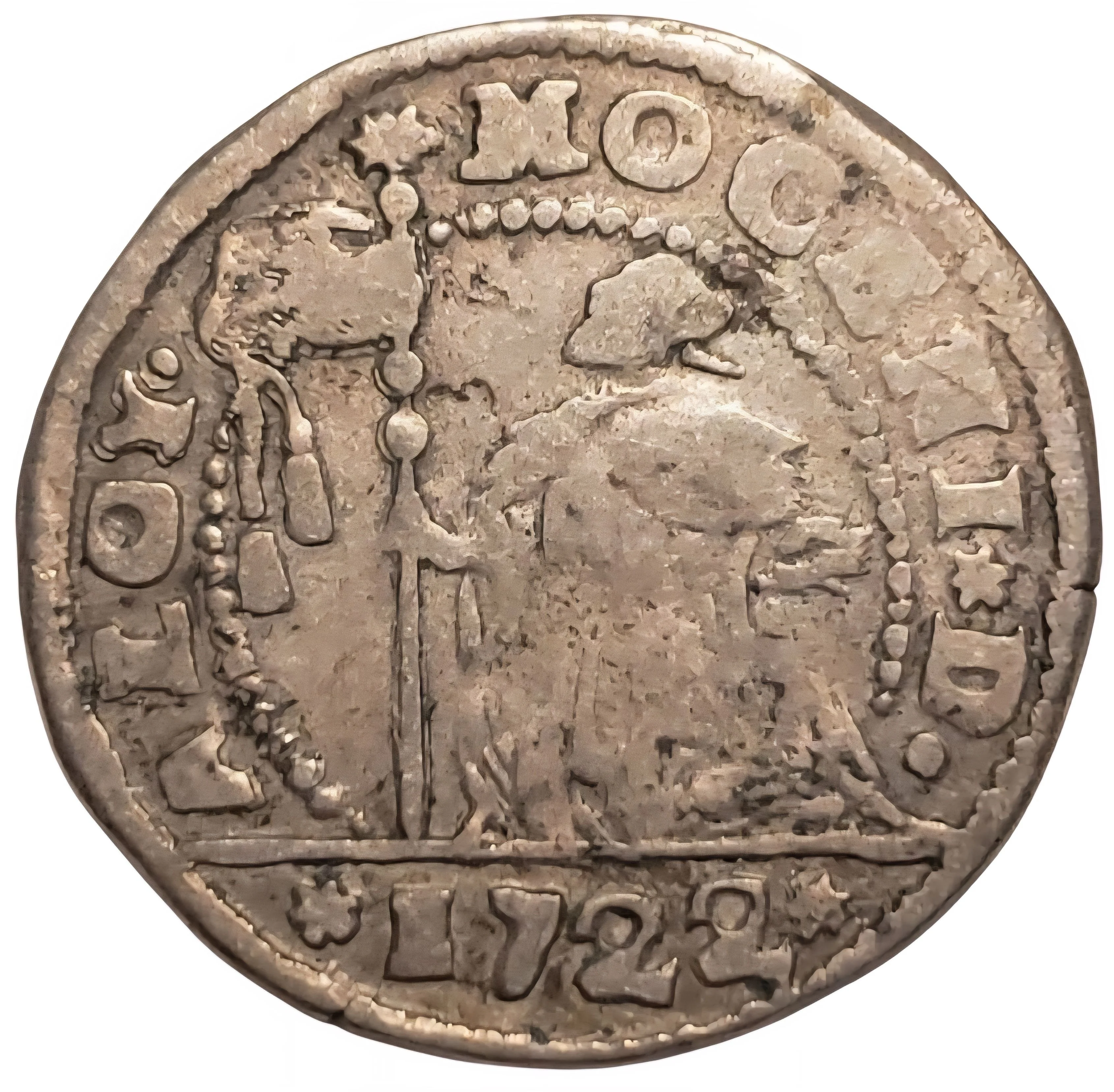
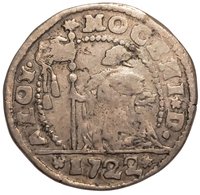
Obverse
Description:
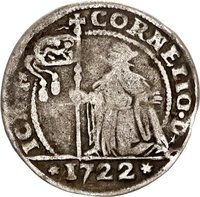
Kneeling Doge holding cross-topped staff with pennant; date below.
Inscription:
ALOY· MOCENI·D·
1722
1722
Script: Latin
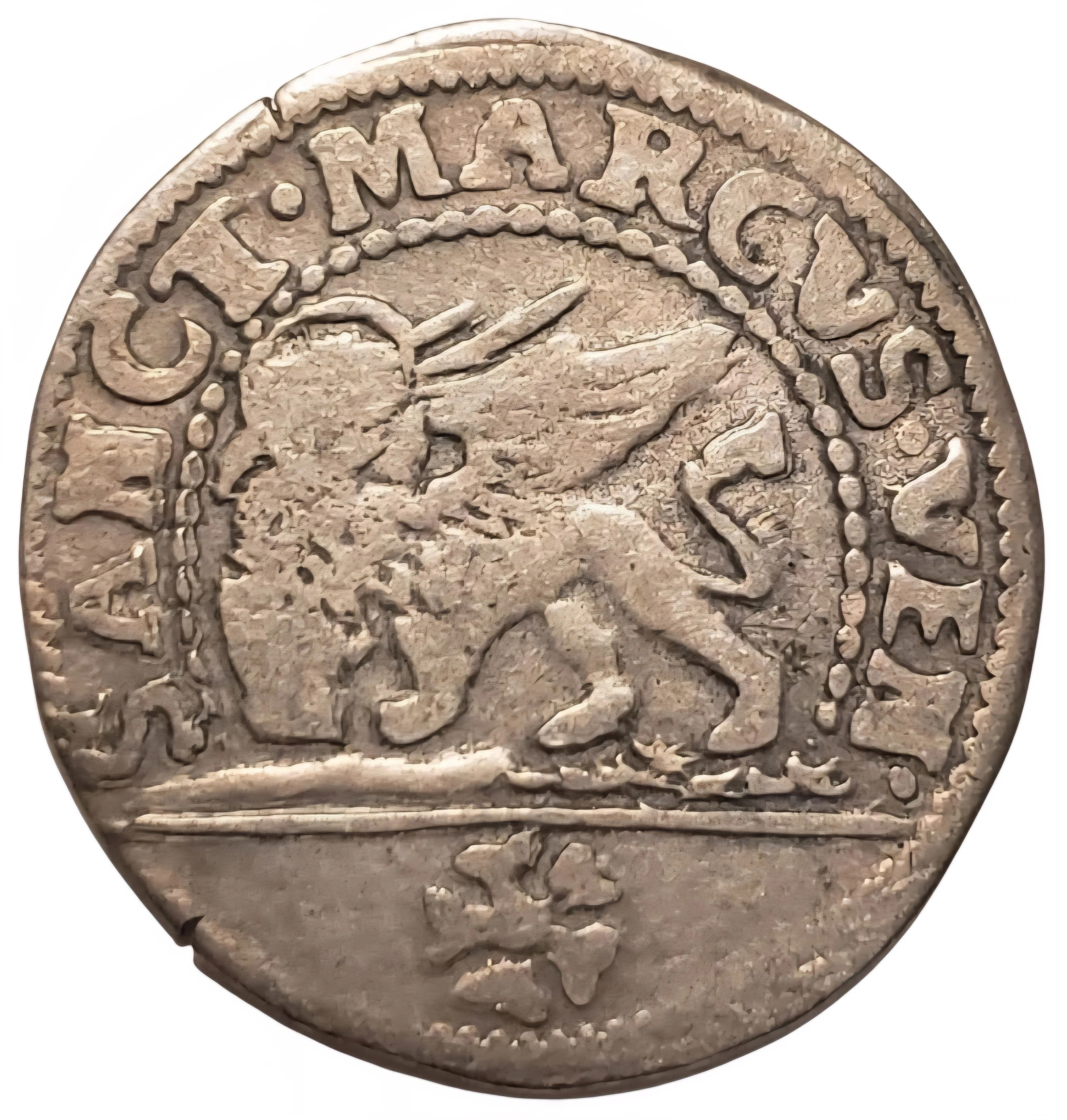
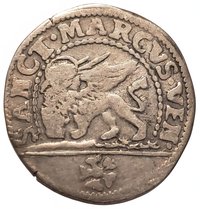
Reverse
Description:
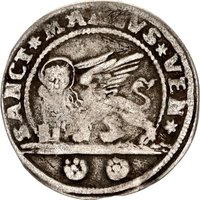
Lion of St. Mark striding left, facing forward, rose below.
Inscription:
SANCT·MARCVS·VEN·
Script: Latin
Edge
Mints
| Name | Mark |
|---|---|
| Venice | — |
Mintings
| Year | Mint Mark | Mintage | Quality | Collection |
|---|---|---|---|---|
| 1722 | — | — |
Historical background
In 1722, Venice found itself in a precarious monetary situation, a legacy of its long and costly wars against the Ottoman Empire throughout the previous century. The state treasury was severely depleted, and the Republic’s traditional trade dominance in the Mediterranean had been eroded by Atlantic powers like England and the Netherlands. To finance its deficits, the government had repeatedly resorted to debasing its silver-based coinage, the lira, by reducing its precious metal content. This created a chaotic system where older, purer coins were hoarded or exported for their intrinsic metal value, while the newer, weaker coins circulated at a forced official value that did not reflect their true worth.
This environment led to a damaging phenomenon known as "corso forzoso," or forced currency, where the state-mandated value of coins exceeded their market value as bullion. The result was a severe loss of public confidence in the currency, price inflation, and a thriving black market for foreign and older Venetian coins. Merchants and citizens alike struggled with the instability, as the disconnect between official and market exchange rates complicated both daily transactions and international commerce. The zecchino, Venice’s renowned gold coin, remained a trusted international store of value, but its scarcity and high value made it unsuitable for everyday use.
Facing this crisis, the Venetian Senate engaged in continuous, often contentious, debates throughout the early 18th century. The fundamental dilemma was whether to restore a sound silver currency—a costly undertaking requiring substantial bullion reserves the treasury lacked—or to continue managing the fragile system of fiduciary money. By 1722, no decisive reform had been implemented, leaving the economy in a state of fragile monetary uncertainty that mirrored the Republic’s broader political and economic decline on the European stage.
This environment led to a damaging phenomenon known as "corso forzoso," or forced currency, where the state-mandated value of coins exceeded their market value as bullion. The result was a severe loss of public confidence in the currency, price inflation, and a thriving black market for foreign and older Venetian coins. Merchants and citizens alike struggled with the instability, as the disconnect between official and market exchange rates complicated both daily transactions and international commerce. The zecchino, Venice’s renowned gold coin, remained a trusted international store of value, but its scarcity and high value made it unsuitable for everyday use.
Facing this crisis, the Venetian Senate engaged in continuous, often contentious, debates throughout the early 18th century. The fundamental dilemma was whether to restore a sound silver currency—a costly undertaking requiring substantial bullion reserves the treasury lacked—or to continue managing the fragile system of fiduciary money. By 1722, no decisive reform had been implemented, leaving the economy in a state of fragile monetary uncertainty that mirrored the Republic’s broader political and economic decline on the European stage.
💎 Extremely Rare