

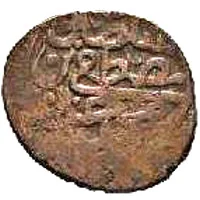
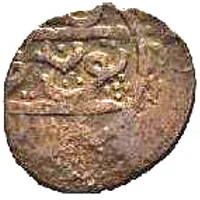
3 Qafsi – Eyalet of Tunis
Tunisia
Context
Years: 1701–1704
Country: Tunisia 
Issuer: Eyalet of Tunis
Ruler: Mustafa II
Currency:
(1567—1891)
Demonetized: Yes
Material
References
KM: #Click to copy to clipboard30
Numista: #113035
Obverse
Reverse
Edge
Mintings
| Year | Mint Mark | Mintage | Quality | Collection |
|---|---|---|---|---|
| 1701 | — | — | ||
| 1703 | — | — | ||
| 1704 | — | — |
Historical background
In 1701, the currency situation in the Eyalet of Tunis was characterized by significant instability and complexity, a direct result of its position within the weakening Ottoman Empire and its intense integration into Mediterranean trade networks. The local economy operated on a bimetallic system, heavily reliant on both Ottoman-issued silver akçe and Spanish silver pieces of eight (reales), the latter flowing in from European commerce and Barbary Coast privateering. However, the chronic debasement of Ottoman coinage by the Porte, a common practice to finance its wars, caused the nominal value of coins to diverge sharply from their intrinsic metal content, leading to frequent monetary confusion and loss of confidence.
This instability was exacerbated by the autonomous power of the Tunisian Muradid Beys (1666-1702), who, while nominally Ottoman governors, exercised considerable control over local minting. The Beys attempted to manage the crisis by striking their own copper fals and silver mahbub coins, but these often failed to gain trust beyond regional borders and could not stem the tide of fluctuating foreign currencies. Furthermore, a severe shortage of small-change copper coins for daily transactions crippled local markets, creating hardship for the common population while merchants and corsairs dealt in more stable foreign silver.
Consequently, the monetary landscape was a fragmented and unpredictable patchwork. Markets in Tunis, Porto Farina, and other trading hubs saw simultaneous circulation of Ottoman, local, and various European coins, their exchange rates shifting with political events and the arrival of foreign merchant ships. This environment of competitive currencies and debasement hindered long-term economic planning, encouraged hoarding of sound money, and reflected the broader political duality of the Eyalet—caught between Ottoman sovereignty and its de facto autonomous, corsair-driven economy.
This instability was exacerbated by the autonomous power of the Tunisian Muradid Beys (1666-1702), who, while nominally Ottoman governors, exercised considerable control over local minting. The Beys attempted to manage the crisis by striking their own copper fals and silver mahbub coins, but these often failed to gain trust beyond regional borders and could not stem the tide of fluctuating foreign currencies. Furthermore, a severe shortage of small-change copper coins for daily transactions crippled local markets, creating hardship for the common population while merchants and corsairs dealt in more stable foreign silver.
Consequently, the monetary landscape was a fragmented and unpredictable patchwork. Markets in Tunis, Porto Farina, and other trading hubs saw simultaneous circulation of Ottoman, local, and various European coins, their exchange rates shifting with political events and the arrival of foreign merchant ships. This environment of competitive currencies and debasement hindered long-term economic planning, encouraged hoarding of sound money, and reflected the broader political duality of the Eyalet—caught between Ottoman sovereignty and its de facto autonomous, corsair-driven economy.

✨ Legendary