

1 Piastra – Papal States
Circulating commemorative coins
Commemoration: War of the Spanish Succession
Vatican City
Context
Year: 1707
Country: Vatican City 
Issuer: Papal States
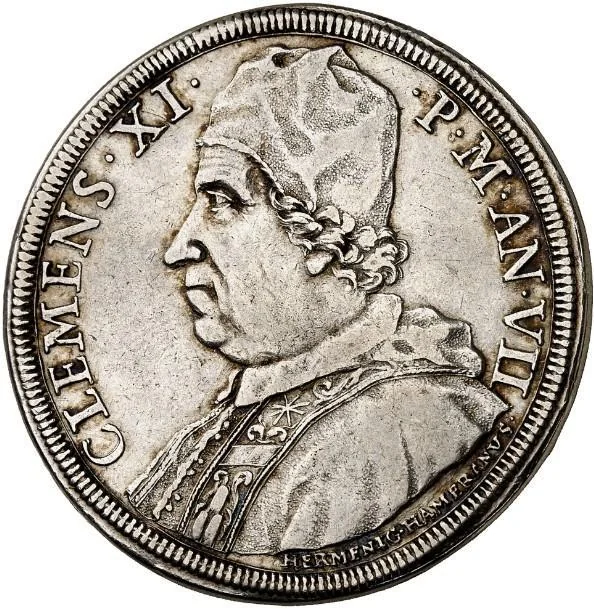
Ruler: Clement XI
Currency:
(1534—1835)
Demonetized: Yes
Material
References
KM: #Click to copy to clipboard700
Numista: #113004
Value
Bullion value: $82.75
Obverse
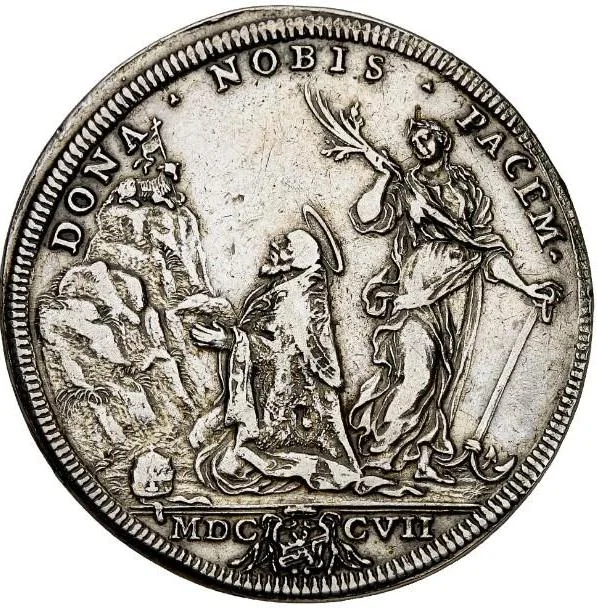
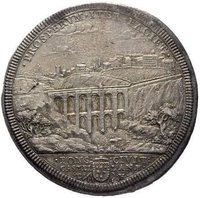
Reverse
Description:
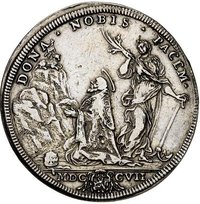
St. Clement kneeling before the Agnus Dei, with Peace standing.
Inscription:
DONA · NOBIS · FACEM ·
MDC CVII
MDC CVII
Script: Latin
Edge
Plain
Mints
| Name | Mark |
|---|---|
| Rome | — |
Mintings
| Year | Mint Mark | Mintage | Quality | Collection |
|---|---|---|---|---|
| 1707 | — | — |
Historical background
In 1707, the Papal States found themselves in a precarious financial and monetary situation, deeply entangled in the wider War of the Spanish Succession (1701-1714). The conflict had drawn in Pope Clement XI, whose political maneuvering between the Bourbon and Habsburg factions led to a severe crisis. In 1706, Imperial (Habsburg) troops under Prince Eugene of Savoy invaded and occupied much of the northern Papal territories, including Emilia-Romagna, in retaliation for the Pope's perceived favoritism toward France. This military occupation stripped the Papacy of vital revenues from these wealthy provinces, creating a sharp fiscal deficit and disrupting economic activity across the state.
The currency system itself was complex and debased. The Papal States did not have a strong, unified coinage but rather circulated a mixture of papal, local, and foreign coins, particularly Spanish reales and French écus. Years of financial strain had led to successive devaluations and the issuance of low-quality billon (base metal) coinage. The Imperial occupation exacerbated this by imposing forced contributions and often paying troops in debased coin or through requisitions, further flooding the local economy with unstable currency. This led to price inflation, hoarding of older, purer coins, and a general loss of confidence in the monetary system, harming trade and daily commerce.
Pope Clement XI's government had limited room to maneuver. With key mints like Bologna under foreign control and central coffers depleted, comprehensive monetary reform was impossible during the occupation. The immediate focus remained on political survival and negotiating the withdrawal of Imperial forces, which was partially achieved by the end of 1707 through diplomatic concessions. The monetary instability of this year was therefore a direct symptom of the Papacy's weakened temporal power, highlighting how its financial health was acutely vulnerable to the shifting tides of European geopolitics.
The currency system itself was complex and debased. The Papal States did not have a strong, unified coinage but rather circulated a mixture of papal, local, and foreign coins, particularly Spanish reales and French écus. Years of financial strain had led to successive devaluations and the issuance of low-quality billon (base metal) coinage. The Imperial occupation exacerbated this by imposing forced contributions and often paying troops in debased coin or through requisitions, further flooding the local economy with unstable currency. This led to price inflation, hoarding of older, purer coins, and a general loss of confidence in the monetary system, harming trade and daily commerce.
Pope Clement XI's government had limited room to maneuver. With key mints like Bologna under foreign control and central coffers depleted, comprehensive monetary reform was impossible during the occupation. The immediate focus remained on political survival and negotiating the withdrawal of Imperial forces, which was partially achieved by the end of 1707 through diplomatic concessions. The monetary instability of this year was therefore a direct symptom of the Papacy's weakened temporal power, highlighting how its financial health was acutely vulnerable to the shifting tides of European geopolitics.
✨ Legendary