

1 Piastra – Papal States
Circulating commemorative coins
Commemoration: Christmas Mass of 1705
Vatican City
Context
Year: 1706
Country: Vatican City 
Issuer: Papal States
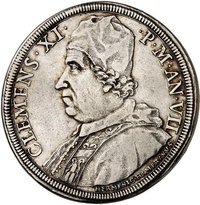
Ruler: Clement XI
Currency:
(1534—1835)
Demonetized: Yes
Material
References
KM: #Click to copy to clipboard677
Numista: #368746
Value
Bullion value: $82.39
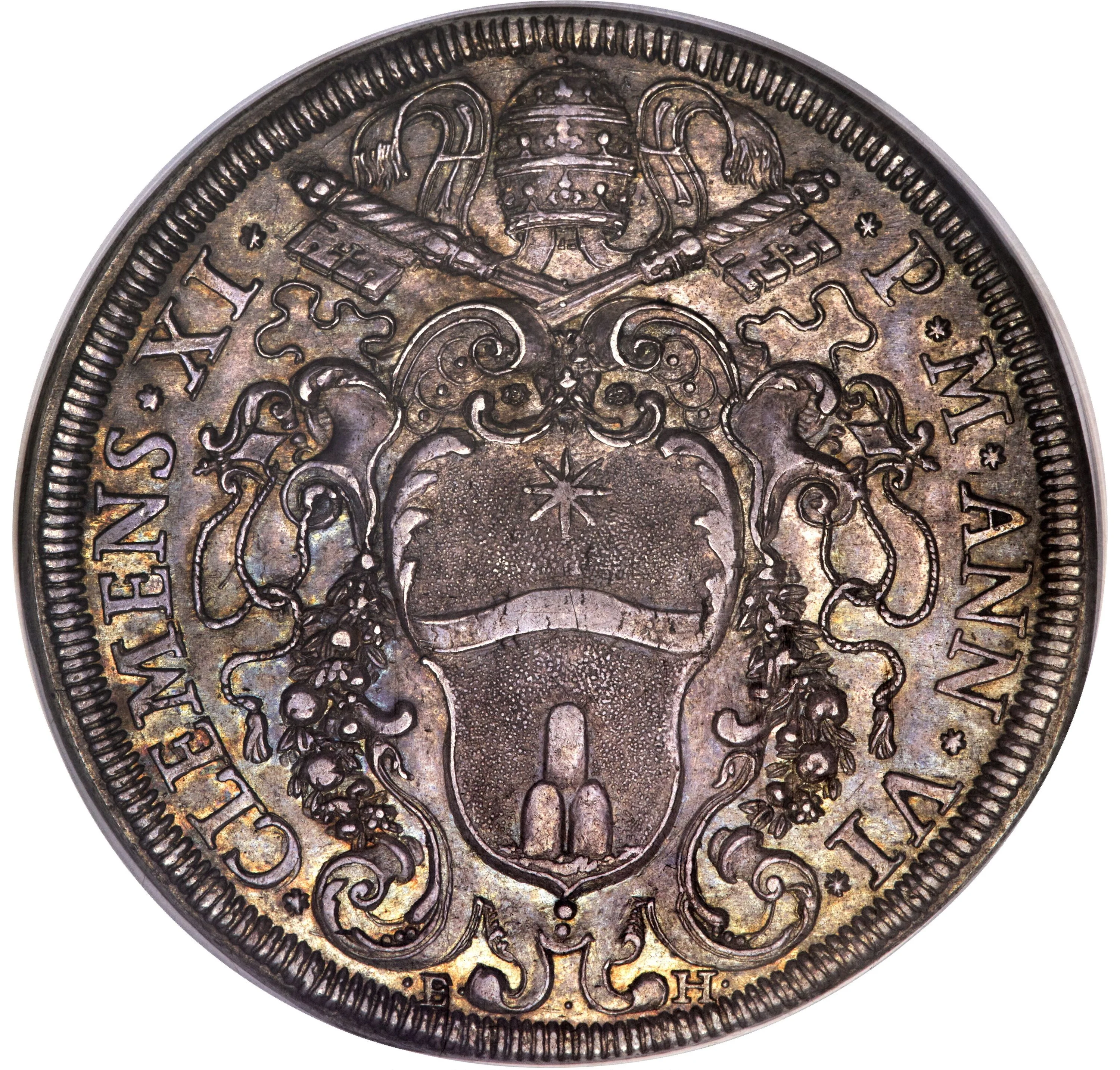
Obverse
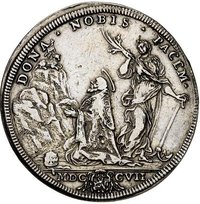
Reverse
Description:
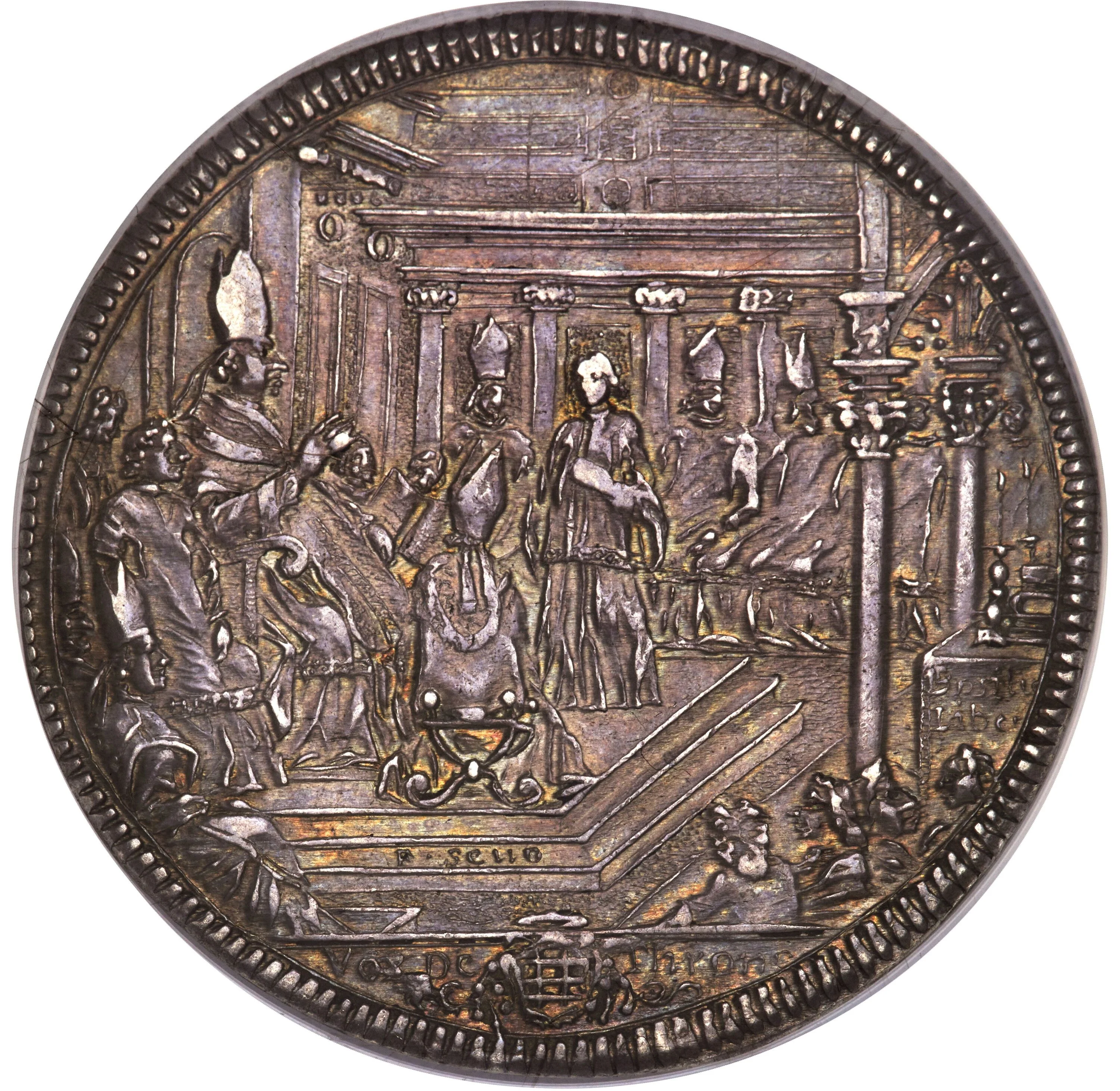
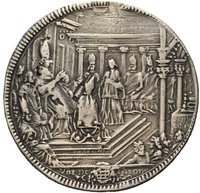
The Pope delivers a homily from the throne in Santa Maria Maggiore, assisted by cardinals.
Inscription:
BASILIC LIBER
F٠SEVO٠
VOX DE THRONO
F٠SEVO٠
VOX DE THRONO
Script: Latin
Edge
Mints
| Name | Mark |
|---|---|
| Rome | — |
Mintings
| Year | Mint Mark | Mintage | Quality | Collection |
|---|---|---|---|---|
| 1706 | — | — |
Historical background
In 1706, the Papal States found themselves in a precarious monetary situation, caught between the lingering effects of a major debasement and the pressures of European war. The root of the crisis lay in the drastic silver coinage reform enacted by Pope Innocent XII in 1691, which had significantly reduced the silver content of the standard giulio and paolo coins to address a chronic budget deficit. While this initially filled the papal coffers, it triggered severe inflation, destabilized trade, and drove better-quality older coins out of circulation, leaving the economy reliant on a weakened currency.
The ongoing War of the Spanish Succession (1701-1714) exacerbated these difficulties. As a major conflict raging across Italy, the war disrupted trade routes, increased military expenditures, and placed heavy demands on the Papal Treasury. Pope Clement XI (1700-1721), navigating a complex political neutrality, faced the dual challenge of funding the state's defenses and obligations while the value of its circulating medium was diminished. This period saw a chaotic mix of undervalued papal coins, older pre-1691 pieces hoarded or traded at a premium, and various foreign currencies in circulation, creating a confusing and inefficient monetary environment.
Consequently, the currency system of 1706 was characterized by instability and confusion. The disparity between the official face value of coins and their intrinsic metal value led to widespread market distrust and complicated commerce. While a full monetary restoration would not be attempted until Pope Clement XII's reforms in the 1730s, the situation in 1706 highlighted the severe economic consequences of fiscal short-termism and the vulnerability of the Papal States' finances to the wider European geopolitical turmoil.
The ongoing War of the Spanish Succession (1701-1714) exacerbated these difficulties. As a major conflict raging across Italy, the war disrupted trade routes, increased military expenditures, and placed heavy demands on the Papal Treasury. Pope Clement XI (1700-1721), navigating a complex political neutrality, faced the dual challenge of funding the state's defenses and obligations while the value of its circulating medium was diminished. This period saw a chaotic mix of undervalued papal coins, older pre-1691 pieces hoarded or traded at a premium, and various foreign currencies in circulation, creating a confusing and inefficient monetary environment.
Consequently, the currency system of 1706 was characterized by instability and confusion. The disparity between the official face value of coins and their intrinsic metal value led to widespread market distrust and complicated commerce. While a full monetary restoration would not be attempted until Pope Clement XII's reforms in the 1730s, the situation in 1706 highlighted the severe economic consequences of fiscal short-termism and the vulnerability of the Papal States' finances to the wider European geopolitical turmoil.
✨ Legendary