

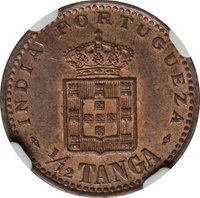
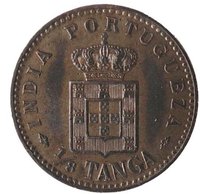
¼ tanga – Portuguese India
Add to wishlist
India
Context
Years: 1901–1903
Country: India
Issuer: Portuguese India
Ruler: Charles I
Currency:
(1880—1958)
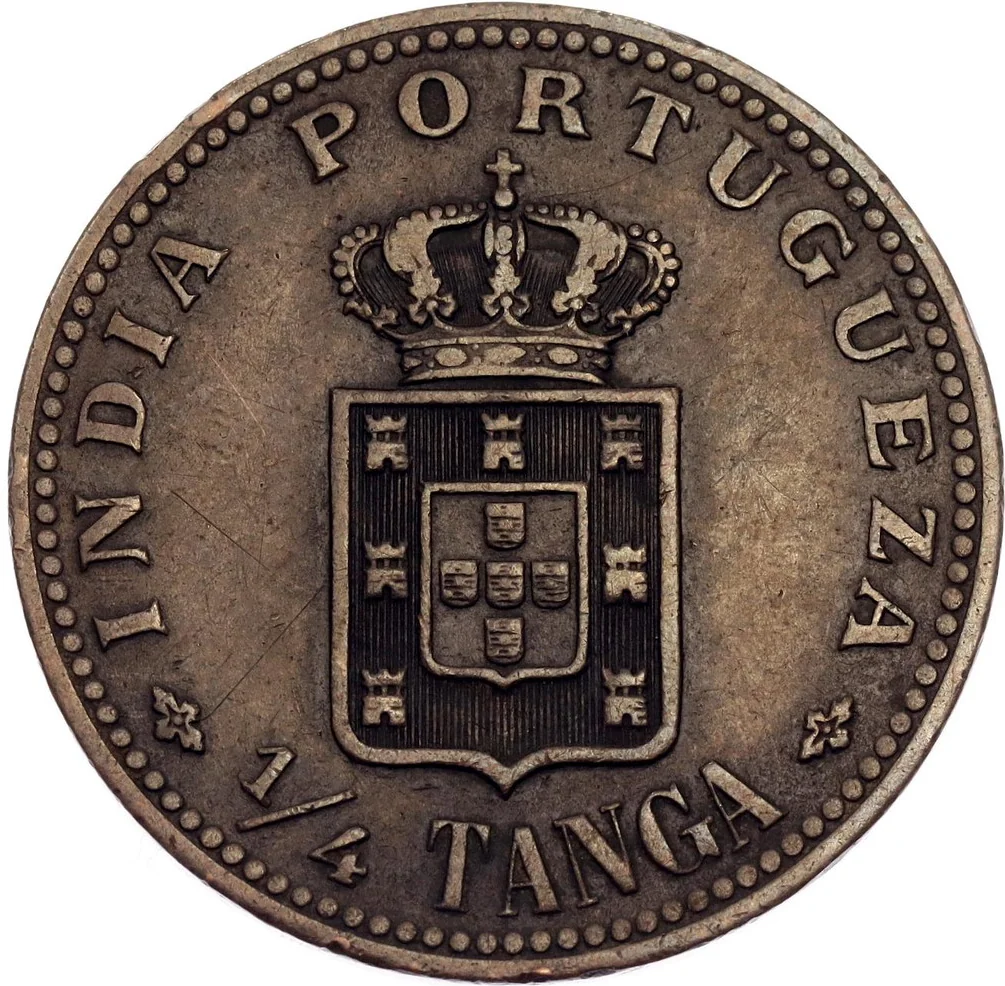
Subdivision: ¼ tanga = 3 Réis
Demonetized: Yes
Total mintage: 1,600,000
Material
References
KM: #
Numista: #11759
Obverse
Description:
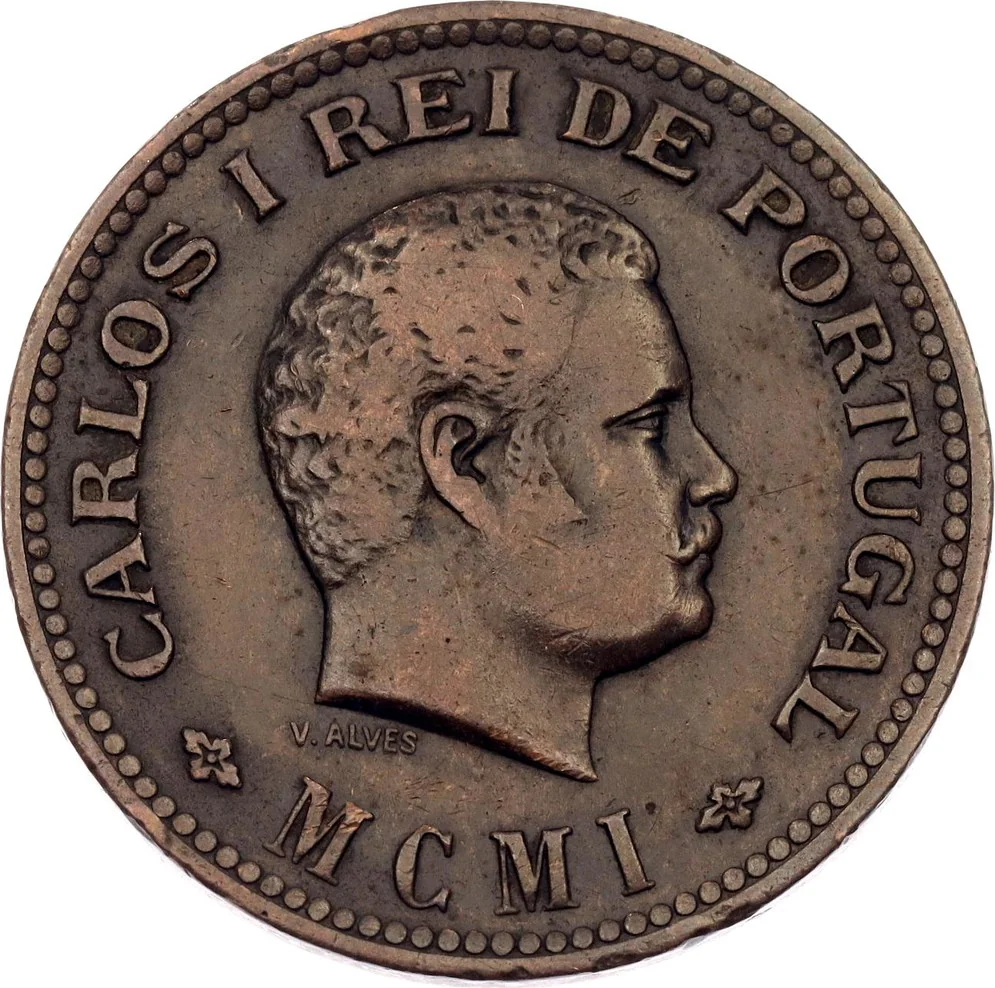
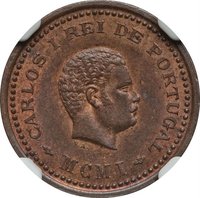
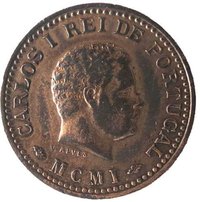
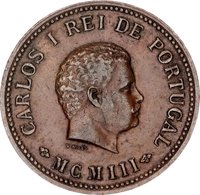
Right-facing bust, date in Roman numerals below.
Inscription:
CARLOS 1 REI DE PORTUGAL
*MCMI* (1901)
*MCMI* (1901)
Translation:
CARLOS I KING OF PORTUGAL
*MCMI* (1901)
*MCMI* (1901)
Script: Latin
Languages: Portuguese, Latin
Engraver: Valancio Alves
Reverse
Edge
Plain
Mints
| Name | Mark |
|---|---|
| Imprensa Nacional - Casa da Moeda | — |
Mintings
| Year | Mint Mark | Mintage | Quality | Collection |
|---|---|---|---|---|
| 1901 | — | 800,000 | ||
| 1901 | — | — | Prooflike | |
| 1903 | — | 800,000 |
Historical background
In 1901, the currency situation in Portuguese India (Goa, Daman, and Diu) was a complex and hybrid system, reflecting its position at the intersection of Portuguese colonial administration and the dominant economic sphere of British India. The official currency was the Portuguese Indian Rupia (divided into 16 tangas or 960 réis), which was minted specifically for the territory. However, the British Indian Rupee, with its superior economic weight and widespread use in regional trade, circulated freely and was accepted at a near-par value, creating a de facto dual-currency environment.
This monetary duality stemmed from practical necessity. While Portuguese authorities collected taxes and paid official salaries in the Portuguese Rupia, the vast majority of Goa's commerce—especially its key exports of salt, coconuts, and spices—was conducted with neighbouring Bombay Presidency and other parts of British India. Consequently, merchants and the general population readily used British rupees for daily transactions, and the two coins often mingled in cash boxes and market exchanges without significant friction or discount.
The system, though functional, was not without its challenges and symbolic implications. Lisbon viewed the prominence of British currency as an erosion of Portuguese sovereignty, yet attempts to enforce exclusive use of the Portuguese Rupia were impractical and risked disrupting the local economy. Therefore, the situation in 1901 was one of pragmatic coexistence, characterized by a stable but unofficial bimetallism where the colonial currency held administrative authority, but the British rupee held substantial commercial and circulatory power. This arrangement would persist until a formal accord with British India in the late 1930s finally pegged the Portuguese Indian Rupia definitively to its British counterpart.
This monetary duality stemmed from practical necessity. While Portuguese authorities collected taxes and paid official salaries in the Portuguese Rupia, the vast majority of Goa's commerce—especially its key exports of salt, coconuts, and spices—was conducted with neighbouring Bombay Presidency and other parts of British India. Consequently, merchants and the general population readily used British rupees for daily transactions, and the two coins often mingled in cash boxes and market exchanges without significant friction or discount.
The system, though functional, was not without its challenges and symbolic implications. Lisbon viewed the prominence of British currency as an erosion of Portuguese sovereignty, yet attempts to enforce exclusive use of the Portuguese Rupia were impractical and risked disrupting the local economy. Therefore, the situation in 1901 was one of pragmatic coexistence, characterized by a stable but unofficial bimetallism where the colonial currency held administrative authority, but the British rupee held substantial commercial and circulatory power. This arrangement would persist until a formal accord with British India in the late 1930s finally pegged the Portuguese Indian Rupia definitively to its British counterpart.
🌱 Common