

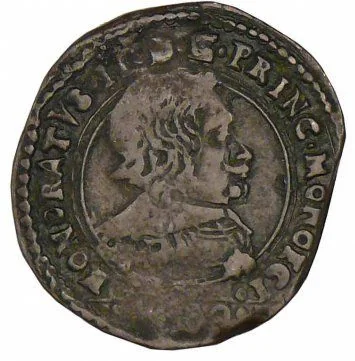
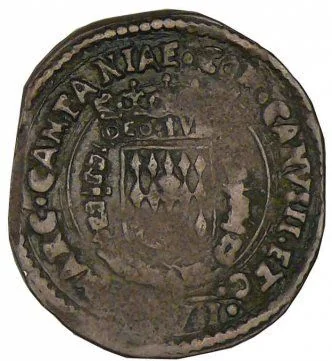
6 Gros – Monaco
Monaco

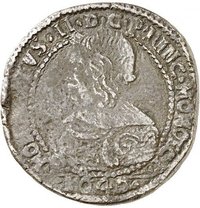
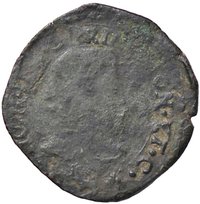
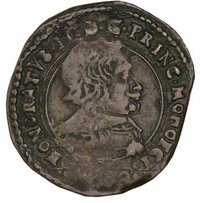
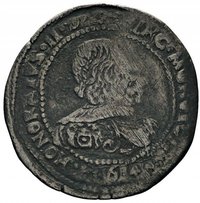
Obverse
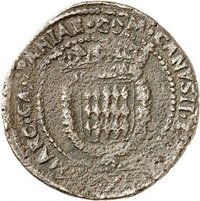
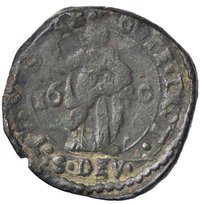
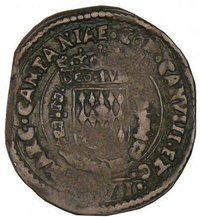
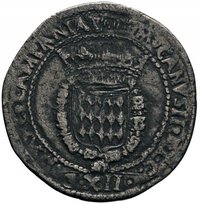
Reverse
Description:
Crowned coat of arms.
Inscription:
MARC. CAMPANIAE. COM. CAN.
A l'exergue G. VI.
A l'exergue G. VI.
Script: Latin
Edge
Plain
Mints
| Name | Mark |
|---|---|
| Monaco | — |
Mintings
| Year | Mint Mark | Mintage | Quality | Collection |
|---|---|---|---|---|
| 1640 | — | — |
Historical background
In 1640, Monaco was a small, independent principality under the protective sovereignty of Spain, a relationship formalized by the Treaty of Taron in 1524. This political alignment dictated its monetary reality. While the Prince of Monaco held the right of coinage (jus monetae), the principality did not strike its own independent currency for daily use. Instead, the economy relied overwhelmingly on the circulation of Spanish silver reales and their smaller denominations, particularly the ubiquitous "piece of eight." These coins, minted from New World silver, were the lifeblood of Mediterranean trade and thus dominant in Monaco's port and market.
However, Monaco's location on the French-Italian border created a complex monetary environment. Alongside Spanish coinage, various French écus, livres, and deniers, as well as Italian lire and ducats from Genoa and Savoy, also circulated. This led to a practical system of monetary pluralism, where merchants and officials needed to be conversant with multiple exchange rates and the fluctuating metallic values of these foreign coins. The Prince's seigniorage rights were likely exercised through the regulation, valuation, and occasional counter-stamping of this foreign currency to affirm its validity within the principality.
Therefore, the currency situation in 1640 was one of dependence and adaptation. Monaco lacked a sovereign coinage expressing its political identity, instead functioning within the monetary sphere of its Spanish protector. Yet its vibrant commercial activity necessitated the acceptance and management of a diverse mix of currencies from neighboring powers. This system, while workable, tied Monaco's financial stability to external economic forces and the strength of the Spanish silver peso, a link that would be tested as Spain's own power began to wane in the latter half of the 17th century.
However, Monaco's location on the French-Italian border created a complex monetary environment. Alongside Spanish coinage, various French écus, livres, and deniers, as well as Italian lire and ducats from Genoa and Savoy, also circulated. This led to a practical system of monetary pluralism, where merchants and officials needed to be conversant with multiple exchange rates and the fluctuating metallic values of these foreign coins. The Prince's seigniorage rights were likely exercised through the regulation, valuation, and occasional counter-stamping of this foreign currency to affirm its validity within the principality.
Therefore, the currency situation in 1640 was one of dependence and adaptation. Monaco lacked a sovereign coinage expressing its political identity, instead functioning within the monetary sphere of its Spanish protector. Yet its vibrant commercial activity necessitated the acceptance and management of a diverse mix of currencies from neighboring powers. This system, while workable, tied Monaco's financial stability to external economic forces and the strength of the Spanish silver peso, a link that would be tested as Spain's own power began to wane in the latter half of the 17th century.
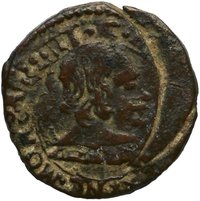
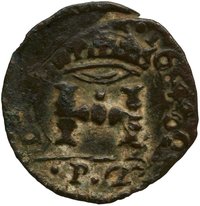
Series: 1640 Monaco circulation coins
✨ Legendary