

1 Liard – Prince-bishopric of Liege
Belgium
Context
Years: 1636–1640
Country: Belgium 
Issuer: Prince-bishopric of Liege
Ruler: Ferdinand of Bavaria
Currency:
(1545—1650)
Subdivision: 1 Liard = 1 Aidant
Demonetized: Yes
Material
Diameter: 25 mm
Weight: 3.3 g
Shape: Irregular round
Composition: Copper
Magnetic: No
Alignment: Medal alignment
flip
References
KM: #Click to copy to clipboard39
Numista: #38186
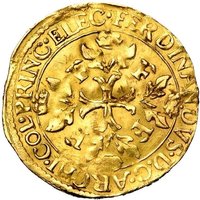
Obverse
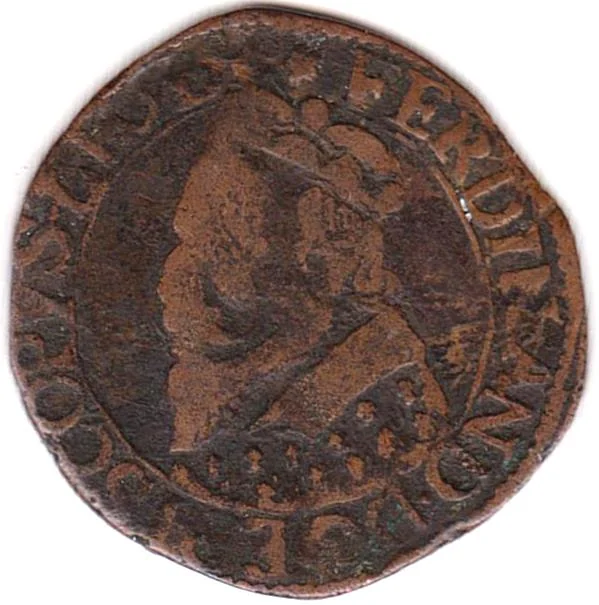
Description:
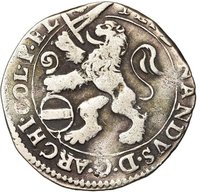
Capped bust left in elector's vestments.
Inscription:
FERDINANDVS · D · G · EPISCO · LEODI ·
Script: Latin
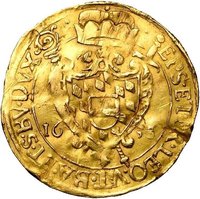
Reverse
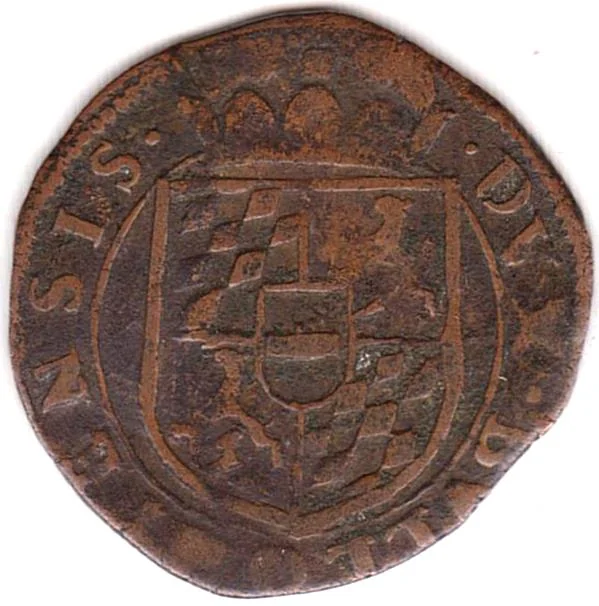
Description:
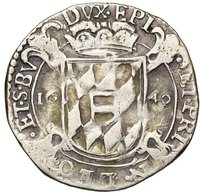
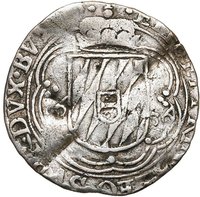
Quartered Bavarian and Palatine arms, centrally charged with Bouillon.
Inscription:
DVX · BVLLONIENSIS·
Script: Latin
Edge
Plain
Mints
| Name | Mark |
|---|---|
| Bouillon | — |
Mintings
| Year | Mint Mark | Mintage | Quality | Collection |
|---|---|---|---|---|
| — | — | — |
Historical background
In 1636, the Prince-Bishopric of Liège found itself in a precarious monetary situation, caught in the crossfire of the wider European crisis of the Thirty Years' War. While officially neutral, the bishopric was surrounded by warring powers and its economy was strained by military transit, contributions, and the disruption of trade. This pressure exacerbated a chronic problem common to the era: the circulation of a chaotic mix of domestic and foreign coins of varying intrinsic value, leading to rampant inflation and a loss of public confidence in the currency.
The core of the problem was the debasement of the patard, the local currency unit. To meet extraordinary wartime expenses, the minting authorities, under the authority of Prince-Bishop Ferdinand of Bavaria, repeatedly reduced the silver content of newly minted coins while ordering their face value to remain the same. This practice, combined with an influx of even more debased foreign coins from neighboring France and the Spanish Netherlands, created a classic "bad money drives out good" scenario. Holders of full-weight older coins hoarded or exported them, leaving the economy flooded with inferior currency, which merchants countered by raising prices.
Consequently, the year 1636 was marked by severe economic distress and social unrest within the bishopric. The effective devaluation eroded purchasing power, hitting the urban poor and wage earners hardest. While the authorities issued ordinances attempting to fix exchange rates and prohibit the circulation of certain foreign coins, these measures were largely ineffective against market forces and the pervasive economic pressures of the war. The monetary chaos of 1636 thus reflected Liège's struggle to maintain stability while being economically besieged by the continental conflict raging around it.
The core of the problem was the debasement of the patard, the local currency unit. To meet extraordinary wartime expenses, the minting authorities, under the authority of Prince-Bishop Ferdinand of Bavaria, repeatedly reduced the silver content of newly minted coins while ordering their face value to remain the same. This practice, combined with an influx of even more debased foreign coins from neighboring France and the Spanish Netherlands, created a classic "bad money drives out good" scenario. Holders of full-weight older coins hoarded or exported them, leaving the economy flooded with inferior currency, which merchants countered by raising prices.
Consequently, the year 1636 was marked by severe economic distress and social unrest within the bishopric. The effective devaluation eroded purchasing power, hitting the urban poor and wage earners hardest. While the authorities issued ordinances attempting to fix exchange rates and prohibit the circulation of certain foreign coins, these measures were largely ineffective against market forces and the pervasive economic pressures of the war. The monetary chaos of 1636 thus reflected Liège's struggle to maintain stability while being economically besieged by the continental conflict raging around it.
💎 Very Rare