

1 Doppia – Papal States
Vatican City
Context
Years: 1615–1621
Country: Vatican City 
Issuer: Papal States
Ruler: Paul V
Currency:
(1534—1835)
Demonetized: Yes
Material
References
KM: #Click to copy to clipboard117
Numista: #381364
Value
Bullion value: $1020.10
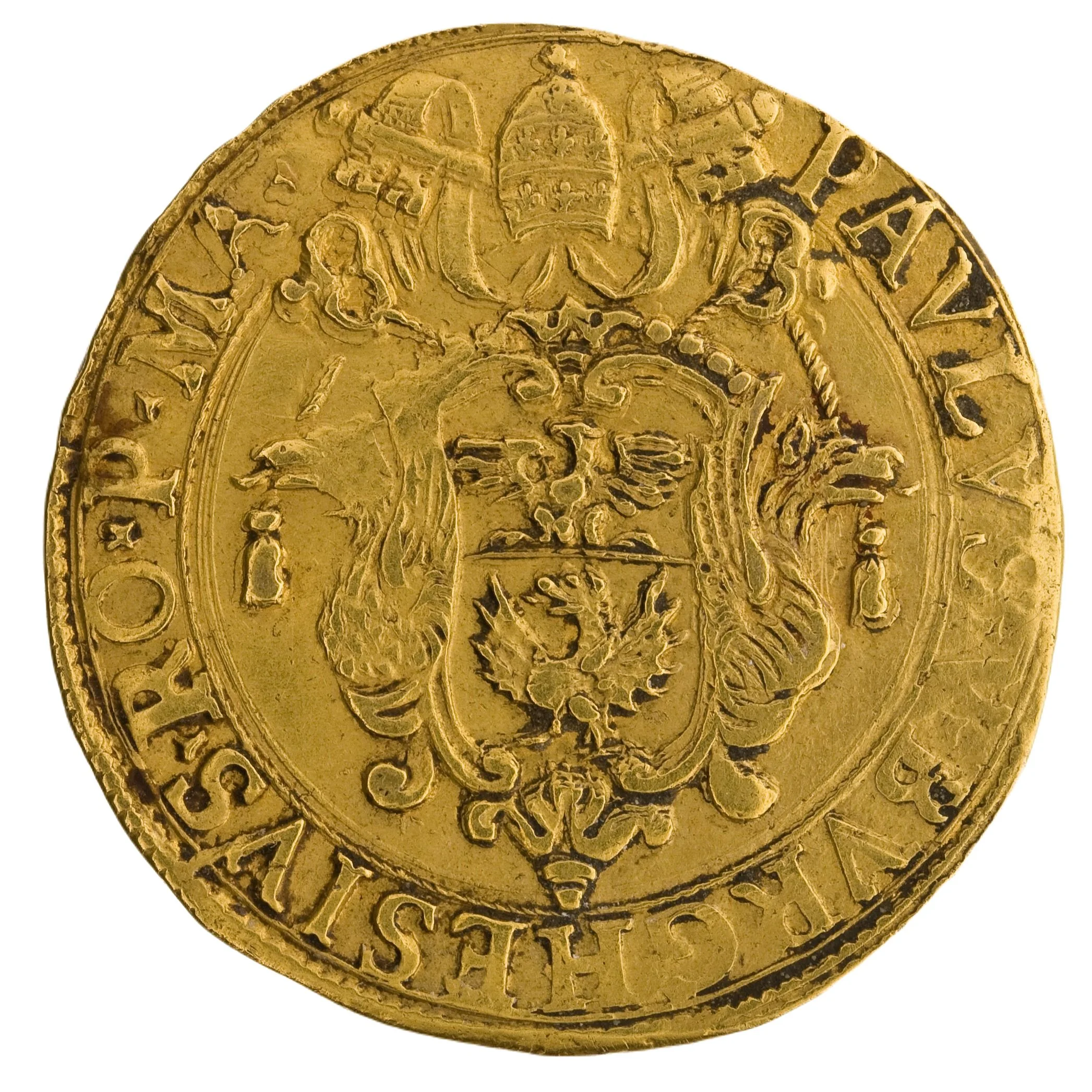
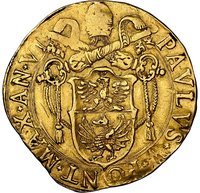
Obverse
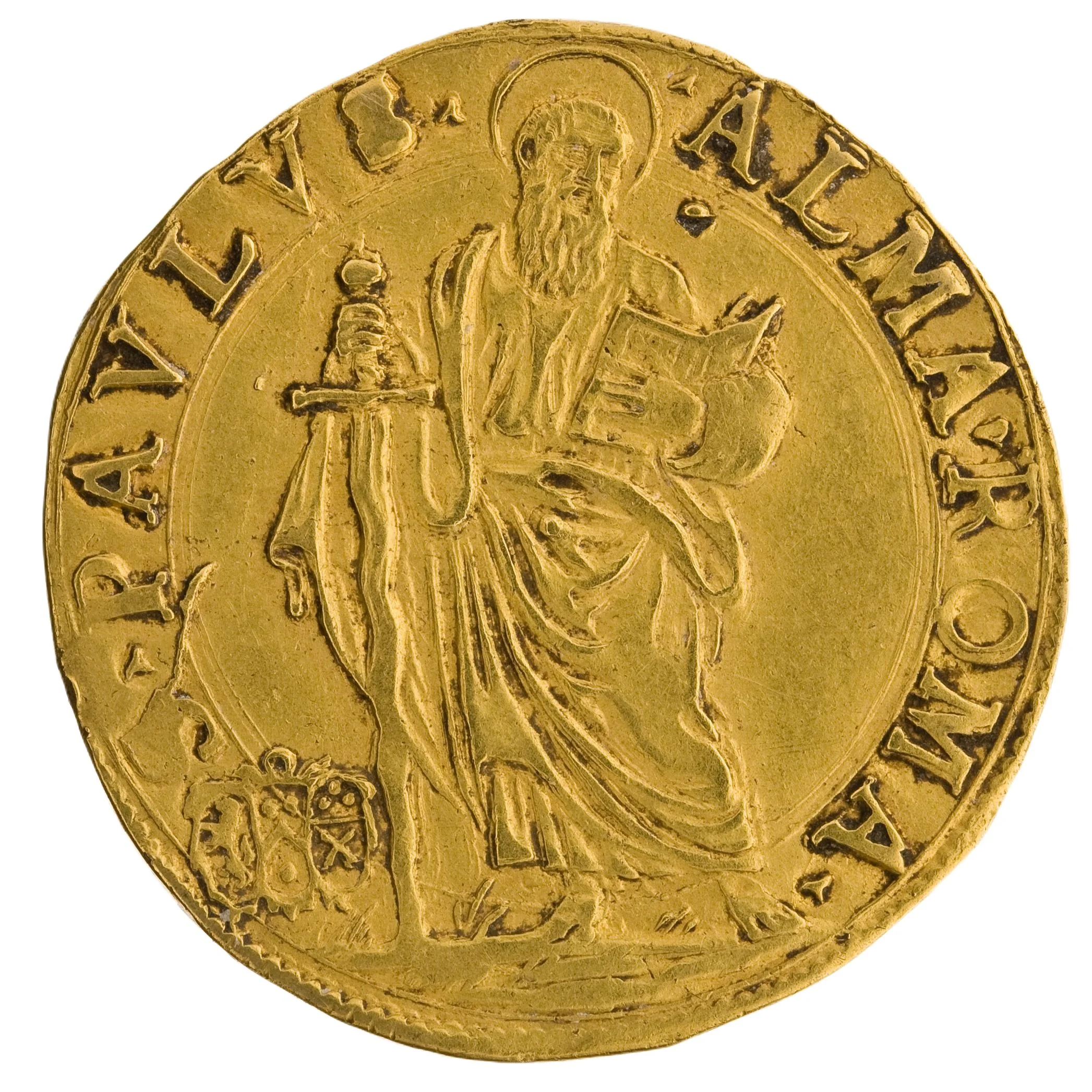
Reverse
Description:
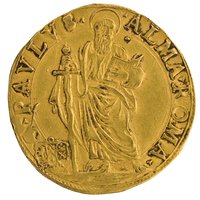
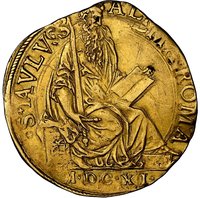
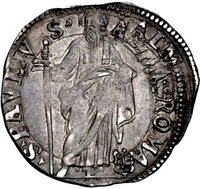
St. Paul with sword and book. Mint master's arm at lower left.
Inscription:
٠ S ٠ PAVLVS ٠ ALMA ٠ ROMA ٠
Script: Latin
Edge
Mints
| Name | Mark |
|---|---|
| Rome | — |
Mintings
| Year | Mint Mark | Mintage | Quality | Collection |
|---|---|---|---|---|
| — | — | — |
Historical background
In 1615, the Papal States operated within a complex and often precarious monetary system typical of early modern Italian states. The primary unit of account was the scudo (specifically the scudo d'oro in oro), a gold coin whose value was tied to international bullion markets. However, daily transactions were dominated by a bewildering variety of silver and billon (debased silver) coins, such as giuli, grossi, and baiocchi, which circulated alongside the theoretical gold standard. The value of these coins relative to each other and to the scudo was subject to frequent official proclamation and market fluctuation, creating constant confusion for merchants and the populace.
This fragmented system was plagued by chronic problems. Persistent budget deficits, driven by the costs of administration, artistic patronage, and military needs, led the Apostolic Camera (the papal treasury) to frequently engage in currency manipulation. A common practice was rinfusa—the recall and debasement of coinage, where the silver content of coins was reduced, and they were reissued at their former face value. This generated immediate seigniorage profit for the state but triggered inflation, eroded public trust, and encouraged hoarding of older, purer coins (Gresham's Law). Furthermore, vast quantities of foreign coins, especially Spanish silver reales from the New World, circulated freely, further complicating exchange.
Pope Paul V (reigned 1605-1621), reigning in 1615, was known for his extensive and expensive building projects (like the completion of St. Peter's Basilica) and his firm temporal governance, which required substantial revenue. While he worked to stabilize papal finances through improved tax collection and loans, the underlying structural issues of the currency remained. Thus, in 1615, the monetary situation was one of fragile equilibrium, a managed chaos where the state's fiscal demands constantly undermined the stability of the very medium of exchange it was meant to guarantee, a tension that would persist for centuries.
This fragmented system was plagued by chronic problems. Persistent budget deficits, driven by the costs of administration, artistic patronage, and military needs, led the Apostolic Camera (the papal treasury) to frequently engage in currency manipulation. A common practice was rinfusa—the recall and debasement of coinage, where the silver content of coins was reduced, and they were reissued at their former face value. This generated immediate seigniorage profit for the state but triggered inflation, eroded public trust, and encouraged hoarding of older, purer coins (Gresham's Law). Furthermore, vast quantities of foreign coins, especially Spanish silver reales from the New World, circulated freely, further complicating exchange.
Pope Paul V (reigned 1605-1621), reigning in 1615, was known for his extensive and expensive building projects (like the completion of St. Peter's Basilica) and his firm temporal governance, which required substantial revenue. While he worked to stabilize papal finances through improved tax collection and loans, the underlying structural issues of the currency remained. Thus, in 1615, the monetary situation was one of fragile equilibrium, a managed chaos where the state's fiscal demands constantly undermined the stability of the very medium of exchange it was meant to guarantee, a tension that would persist for centuries.
✨ Legendary