

1 Quadrupla – Papal States
Vatican City
Context
Year: 1611
Country: Vatican City 
Issuer: Papal States
Ruler: Paul V
Currency:
(1534—1835)
Demonetized: Yes
Material
Diameter: 30 mm
Weight: 14 g
Gold weight: 13.80 g
Shape: Irregular round
Composition: 98.6% Gold
Magnetic: No
References
KM: #Click to copy to clipboard67
Numista: #368736
Value
Bullion value: $2301.01
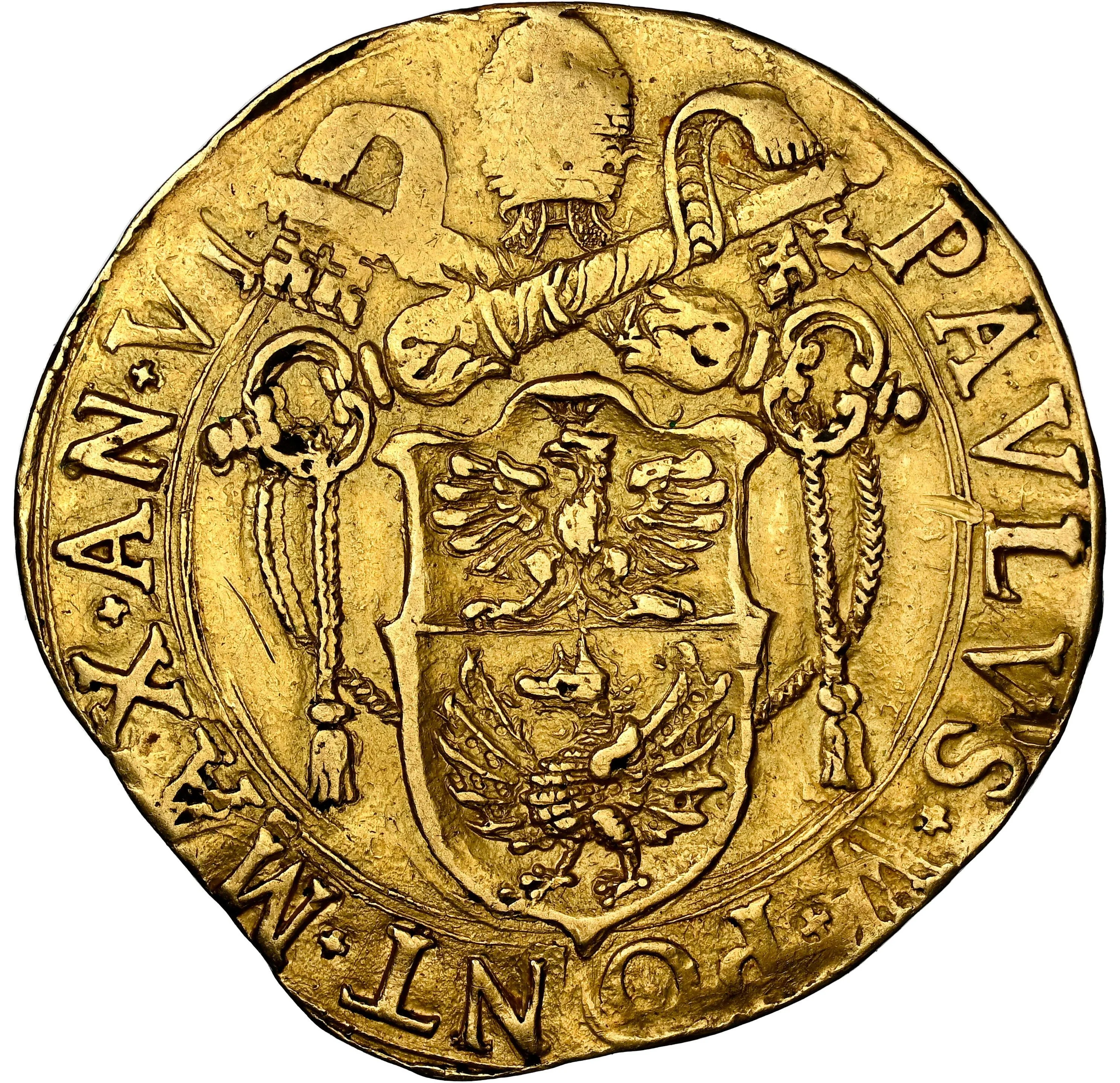
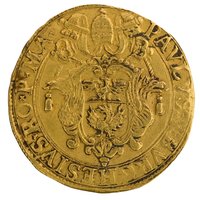
Obverse
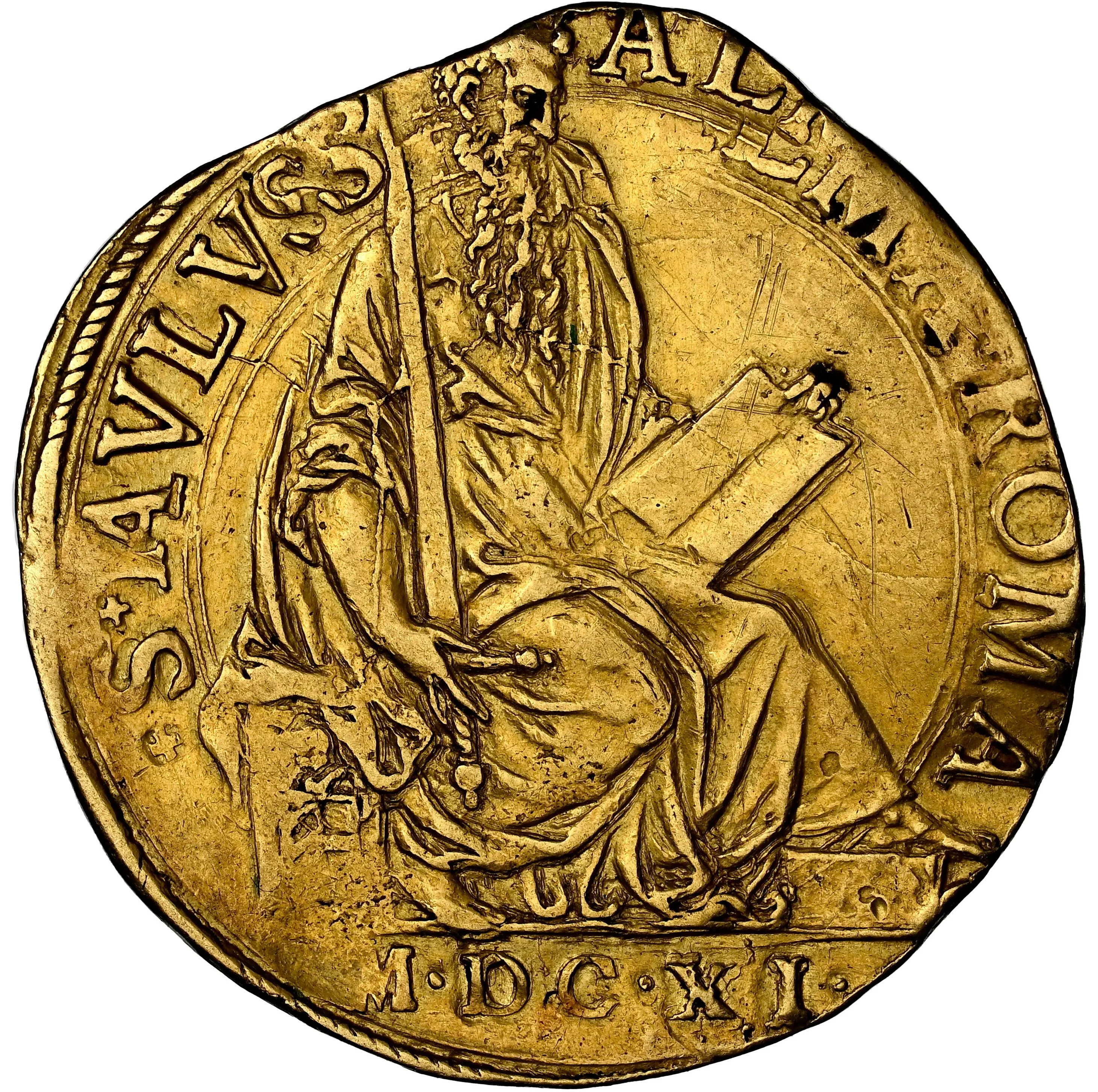
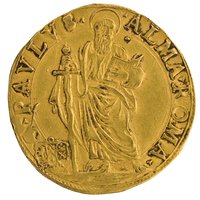
Reverse
Description:
St. Paul seated right, date below.
Inscription:
S٠PAVLVS٠ALMA٠ROMA
M٠DC٠XI٠
M٠DC٠XI٠
Script: Latin
Edge
Categories
| Person> Religious figure |
Mints
| Name | Mark |
|---|---|
| Rome | — |
Mintings
| Year | Mint Mark | Mintage | Quality | Collection |
|---|---|---|---|---|
| 1611 | — | — |
Historical background
In 1611, the Papal States, under Pope Paul V, operated within a complex and challenging monetary system typical of early modern Italy. The state lacked a unified, stable currency, instead circulating a multitude of coins from various Italian and foreign mints. The primary papal silver coin was the giulio, but its value and silver content were in constant tension with other regional coins like the Florentine piastra and the Spanish reale, the latter being a dominant trade coin due to Spain's political influence on the peninsula. This proliferation of currencies, each with fluctuating intrinsic values, created a chaotic environment for commerce and taxation.
The core monetary problem was chronic debasement. Facing persistent fiscal pressure from ambitious building projects (like the completion of St. Peter's Basilica), administrative costs, and military expenditures, the Papal Treasury often resorted to reducing the silver content in its coinage. This practice, while providing short-term revenue, triggered inflation, eroded public trust in papal money, and encouraged the hoarding of older, purer coins (Gresham's Law). Consequently, the value of the giulio was unstable, and exchange rates between the myriad coins in circulation were a subject of daily negotiation and frequent dispute.
Efforts at reform were piecemeal and largely ineffective at this time. Although the papal authorities issued edicts to fix official exchange rates (cours forcé), these were routinely ignored by market forces. The circulation of heavily debased small change (moneta nera) further plagued everyday transactions, harming the poor. Thus, in 1611, the monetary situation was one of entrenched instability, where the Pope's spiritual authority contrasted sharply with his inability to exert full control over the temporal realm of currency, undermining both economic predictability and the financial integrity of the state itself.
The core monetary problem was chronic debasement. Facing persistent fiscal pressure from ambitious building projects (like the completion of St. Peter's Basilica), administrative costs, and military expenditures, the Papal Treasury often resorted to reducing the silver content in its coinage. This practice, while providing short-term revenue, triggered inflation, eroded public trust in papal money, and encouraged the hoarding of older, purer coins (Gresham's Law). Consequently, the value of the giulio was unstable, and exchange rates between the myriad coins in circulation were a subject of daily negotiation and frequent dispute.
Efforts at reform were piecemeal and largely ineffective at this time. Although the papal authorities issued edicts to fix official exchange rates (cours forcé), these were routinely ignored by market forces. The circulation of heavily debased small change (moneta nera) further plagued everyday transactions, harming the poor. Thus, in 1611, the monetary situation was one of entrenched instability, where the Pope's spiritual authority contrasted sharply with his inability to exert full control over the temporal realm of currency, undermining both economic predictability and the financial integrity of the state itself.
✨ Legendary