

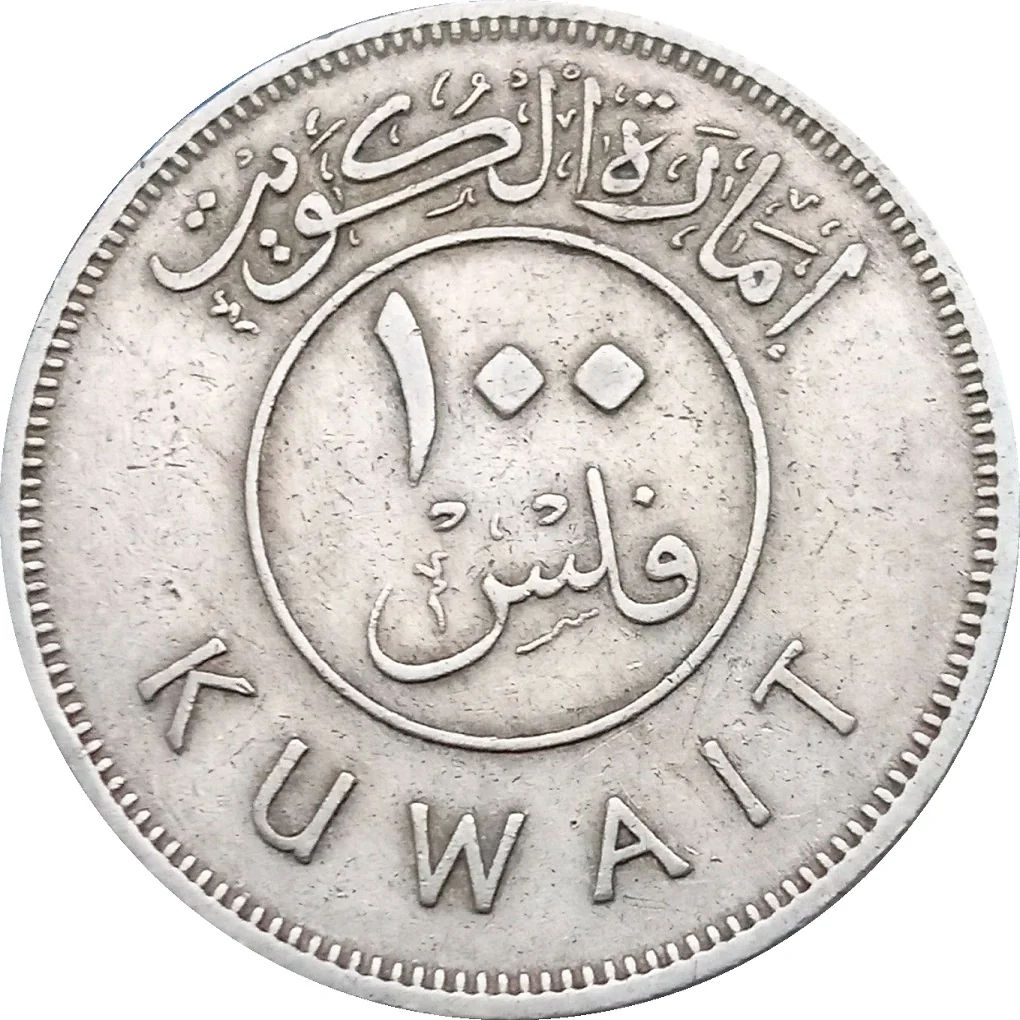
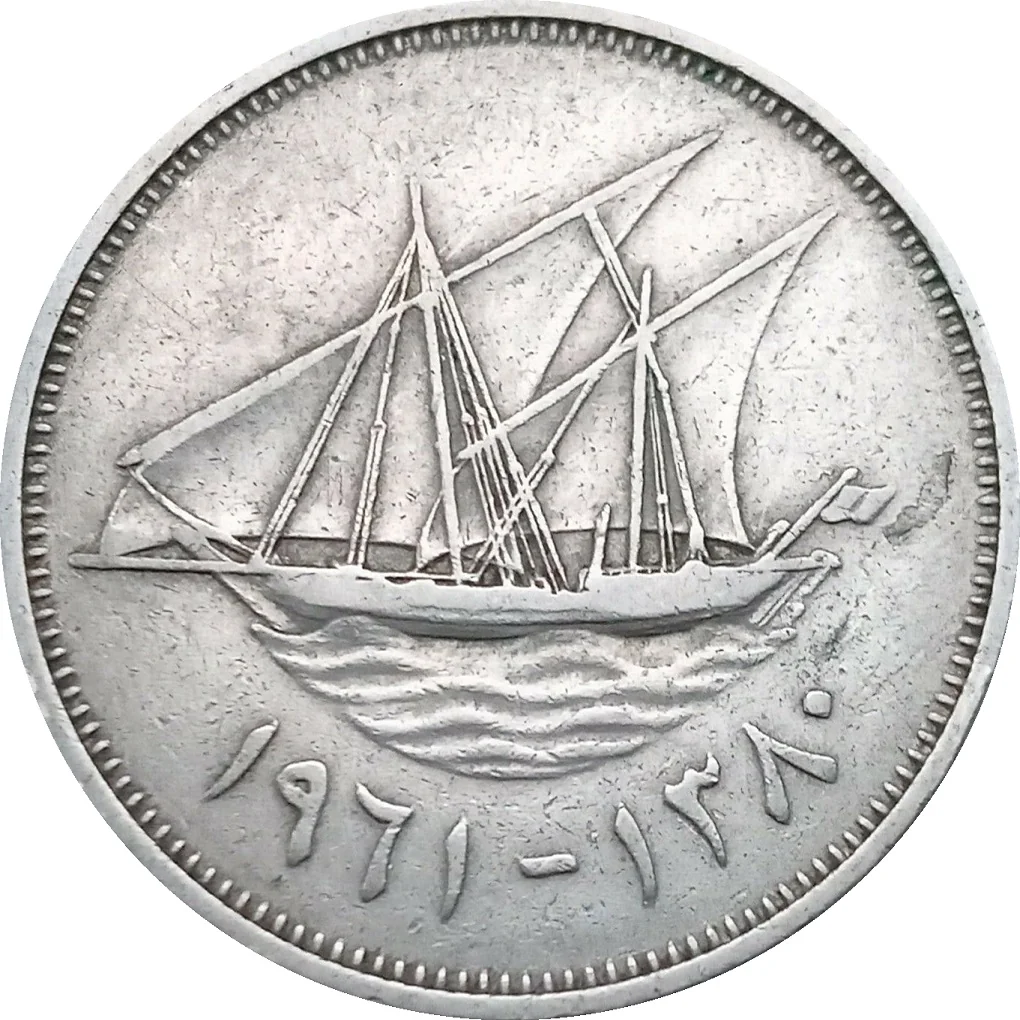
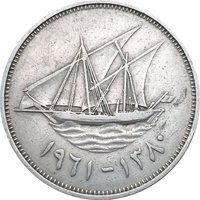
100 Fils – Kuwait
Kuwait
Context
Material
Diameter: 26 mm
Weight: 6.5 g
Thickness: 1.5 mm
Shape: Round
Composition: Copper-nickel
Technique: Milled
Alignment: Medal alignment
flip
References
KM: #Click to copy to clipboard7
Numista: #11756
Value
Exchange value: 0.100 KWD
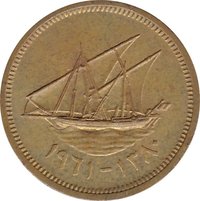
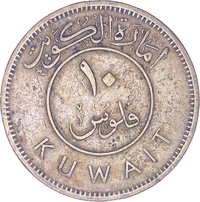
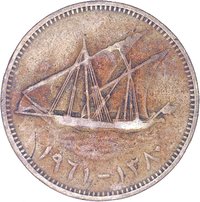
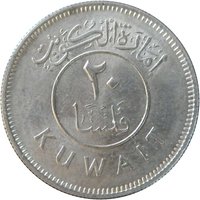
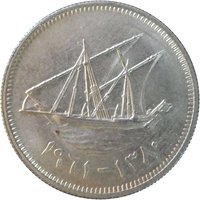
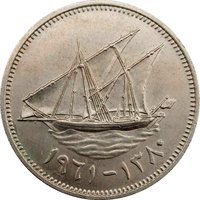
Obverse
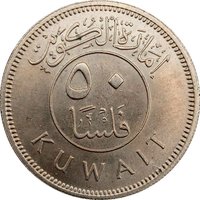
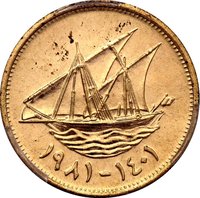
Reverse
Edge
Reeded
Categories
| Transportation> Watercraft |
Mints
| Name | Mark |
|---|---|
| Royal Mint (Tower Hill) | — |
Mintings
| Year | Mint Mark | Mintage | Quality | Collection |
|---|---|---|---|---|
| 1961 | — | 1,260,000 | ||
| 1961 | — | 60 | Proof |
Historical background
In 1961, Kuwait's currency situation was in a state of transitional flux following the nation's independence from the British protectorate on June 19th. Prior to this, the official currency was the Gulf rupee, a special issue of the Indian rupee managed by the Reserve Bank of India and pegged to the British pound sterling. This arrangement was practical under the protectorate but became politically and economically unsuitable for a newly sovereign state seeking to assert its autonomy and control over its own monetary affairs.
The immediate post-independence period saw the rapid introduction of a provisional national currency. On April 1, 1961, even before formal independence, the Kuwaiti Currency Board issued the first Kuwaiti dinar (KWD) to replace the Gulf rupee. This was a critical step in establishing economic sovereignty. The new dinar was initially pegged at par with the British pound sterling, maintaining a link to a major international currency while shifting authority to a Kuwaiti institution. The exchange was set at 1 dinar = 13.33 Indian rupees, effectively demonetizing the Gulf rupee in Kuwait.
This currency reform was a foundational element of early state-building, occurring against a backdrop of heightened regional tensions, including an Iraqi claim to Kuwaiti territory just weeks after independence. The successful launch of the dinar provided immediate financial stability and symbolized Kuwait's newfound independence. It laid the administrative groundwork for the more robust Kuwaiti Monetary Authority, established in 1968, which would eventually evolve into the Central Bank of Kuwait in 1969, ensuring long-term management of the now-strong national currency.
The immediate post-independence period saw the rapid introduction of a provisional national currency. On April 1, 1961, even before formal independence, the Kuwaiti Currency Board issued the first Kuwaiti dinar (KWD) to replace the Gulf rupee. This was a critical step in establishing economic sovereignty. The new dinar was initially pegged at par with the British pound sterling, maintaining a link to a major international currency while shifting authority to a Kuwaiti institution. The exchange was set at 1 dinar = 13.33 Indian rupees, effectively demonetizing the Gulf rupee in Kuwait.
This currency reform was a foundational element of early state-building, occurring against a backdrop of heightened regional tensions, including an Iraqi claim to Kuwaiti territory just weeks after independence. The successful launch of the dinar provided immediate financial stability and symbolized Kuwait's newfound independence. It laid the administrative groundwork for the more robust Kuwaiti Monetary Authority, established in 1968, which would eventually evolve into the Central Bank of Kuwait in 1969, ensuring long-term management of the now-strong national currency.
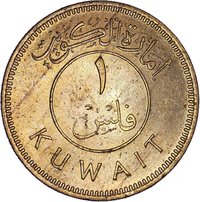
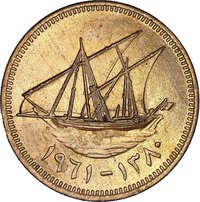
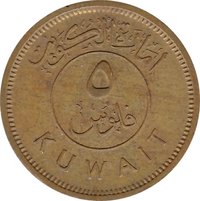
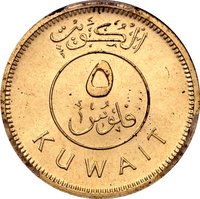
Series: 1961 Kuwait circulation coins
🌱 Common