

1 penny – Isle of Man
Add to wishlist
Context
Years: 1798–1813
Country: British Crown dependencies
Issuer: Isle of Man
Ruler: George III
Currency:
(1709—1839)
Demonetized: Yes
Material
References
KM: #
Numista: #37913
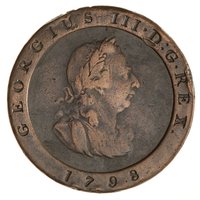
Obverse
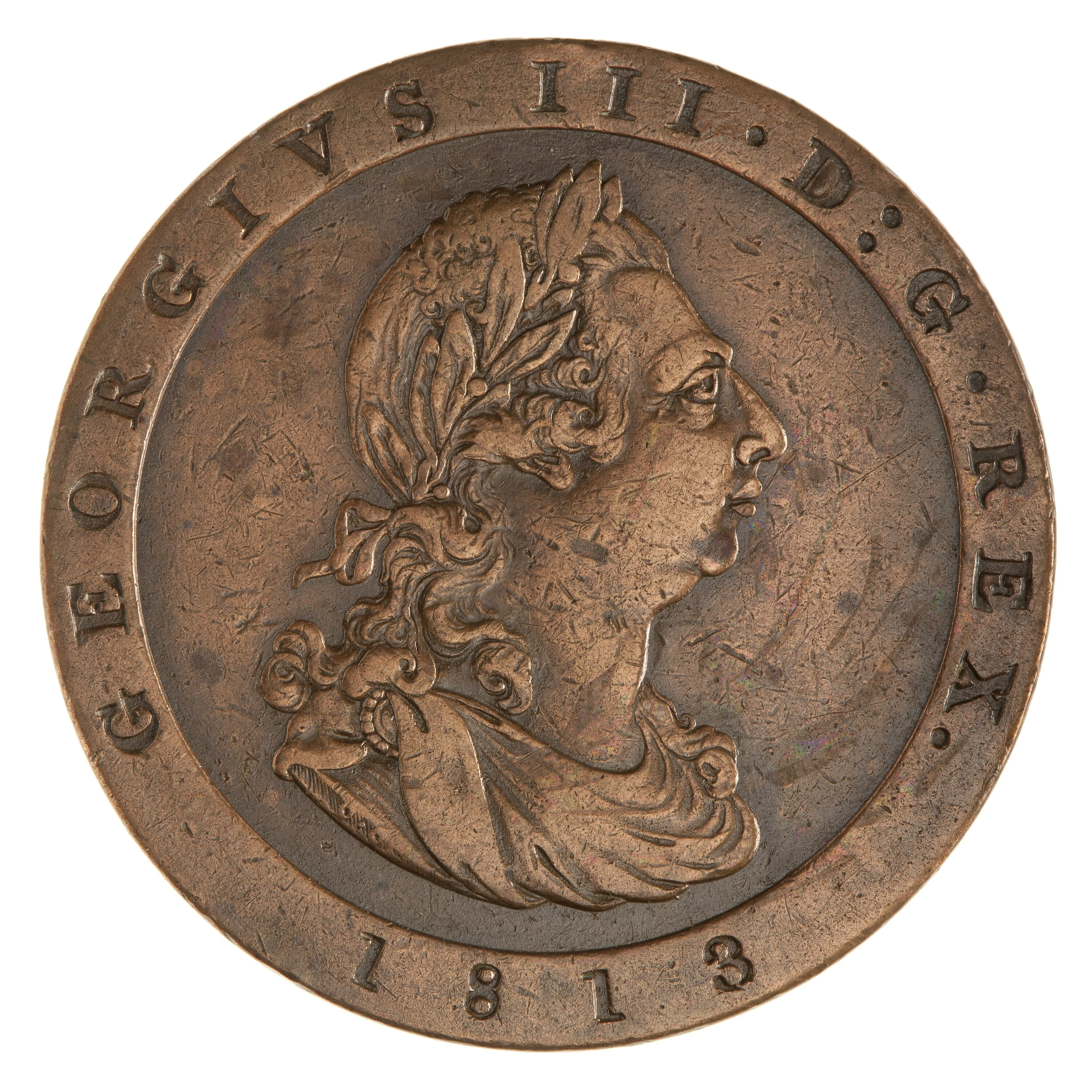
Description:
Bust of George III within a circle, surrounded by lettering.
Inscription:
GEORGIVS III . D:G . REX
1798
1798
Script: Latin
Engraver: Conrad Heinrich Küchler
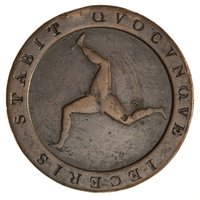
Reverse
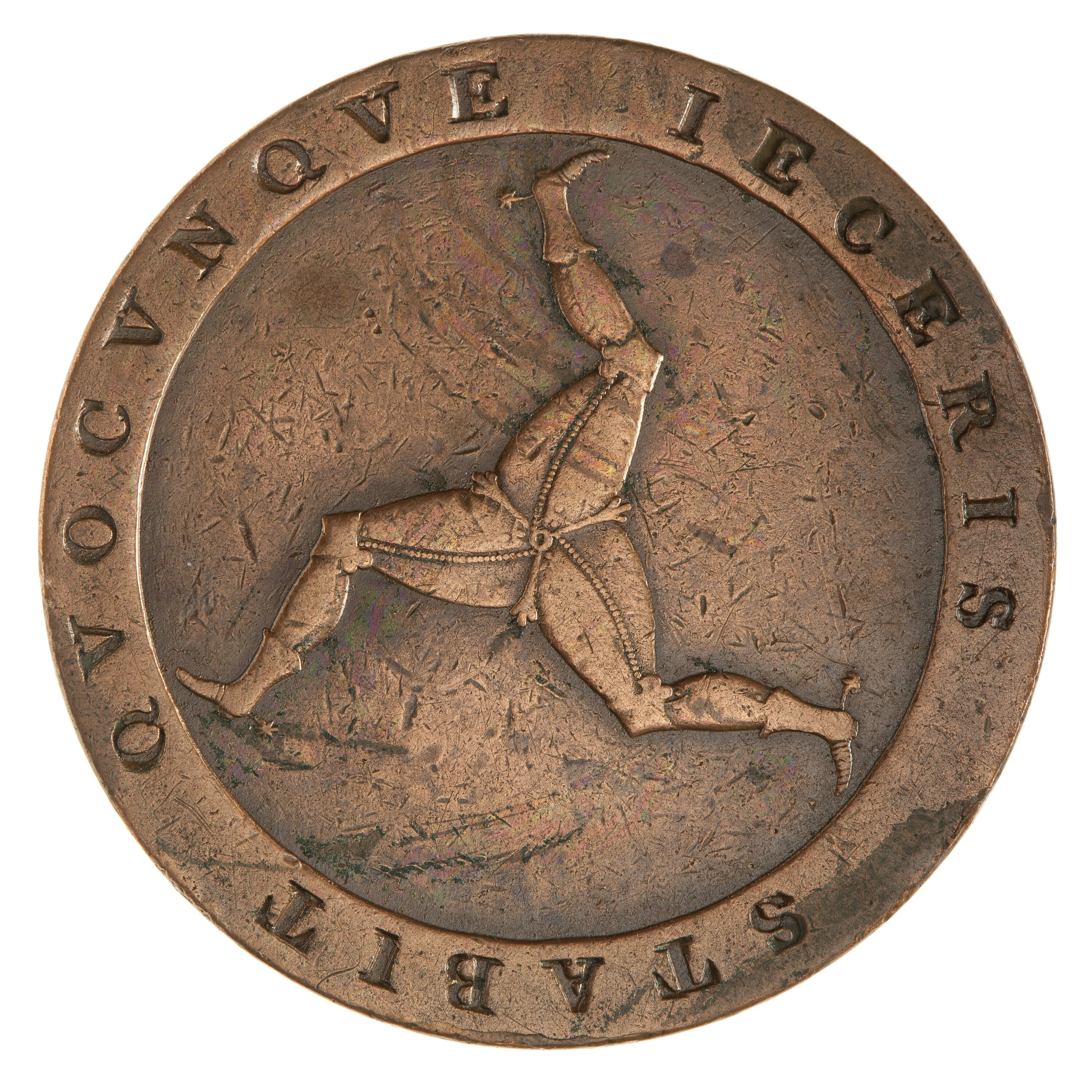
Description:
Triskeles center, encircled by text.
Inscription:
QVOCVNQVE IECERIS STABIT
Script: Latin
Engraver: Conrad Heinrich Küchler
Edge
Plain
Categories
| Symbol> Triskelion |
Mints
| Name | Mark |
|---|---|
| Soho Mint | — |
Mintings
| Year | Mint Mark | Mintage | Quality | Collection |
|---|---|---|---|---|
| 1798 | — | — | ||
| 1813 | — | — |
Historical background
In 1798, the Isle of Man faced a significant and disruptive currency crisis, rooted in its unique political status. As a British Crown Dependency, the island was not part of the United Kingdom and thus did not use British coinage as its official currency. Instead, the local economy operated on a confusing patchwork of mostly foreign silver coins, primarily Spanish dollars and Portuguese Johannes, which circulated alongside limited British and Irish coinage. This system was inherently unstable, as the value of these coins was based on their silver weight and was subject to fluctuation and frequent clipping or counterfeiting, leading to widespread confusion in trade.
The crisis was exacerbated by the global pressures of the French Revolutionary Wars. The British government, fearing invasion and hoarding, had suspended the convertibility of Bank of England notes into gold in 1797, causing a national coin shortage that spilled over to the Isle of Man. This severely restricted the inflow of even the limited British coins the island relied upon. Simultaneously, a sharp decline in the smuggling trade—a major source of island revenue due to its historic special customs status—drained silver from the economy, creating a critical scarcity of acceptable circulating medium.
In response to this acute shortage, the Isle of Man’s authorities took an extraordinary local measure. Later in 1798, the island’s government, the Tynwald, authorised the issue of one-pound and two-pound promissory notes, a first for the island. These notes, signed by two officials from each of the island’s six sheadings, were essentially emergency tokens of credit intended to facilitate everyday transactions. This stopgap solution highlighted the island’s administrative autonomy and its precarious financial position, caught between its traditional informal currency system and the economic upheavals of the wider British war effort.
The crisis was exacerbated by the global pressures of the French Revolutionary Wars. The British government, fearing invasion and hoarding, had suspended the convertibility of Bank of England notes into gold in 1797, causing a national coin shortage that spilled over to the Isle of Man. This severely restricted the inflow of even the limited British coins the island relied upon. Simultaneously, a sharp decline in the smuggling trade—a major source of island revenue due to its historic special customs status—drained silver from the economy, creating a critical scarcity of acceptable circulating medium.
In response to this acute shortage, the Isle of Man’s authorities took an extraordinary local measure. Later in 1798, the island’s government, the Tynwald, authorised the issue of one-pound and two-pound promissory notes, a first for the island. These notes, signed by two officials from each of the island’s six sheadings, were essentially emergency tokens of credit intended to facilitate everyday transactions. This stopgap solution highlighted the island’s administrative autonomy and its precarious financial position, caught between its traditional informal currency system and the economic upheavals of the wider British war effort.
🌟 Limited