

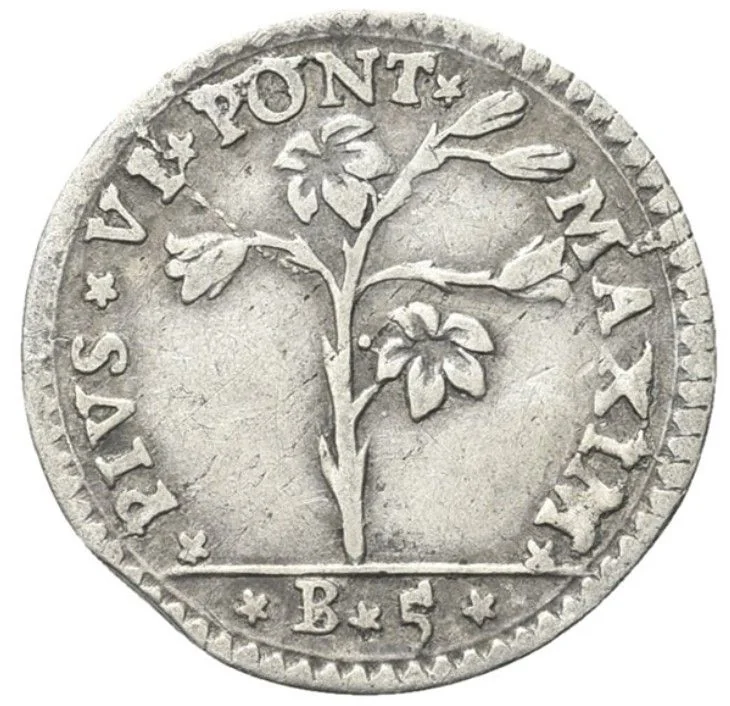
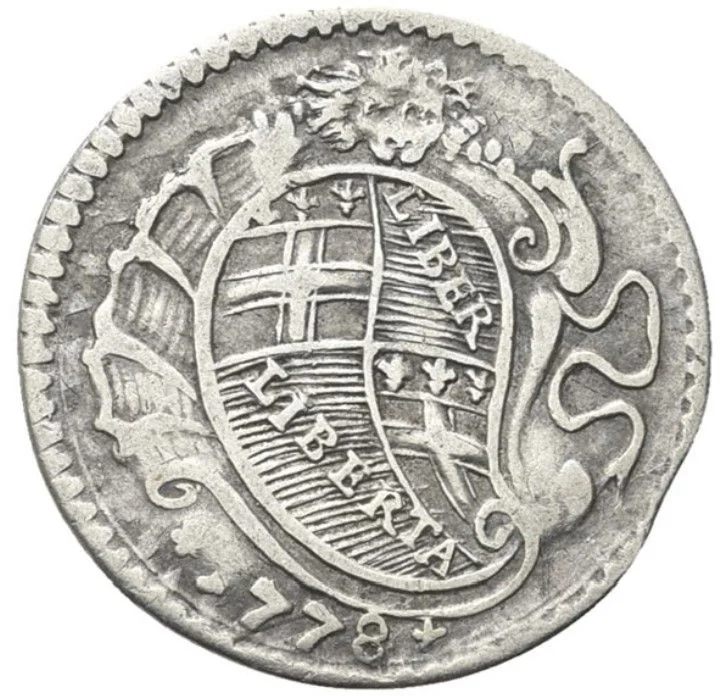

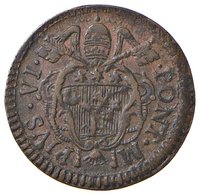
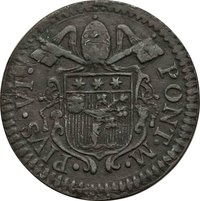
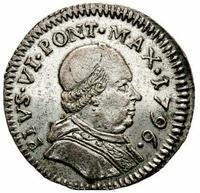
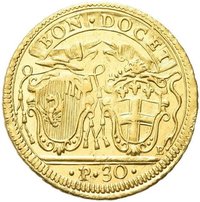
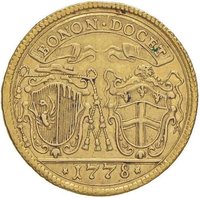
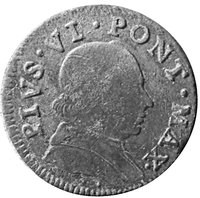
Obverse
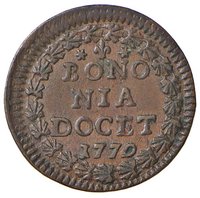
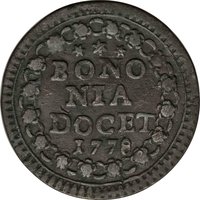
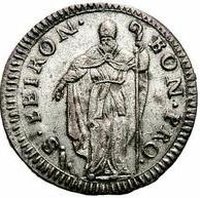
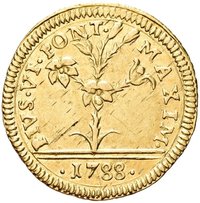
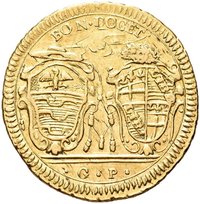
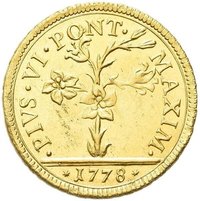
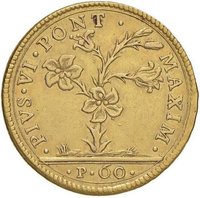
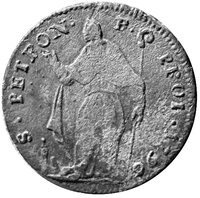
Reverse
Edge
Mints
| Name | Mark |
|---|---|
| Bologna | — |
Mintings
| Year | Mint Mark | Mintage | Quality | Collection |
|---|---|---|---|---|
| 1778 | — | — | ||
| 1779 | — | — | ||
| 1780 | — | — |
Historical background
In 1778, Bologna operated within the complex monetary landscape of the Papal States, to which it belonged. The city did not mint its own coinage; instead, its currency system was dictated by the papal monetary authorities in Rome. The official circulating medium was based on the Papal Scudo, a silver coin, which was subdivided into 100 Baiocchi. However, the reality of daily commerce was far more intricate. Alongside these official issues, a multitude of foreign coins circulated freely, particularly from neighbouring Italian states like the Republic of Venice (ducats), the Duchy of Modena, and the Grand Duchy of Tuscany (florins), as well as older papal issues and even counterfeit pieces. This created a constant challenge for merchants and citizens who had to assess the weight, purity, and fluctuating exchange rates of this heterogeneous mix.
The local economy therefore relied heavily on the practice of "agio," a premium or discount applied when exchanging one type of coin for another. Tables of exchange (tavole di cambio) were published regularly to guide transactions, as the intrinsic silver or gold content of a coin often held more practical value than its official face value. This system was managed by money changers (banchieri or cambisti) whose expertise was essential for commerce. Furthermore, large transactions often bypassed specie altogether, utilizing bills of exchange—a form of paper credit—to settle accounts between merchants and banks, highlighting a dual system of physical and credit-based money.
This monetary environment was a source of persistent tension. The influx of debased foreign coinage and the wear on existing coins could lead to inflationary pressures, harming the poor and causing price instability. While papal authorities periodically attempted reforms to standardize the currency, their decrees often had limited effect on the ground in Bologna, where mercantile practice and the need for flexible liquidity prevailed. Thus, in 1778, Bologna’s currency situation was characterized by a fragile balance between papal authority, the practical demands of a thriving mercantile city, and the chaotic reality of a diverse and unstandardized coinage in circulation.
The local economy therefore relied heavily on the practice of "agio," a premium or discount applied when exchanging one type of coin for another. Tables of exchange (tavole di cambio) were published regularly to guide transactions, as the intrinsic silver or gold content of a coin often held more practical value than its official face value. This system was managed by money changers (banchieri or cambisti) whose expertise was essential for commerce. Furthermore, large transactions often bypassed specie altogether, utilizing bills of exchange—a form of paper credit—to settle accounts between merchants and banks, highlighting a dual system of physical and credit-based money.
This monetary environment was a source of persistent tension. The influx of debased foreign coinage and the wear on existing coins could lead to inflationary pressures, harming the poor and causing price instability. While papal authorities periodically attempted reforms to standardize the currency, their decrees often had limited effect on the ground in Bologna, where mercantile practice and the need for flexible liquidity prevailed. Thus, in 1778, Bologna’s currency situation was characterized by a fragile balance between papal authority, the practical demands of a thriving mercantile city, and the chaotic reality of a diverse and unstandardized coinage in circulation.
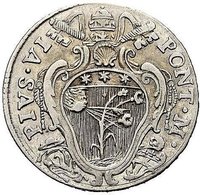
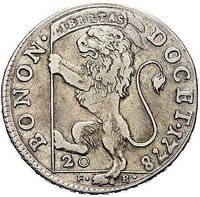
Series: 1778 Bologna circulation coins
✨ Legendary