

1 Skilling – Norway
Norway
Context
Years: 1768–1770
Issuer: Norway 
Ruler: Christian VII
Currency:
(1746—1814)
Demonetized: Yes
Total mintage: 2,035,200
Material
References
KM: #Click to copy to clipboard245
Numista: #37619
Obverse
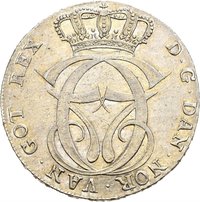
Description:
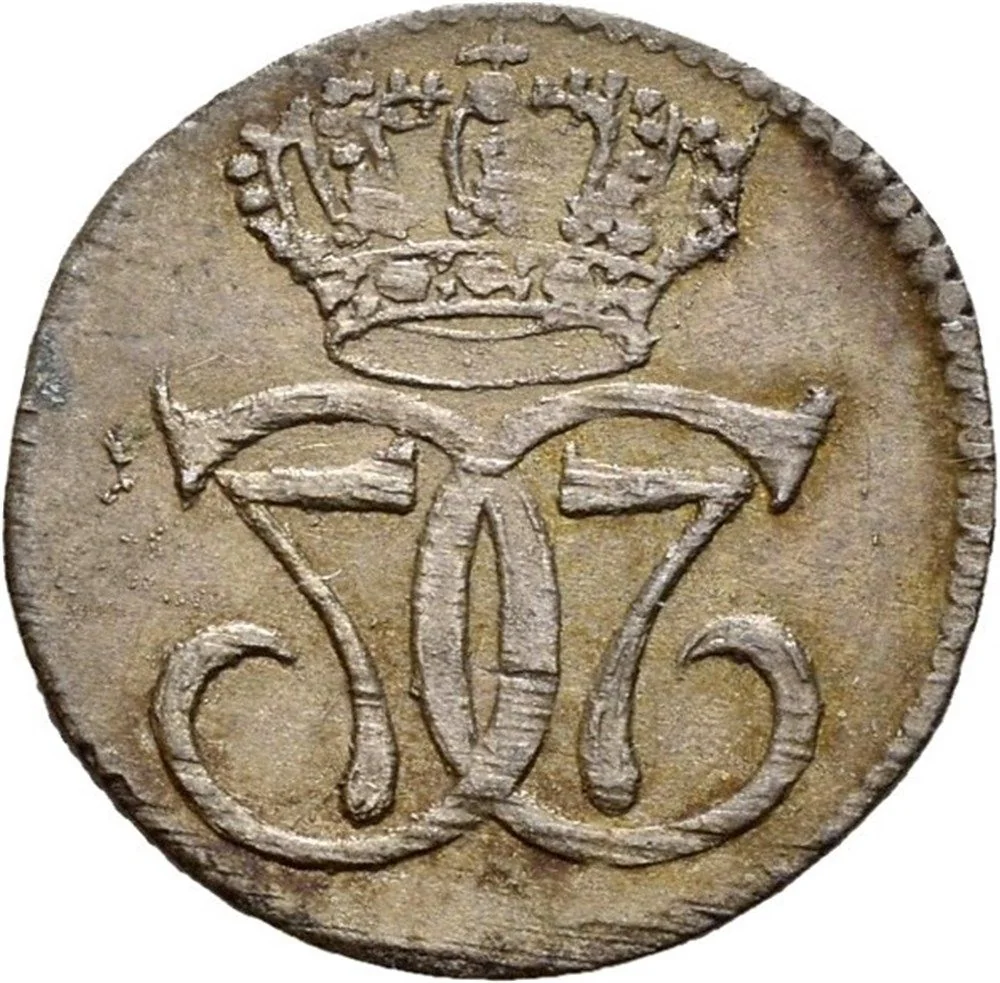
Crowned mirrored monogram of Christian VII with a beaded edge.
Script: Latin
Reverse
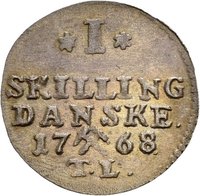
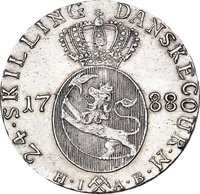
Description:
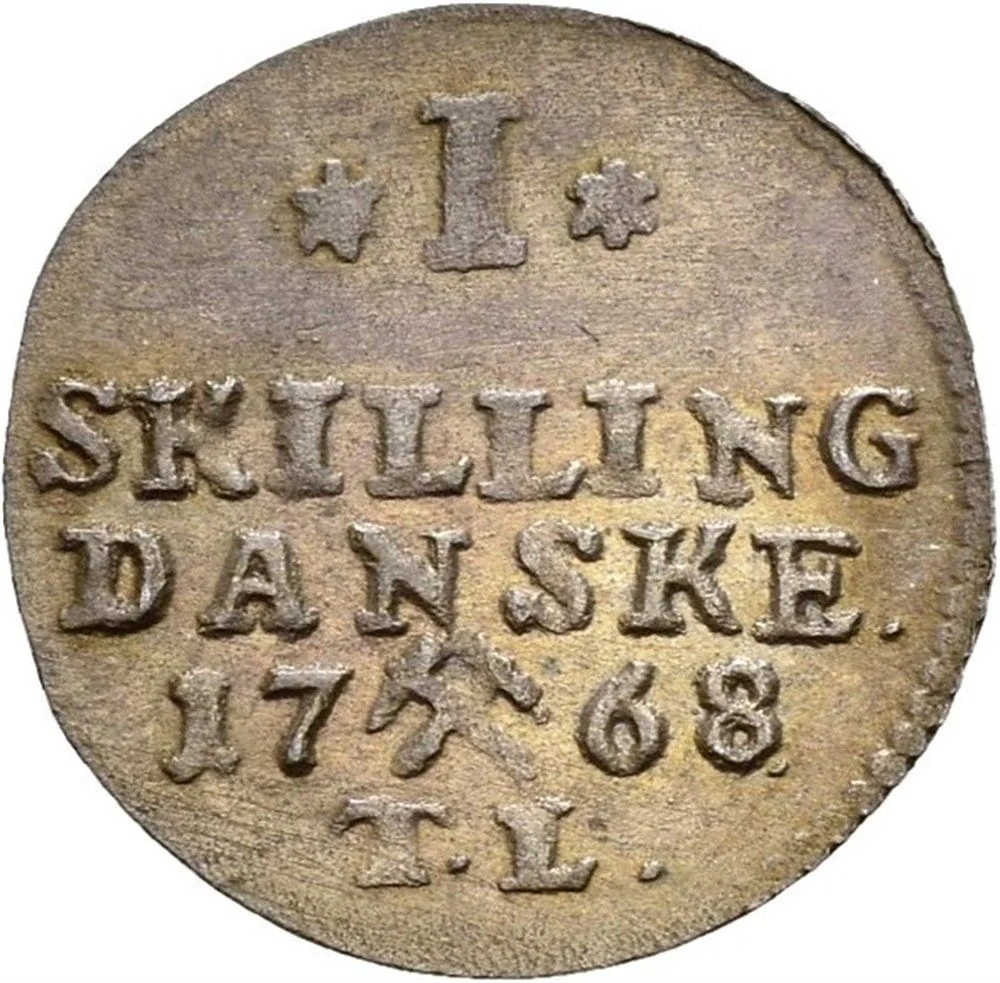
Value and date on four lines.
Date divided by mintmark.
Mintmaster's initials below.
Beaded edge.
Date divided by mintmark.
Mintmaster's initials below.
Beaded edge.
Inscription:
🞹 I 🞹
SKILLING
DANSKE.
17 ⚒ 68.
T. L.
SKILLING
DANSKE.
17 ⚒ 68.
T. L.
Script: Latin
Edge
Mints
| Name | Mark |
|---|---|
| Norwegian Mint | — |
Mintings
| Year | Mint Mark | Mintage | Quality | Collection |
|---|---|---|---|---|
| 1768 | — | 697,400 | ||
| 1769 | — | 889,700 | ||
| 1770 | — | 448,100 |
Historical background
In 1768, Norway was part of the Dano-Norwegian dual monarchy, and its currency situation was complex and strained. The primary circulating coin was the riksdaler specie, a silver-based currency, but the system was plagued by a severe shortage of small change for everyday transactions. This scarcity was exacerbated by the widespread use of heavily worn and clipped coins, alongside a confusing array of older, devalued coins still in circulation from earlier monetary systems, leading to frequent disputes over real value in the marketplace.
The root of the problem lay in the monetary policies set in Copenhagen, which often prioritized the needs of the Danish realm. To address the small change shortage, the state had issued large quantities of low-value skilling coins made from copper or debased silver. However, these were easily counterfeited, and their intrinsic metal value was often lower than their face value, leading to inflation and a loss of public confidence. Furthermore, Norway's significant trade surplus, particularly from timber exports, often resulted in silver flowing out of the country to settle international debts, draining the kingdom of sound metal currency.
Consequently, the year 1768 fell within a period of monetary instability that would persist for decades. The public relied on a cumbersome mix of official coins, private tokens issued by merchants and mines, and even barter for local trade. This unsatisfactory situation highlighted the growing economic divergence between Norway and Denmark and underscored the need for a unified, stable currency—a goal that would not be fully realized until after the establishment of Norges Bank and the introduction of the Norwegian speciedaler following the 1814 dissolution of the union with Denmark.
The root of the problem lay in the monetary policies set in Copenhagen, which often prioritized the needs of the Danish realm. To address the small change shortage, the state had issued large quantities of low-value skilling coins made from copper or debased silver. However, these were easily counterfeited, and their intrinsic metal value was often lower than their face value, leading to inflation and a loss of public confidence. Furthermore, Norway's significant trade surplus, particularly from timber exports, often resulted in silver flowing out of the country to settle international debts, draining the kingdom of sound metal currency.
Consequently, the year 1768 fell within a period of monetary instability that would persist for decades. The public relied on a cumbersome mix of official coins, private tokens issued by merchants and mines, and even barter for local trade. This unsatisfactory situation highlighted the growing economic divergence between Norway and Denmark and underscored the need for a unified, stable currency—a goal that would not be fully realized until after the establishment of Norges Bank and the introduction of the Norwegian speciedaler following the 1814 dissolution of the union with Denmark.
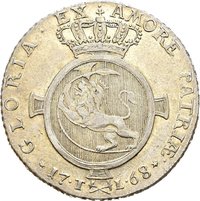
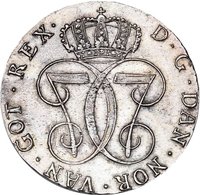
💎 Extremely Rare