

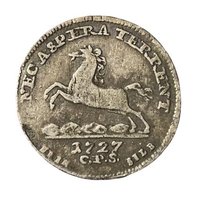
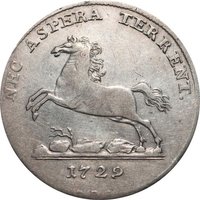
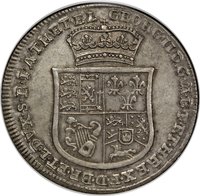
Obverse
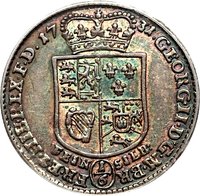
Description:
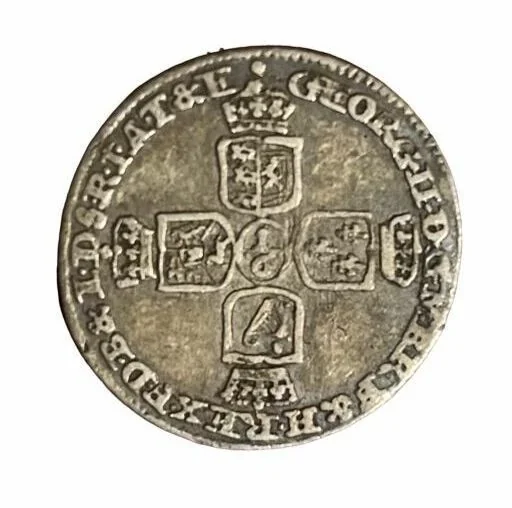
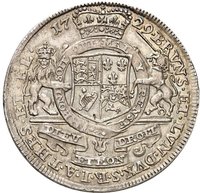
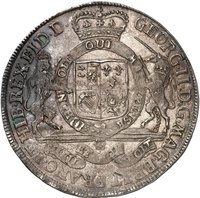
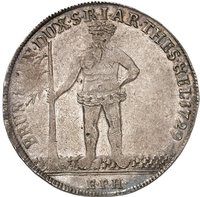
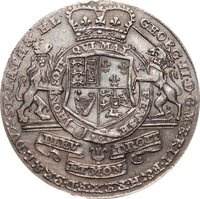
Four shields in a cross.
Inscription:
GEORG II D G M BR F & H REX F D B & I DS R I A T & E
1/6
1/6
Script: Latin
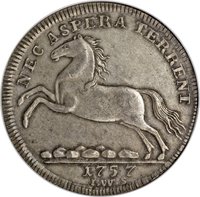
Reverse
Edge
Plain
Categories
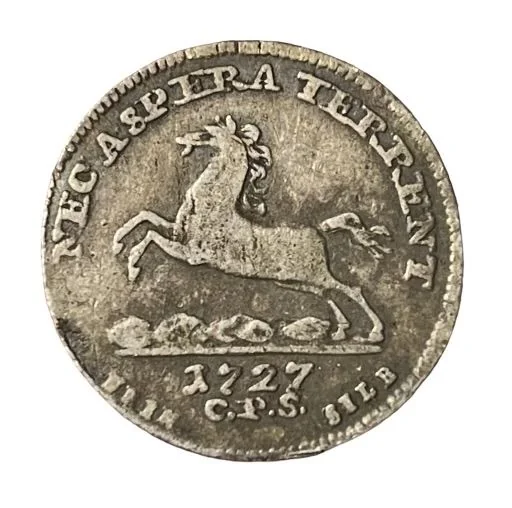
| Animal> Horse |
| Symbols> Coat of Arms |
Mints
| Name | Mark |
|---|---|
| Clausthal | — |
Mintings
| Year | Mint Mark | Mintage | Quality | Collection |
|---|---|---|---|---|
| 1727 | — | — | ||
| 1729 | — | — |
Historical background
In 1727, the currency situation in the Duchy of Brunswick-Lüneburg, specifically the Principality of Calenberg (with its capital in Hanover), was characterized by significant complexity and instability. The region was part of the fragmented Holy Roman Empire, where numerous states issued their own coinage, leading to a chaotic monetary landscape. Within the Welf domains themselves, different branches of the ruling family in Wolfenbüttel, Celle, and Calenberg-Hannover often pursued independent monetary policies, causing competing currencies to circulate simultaneously. This period followed the costly Great Northern War, and the state treasury was burdened by debt, creating a temptation to debase coinage to generate short-term revenue.
The primary unit of account was the Thaler, but daily transactions were dominated by a plethora of smaller, often debased coins like Gute Groschen, Mariengroschen, and Pfennige. A critical problem was the widespread circulation of inferior coins from neighboring states and the persistence of older, worn coins, which drove better-quality, full-weight coins out of circulation (Gresham's Law). This made trade difficult, eroded public trust, and complicated the principality's finances. Furthermore, the monetary system was not decimalized; instead, it relied on cumbersome conversion rates (e.g., 1 Thaler = 24 Gute Groschen = 36 Mariengroschen = 288 Pfennige), which facilitated fraud and error.
Recognizing the economic damage, the ruling Duke and Elector, George II Augustus (who was also King of Great Britain), and his Hanoverian administration were actively seeking reform. The year 1727 falls within a period of preparation for a major monetary convention. This effort would culminate in the pivotal Hanoverian Coinage Standardization of 1730 (Hanoversche Münzvertrag), which aimed to unify the coinage across the Welf territories, stabilize the relationship between the Thaler and the smaller subunits, and curb the influx of foreign debased money. Thus, the situation in 1727 was one of entrenched monetary disorder, but on the cusp of a concerted, princely-led attempt to impose order and stability for economic improvement.
The primary unit of account was the Thaler, but daily transactions were dominated by a plethora of smaller, often debased coins like Gute Groschen, Mariengroschen, and Pfennige. A critical problem was the widespread circulation of inferior coins from neighboring states and the persistence of older, worn coins, which drove better-quality, full-weight coins out of circulation (Gresham's Law). This made trade difficult, eroded public trust, and complicated the principality's finances. Furthermore, the monetary system was not decimalized; instead, it relied on cumbersome conversion rates (e.g., 1 Thaler = 24 Gute Groschen = 36 Mariengroschen = 288 Pfennige), which facilitated fraud and error.
Recognizing the economic damage, the ruling Duke and Elector, George II Augustus (who was also King of Great Britain), and his Hanoverian administration were actively seeking reform. The year 1727 falls within a period of preparation for a major monetary convention. This effort would culminate in the pivotal Hanoverian Coinage Standardization of 1730 (Hanoversche Münzvertrag), which aimed to unify the coinage across the Welf territories, stabilize the relationship between the Thaler and the smaller subunits, and curb the influx of foreign debased money. Thus, the situation in 1727 was one of entrenched monetary disorder, but on the cusp of a concerted, princely-led attempt to impose order and stability for economic improvement.

✨ Legendary