

⅙ Riksdaler – Sweden
Sweden
Context
Years: 1778–1790
Issuer: Sweden 
Ruler: Gustav III
Currency:
(1719—1798)
Demonetized: Yes
Total mintage: 5,403,744
Material
References
KM: #Click to copy to clipboard524
Numista: #37577
Value
Bullion value: $12.41
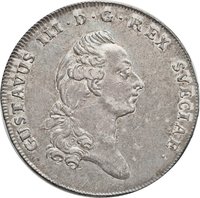
Obverse
Description:
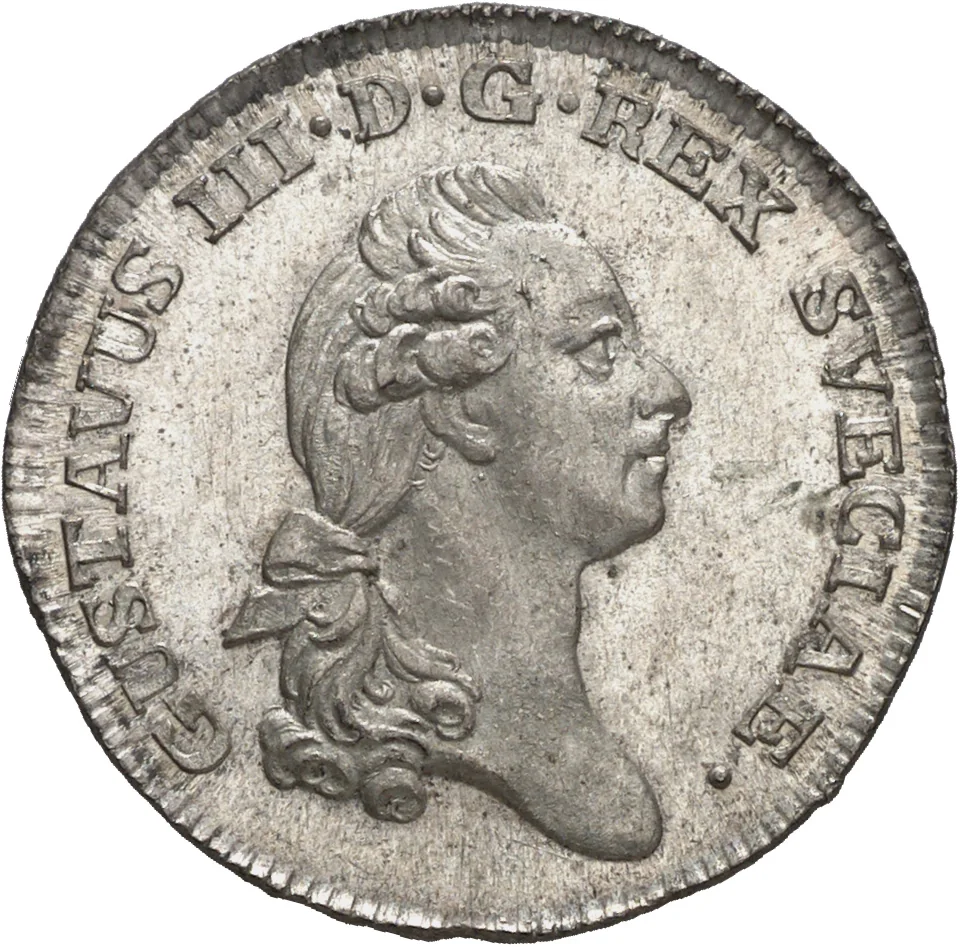
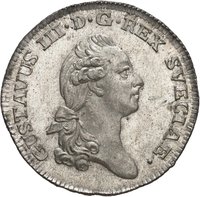
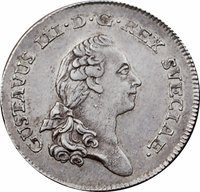
Bust of Gustav III facing right, encircled by legend.
Inscription:
GUSTAVUS III · D · G · REX SVECIAE·
Script: Latin
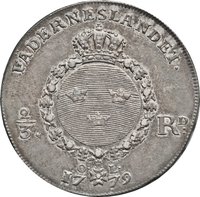
Reverse
Description:
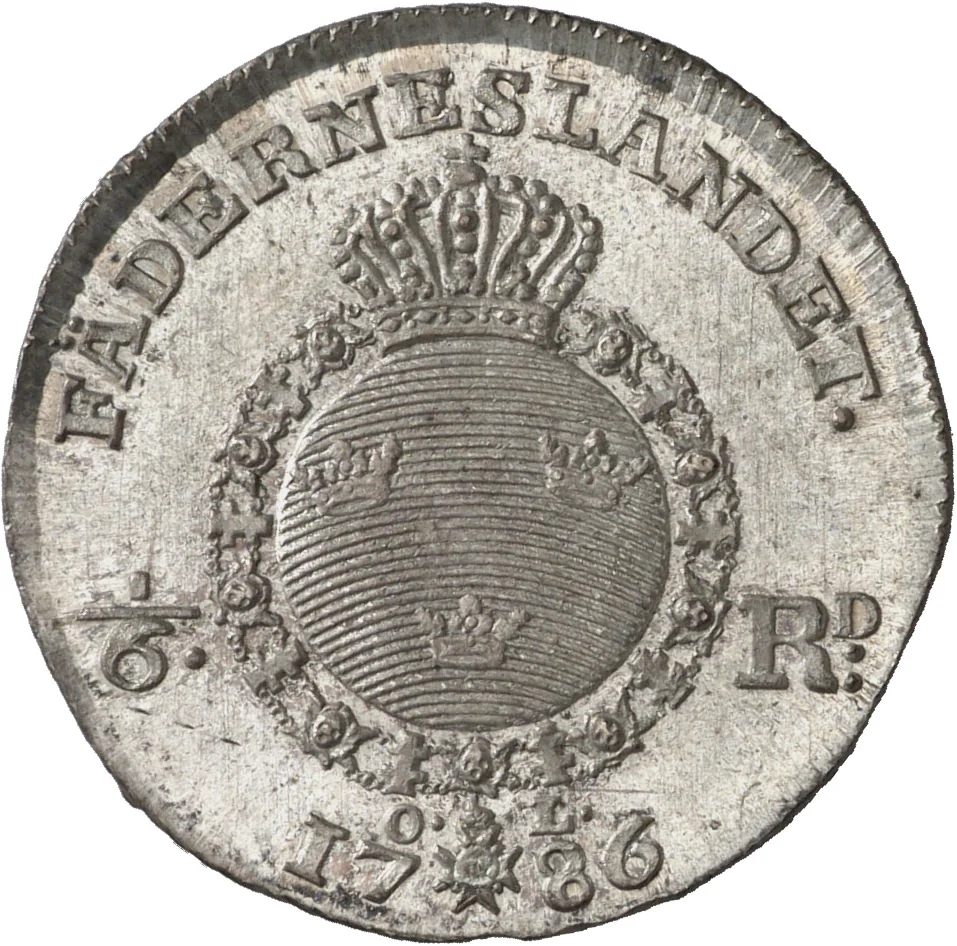
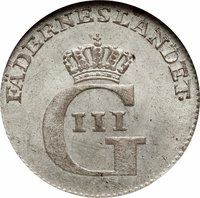
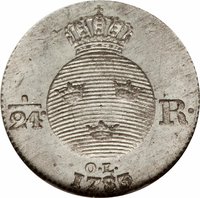
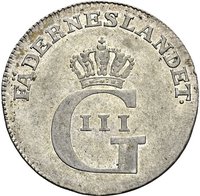
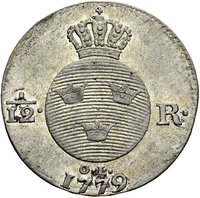
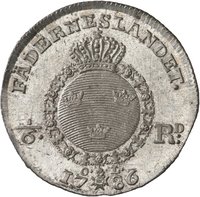
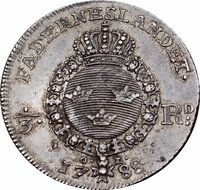
Swedish Three Crowns orb within the Seraphim chain. The pendant divides the date and mintmark; value flanks the orb. The King's motto is above the crown.
Inscription:
FÄDERNESLANDET·
1/3· RD:
O· L·
17 78
1/3· RD:
O· L·
17 78
Script: Latin
Edge
Diagonal milling
Categories
| Symbols> Coat of Arms |
Mintings
| Year | Mint Mark | Mintage | Quality | Collection |
|---|---|---|---|---|
| 1778 | OL | 977,772 | ||
| 1779 | OL | 1,026,846 | ||
| 1781 | OL | 179,622 | ||
| 1783 | OL | 413,706 | ||
| 1784 | OL | 387,576 | ||
| 1785 | OL | 252,486 | ||
| 1786 | OL | 790,500 | ||
| 1787 | OL | 25,662 | ||
| 1788 | OL | 741,918 | ||
| 1789 | OL | 208,872 | ||
| 1790 | OL | 398,784 |
Historical background
In 1778, Sweden was navigating a complex and precarious monetary situation under the reign of Gustav III. The nation was still grappling with the severe economic consequences of the Seven Years' War and the disastrous "Freedom Era," which had left the state coffers depleted. To finance its debts and expenditures, the state had heavily relied on the Riksbank to issue vast quantities of copper and silver coinage, but more problematically, a flood of low-quality paper money known as riksdaler riksgälds. This fiat currency, not backed by sufficient precious metals, had been depreciating for years, leading to inflation, a loss of public confidence, and a confusing multiplicity of circulating currencies.
The year itself was a point of tense anticipation rather than dramatic change. Gustav III, having seized absolute power in a 1772 coup, was actively working to stabilize the economy as part of his broader nationalist agenda. Preparations were underway for a major monetary reform, which would culminate in the 1779 ordinance. The core plan, developed by his financial advisors, was to introduce a new silver-based riksdaler specie as the standard, while systematically devaluing and retiring the discredited paper notes. The goal for 1778 was to lay the groundwork: assessing the scale of the debt, building necessary administrative structures, and managing the money supply in anticipation of the formal reset.
Thus, the currency situation in 1778 was one of managed crisis and planned transition. The public and markets were contending with the practical daily challenges of a devalued and untrustworthy paper currency, while the crown was finalizing a bold, top-down solution. This set the stage for the 1779 reform, which successfully established a new silver standard and restored some order, though it came with the heavy social cost of effectively writing down the savings of many ordinary citizens who held the old paper notes.
The year itself was a point of tense anticipation rather than dramatic change. Gustav III, having seized absolute power in a 1772 coup, was actively working to stabilize the economy as part of his broader nationalist agenda. Preparations were underway for a major monetary reform, which would culminate in the 1779 ordinance. The core plan, developed by his financial advisors, was to introduce a new silver-based riksdaler specie as the standard, while systematically devaluing and retiring the discredited paper notes. The goal for 1778 was to lay the groundwork: assessing the scale of the debt, building necessary administrative structures, and managing the money supply in anticipation of the formal reset.
Thus, the currency situation in 1778 was one of managed crisis and planned transition. The public and markets were contending with the practical daily challenges of a devalued and untrustworthy paper currency, while the crown was finalizing a bold, top-down solution. This set the stage for the 1779 reform, which successfully established a new silver standard and restored some order, though it came with the heavy social cost of effectively writing down the savings of many ordinary citizens who held the old paper notes.
Series: 1778 Sweden circulation coins
⭐ Rare