

cruzado novo – Portugal
Add to wishlist
Standard circulation coins
Series: ET . ALG.
Portugal
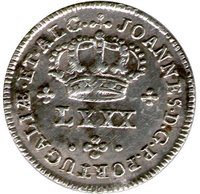
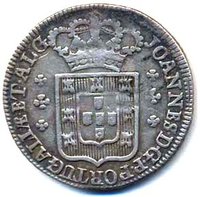
Obverse
Description:
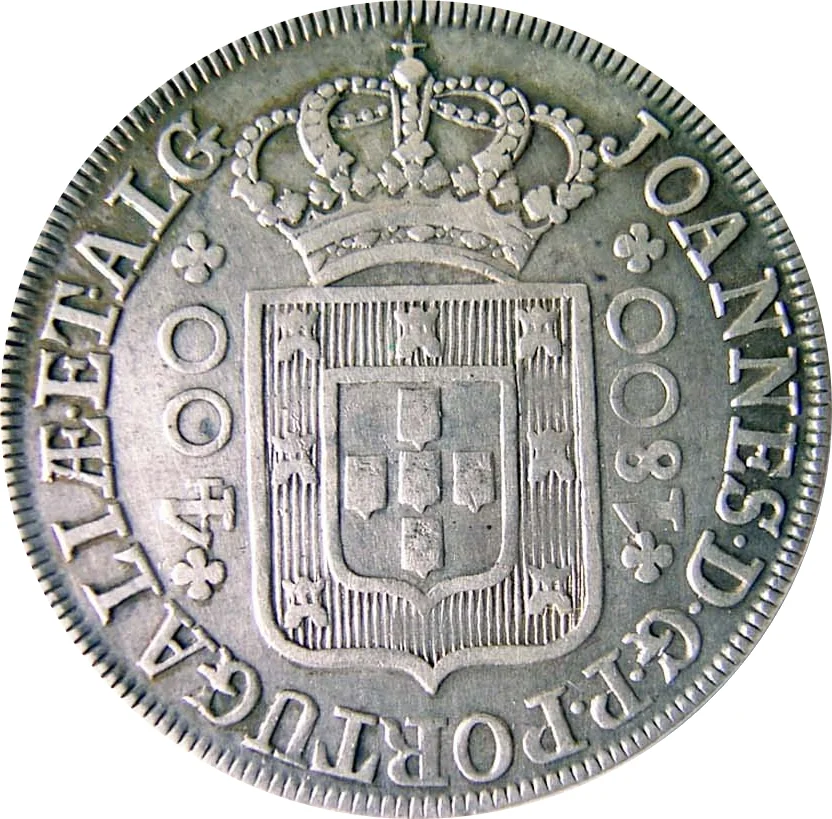
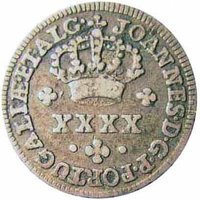
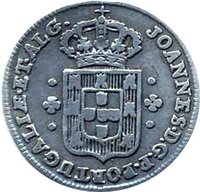
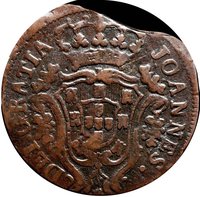
Portugal's crowned coat of arms, with value left, year right, and edge legends.
Inscription:
JOANNES.D.G.P.PORTUGALIÆ.ET.ALG
*400*/*1800*
*400*/*1800*
Script: Latin
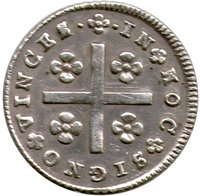
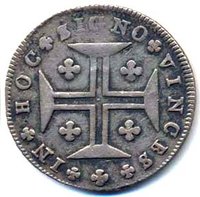
Reverse
Description:
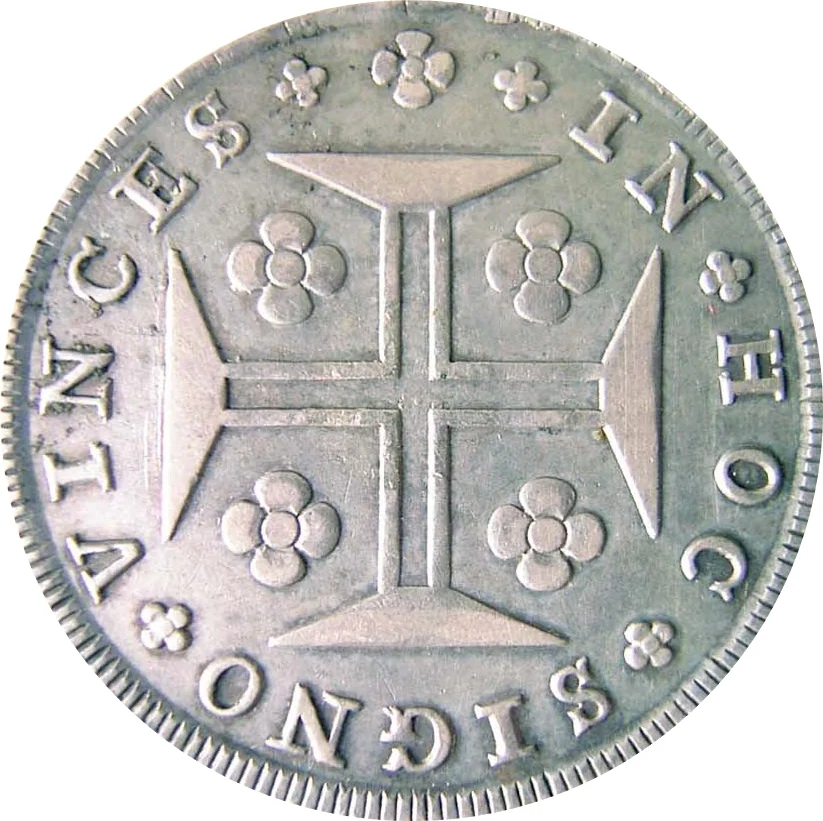
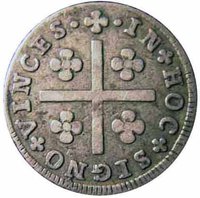
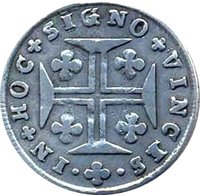
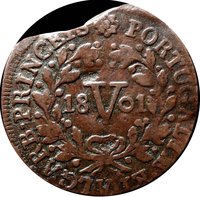
Order of Christ cross with corner rosettes and edge inscriptions.
Inscription:
*IN*HOC*SIGNO*VINCES
Script: Latin
Edge
Rope shaped
Mints
| Name | Mark |
|---|---|
| Imprensa Nacional - Casa da Moeda | — |
Mintings
| Year | Mint Mark | Mintage | Quality | Collection |
|---|---|---|---|---|
| 1799 | — | 724,663 | ||
| 1800 | — | 437,538 | ||
| 1801 | — | 195,888 | ||
| 1802 | — | — |
Historical background
In 1799, Portugal's currency situation was defined by deep instability and inflationary pressure, largely driven by its colonial ambitions and the broader European conflicts of the Napoleonic era. The Portuguese economy was heavily reliant on Brazilian gold, which had flowed into the metropolis throughout the 18th century, minted into coins like the cruzado and moeda. However, by the late 1790s, this supply was beginning to decline, straining state finances. This was exacerbated by massive military expenditures to maintain Portugal's precarious neutrality amidst the war between Britain and Revolutionary France, forcing the royal treasury, led by the Marquis of Ponte de Lima, to resort to borrowing and monetary expedients.
The core of the crisis lay in the proliferation of paper money. To finance its obligations, particularly the subsidy to its ally Spain under the Treaty of Badajoz (1801), the government issued vast quantities of interest-bearing treasury bills (vales reais). Initially intended as a temporary debt instrument, these began to circulate as a de facto paper currency. By 1799, they were severely depreciated, trading at a significant discount to their face value in metallic coin. This created a destructive dual-system where people hoarded gold and silver, while the depreciating paper was used for daily transactions, eroding public trust and fueling inflation.
Consequently, 1799 represented a pivotal point of financial strain before a more acute crisis. The currency disorder reflected the Portuguese state's weakening fiscal foundation and its dependence on an overstretched empire. The situation would deteriorate further in the coming decade, culminating in the flight of the Royal Family to Brazil in 1807 and the complete collapse of the vales reais, necessitating a major monetary reform in 1822 after the return of King João VI.
The core of the crisis lay in the proliferation of paper money. To finance its obligations, particularly the subsidy to its ally Spain under the Treaty of Badajoz (1801), the government issued vast quantities of interest-bearing treasury bills (vales reais). Initially intended as a temporary debt instrument, these began to circulate as a de facto paper currency. By 1799, they were severely depreciated, trading at a significant discount to their face value in metallic coin. This created a destructive dual-system where people hoarded gold and silver, while the depreciating paper was used for daily transactions, eroding public trust and fueling inflation.
Consequently, 1799 represented a pivotal point of financial strain before a more acute crisis. The currency disorder reflected the Portuguese state's weakening fiscal foundation and its dependence on an overstretched empire. The situation would deteriorate further in the coming decade, culminating in the flight of the Royal Family to Brazil in 1807 and the complete collapse of the vales reais, necessitating a major monetary reform in 1822 after the return of King João VI.
Series: ET . ALG.
💎 Extremely Rare