

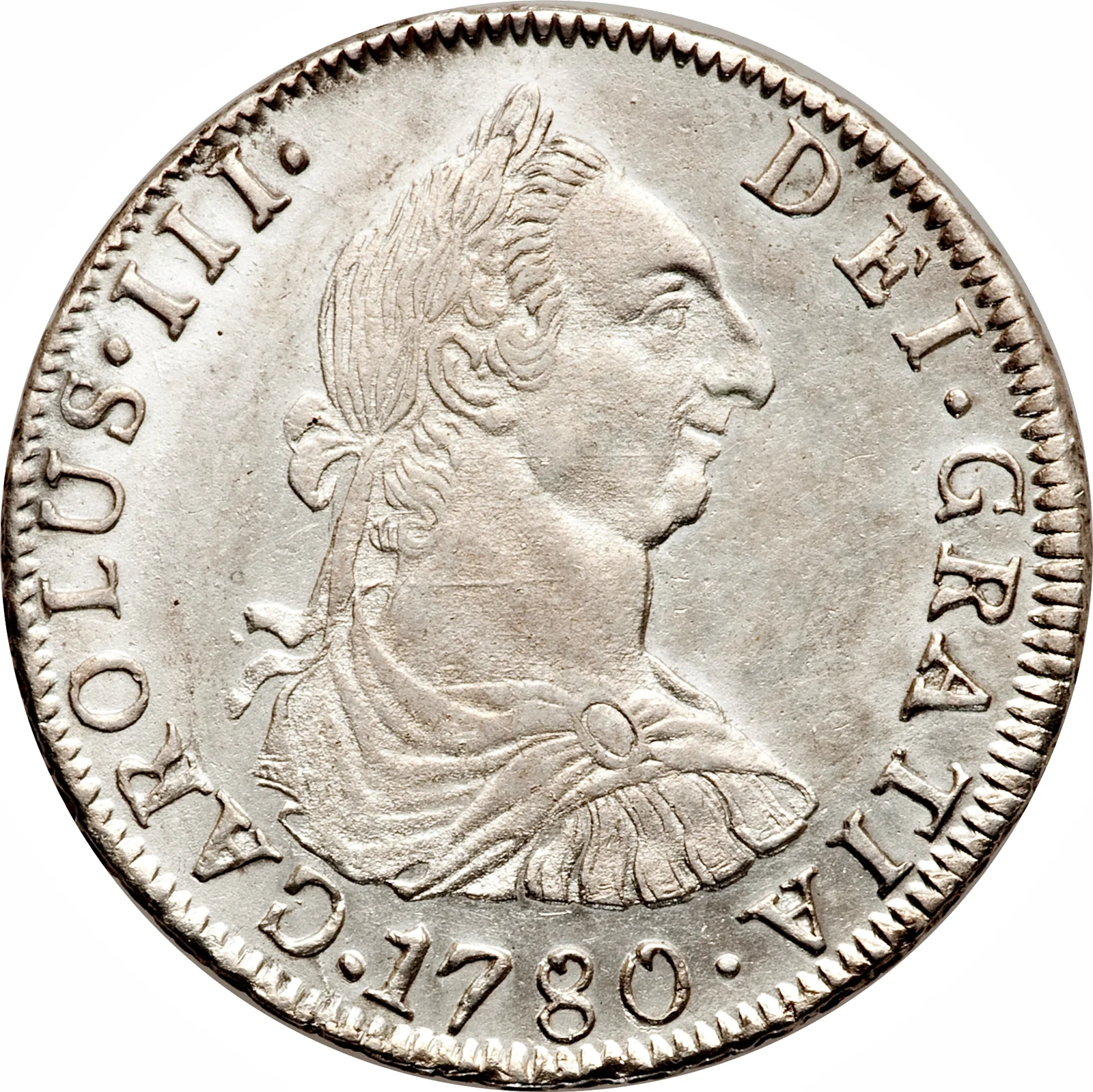
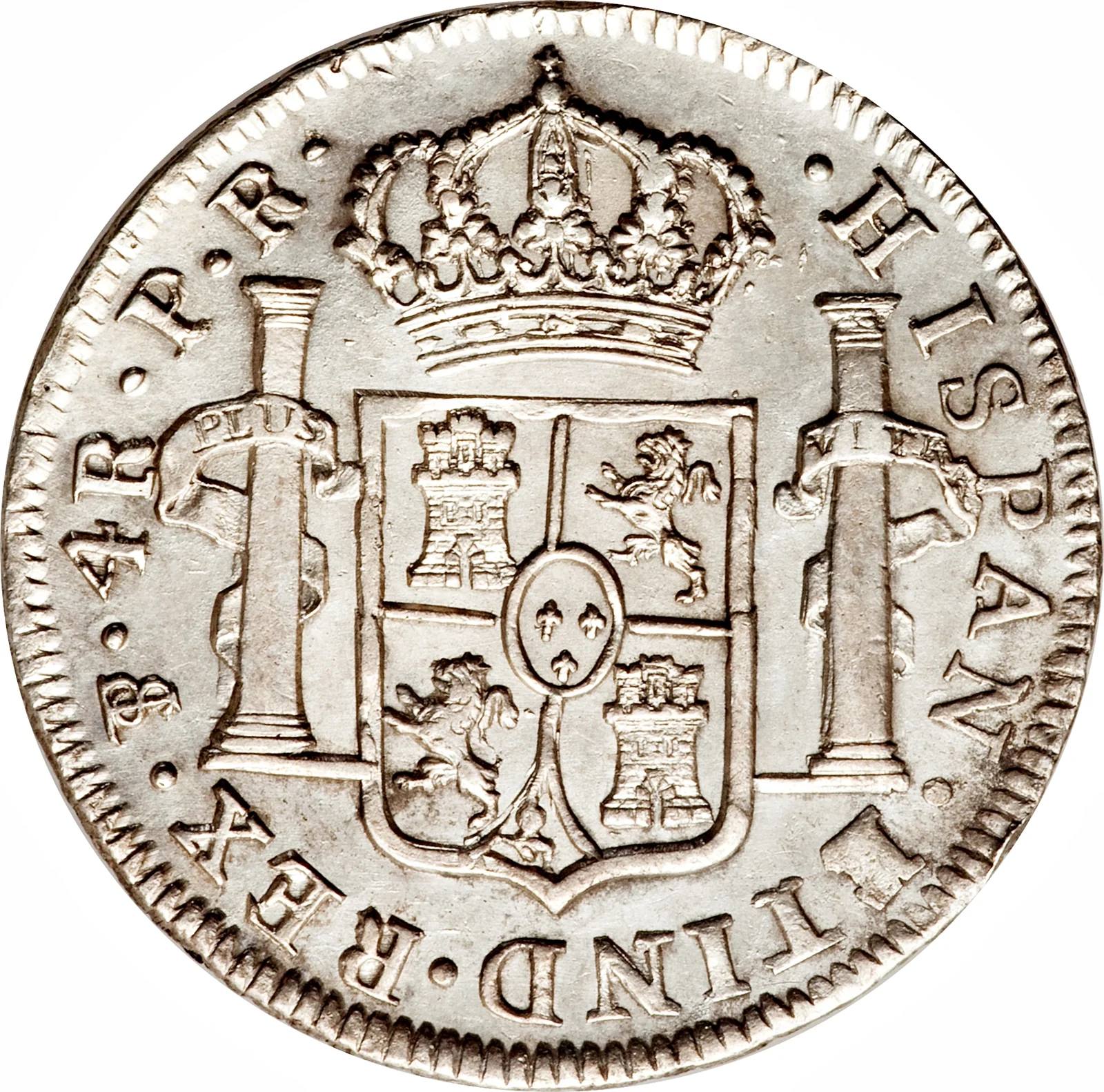
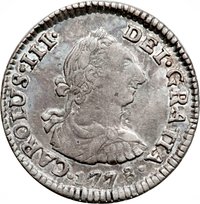
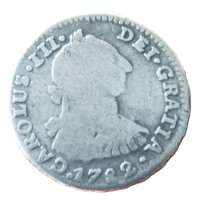
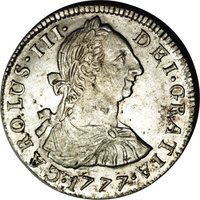
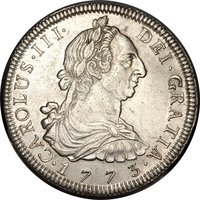
Obverse
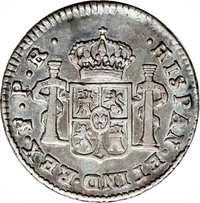
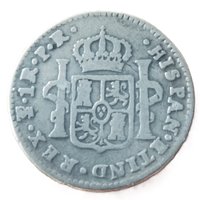
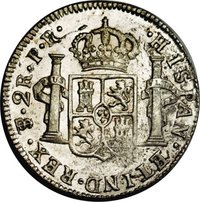
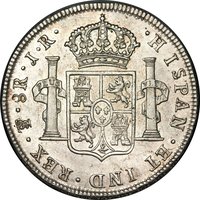
Reverse
Edge
Mints
| Name | Mark |
|---|---|
| Potosi | — |
Mintings
| Year | Mint Mark | Mintage | Quality | Collection |
|---|---|---|---|---|
| 1773 | JR | — | ||
| 1774 | JR | — | ||
| 1775 | JR | — | ||
| 1776 | JR | — | ||
| 1776 | PR | — | ||
| 1777 | PR | — | ||
| 1778 | JR | — | ||
| 1778 | PR | — | ||
| 1779 | PR | — | ||
| 1780 | PR | — | ||
| 1781 | PR | — | ||
| 1782 | PR | — | ||
| 1783 | PR | — | ||
| 1784 | PR | — | ||
| 1785 | PR | — | ||
| 1786 | PR | — | ||
| 1787 | PR | — | ||
| 1788 | PR | — | ||
| 1789 | PR | — |
Historical background
In 1773, the currency situation in the Bolivian region (then the colonial Audiencia of Charcas within the Viceroyalty of Peru) was fundamentally defined by the immense silver output of the Cerro Rico of Potosí. This single mountain was the economic engine of the Spanish Empire, producing the vast majority of the world's silver. The primary unit of account was the silver peso, or "piece of eight," minted into physical coins at the Potosí Mint (Casa de la Moneda). However, the system was plagued by a severe and chronic shortage of circulating small-denomination coinage for everyday transactions, a problem stemming from the Crown's focus on exporting high-value silver bars and coins.
This scarcity of fractional currency led to the widespread and official use of substitute monies. The most common were macuquinas—crudely cut and clipped chunks of silver coins—and token señas, often made of base metals or even coca leaves in local markets. More formally, the Spanish administration frequently authorized the use of moneda menuda or tlacos in other parts of the empire, but in Potosí, the sheer scale of mining created a unique economy where even workers' wages were often paid in a mix of valuable silver and these impractical fragments. This created a two-tiered system: large-scale imperial finance flowed in pristine pesos, while the local economy choked on a dysfunctional and debased medium of exchange.
The underlying strain in 1773 was also one of control and fraud. The Potosí Mint had been historically scandalized by widespread debasement in the previous century, and while reforms had been implemented, trust in the coinage remained a sensitive issue. Furthermore, the Bourbon reforms were beginning to exert pressure, aiming to centralize economic control and increase revenue for the Crown. This tension between the imperial need for silver and the colony's need for a functional monetary system would persist, setting the stage for future administrative overhauls, including the establishment of the new Viceroyalty of the Río de la Plata in 1776, which would soon bring Potosí under its authority.
This scarcity of fractional currency led to the widespread and official use of substitute monies. The most common were macuquinas—crudely cut and clipped chunks of silver coins—and token señas, often made of base metals or even coca leaves in local markets. More formally, the Spanish administration frequently authorized the use of moneda menuda or tlacos in other parts of the empire, but in Potosí, the sheer scale of mining created a unique economy where even workers' wages were often paid in a mix of valuable silver and these impractical fragments. This created a two-tiered system: large-scale imperial finance flowed in pristine pesos, while the local economy choked on a dysfunctional and debased medium of exchange.
The underlying strain in 1773 was also one of control and fraud. The Potosí Mint had been historically scandalized by widespread debasement in the previous century, and while reforms had been implemented, trust in the coinage remained a sensitive issue. Furthermore, the Bourbon reforms were beginning to exert pressure, aiming to centralize economic control and increase revenue for the Crown. This tension between the imperial need for silver and the colony's need for a functional monetary system would persist, setting the stage for future administrative overhauls, including the establishment of the new Viceroyalty of the Río de la Plata in 1776, which would soon bring Potosí under its authority.
Series: 1773 Bolivia circulation coins
⭐ Rare