

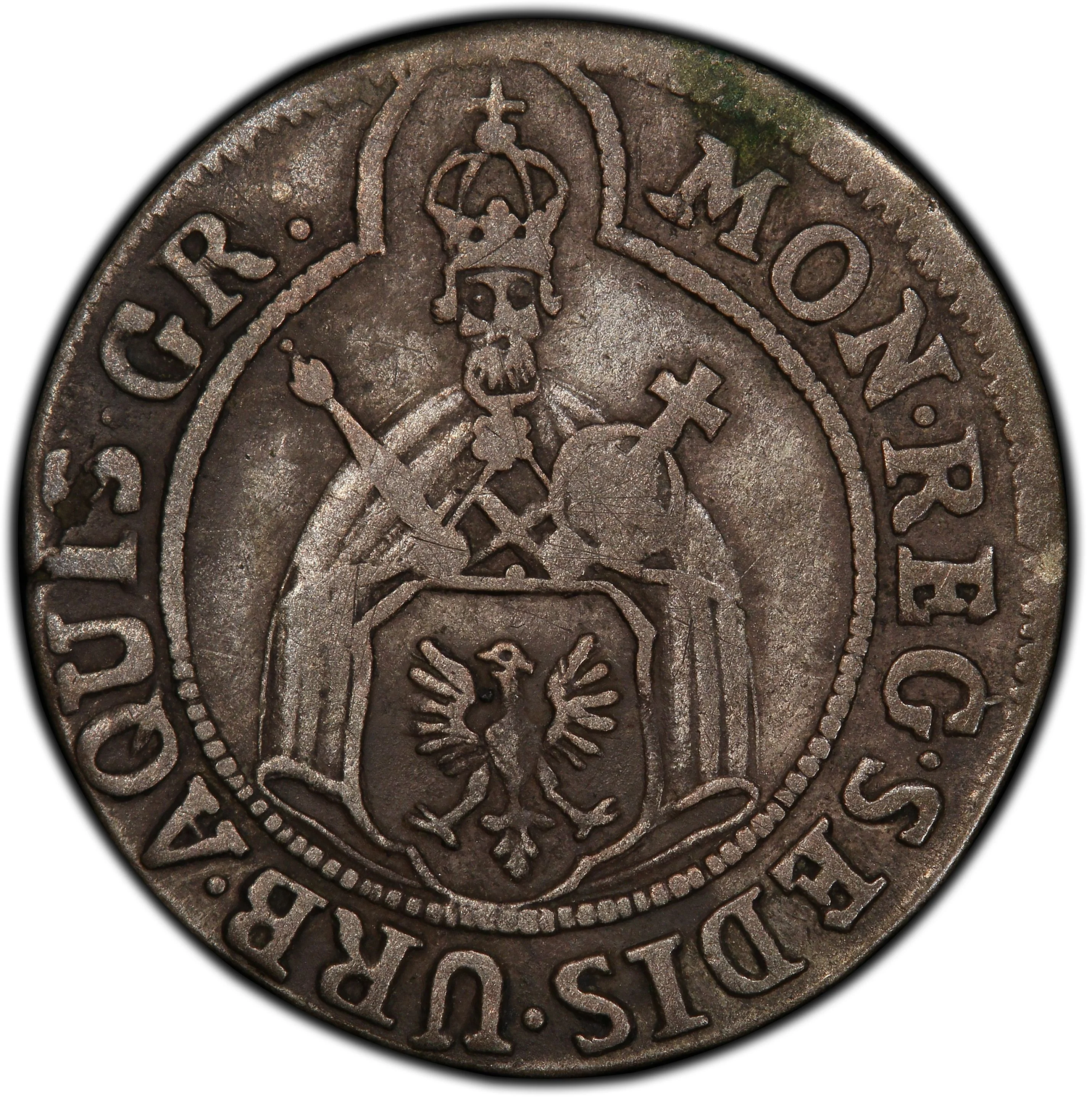
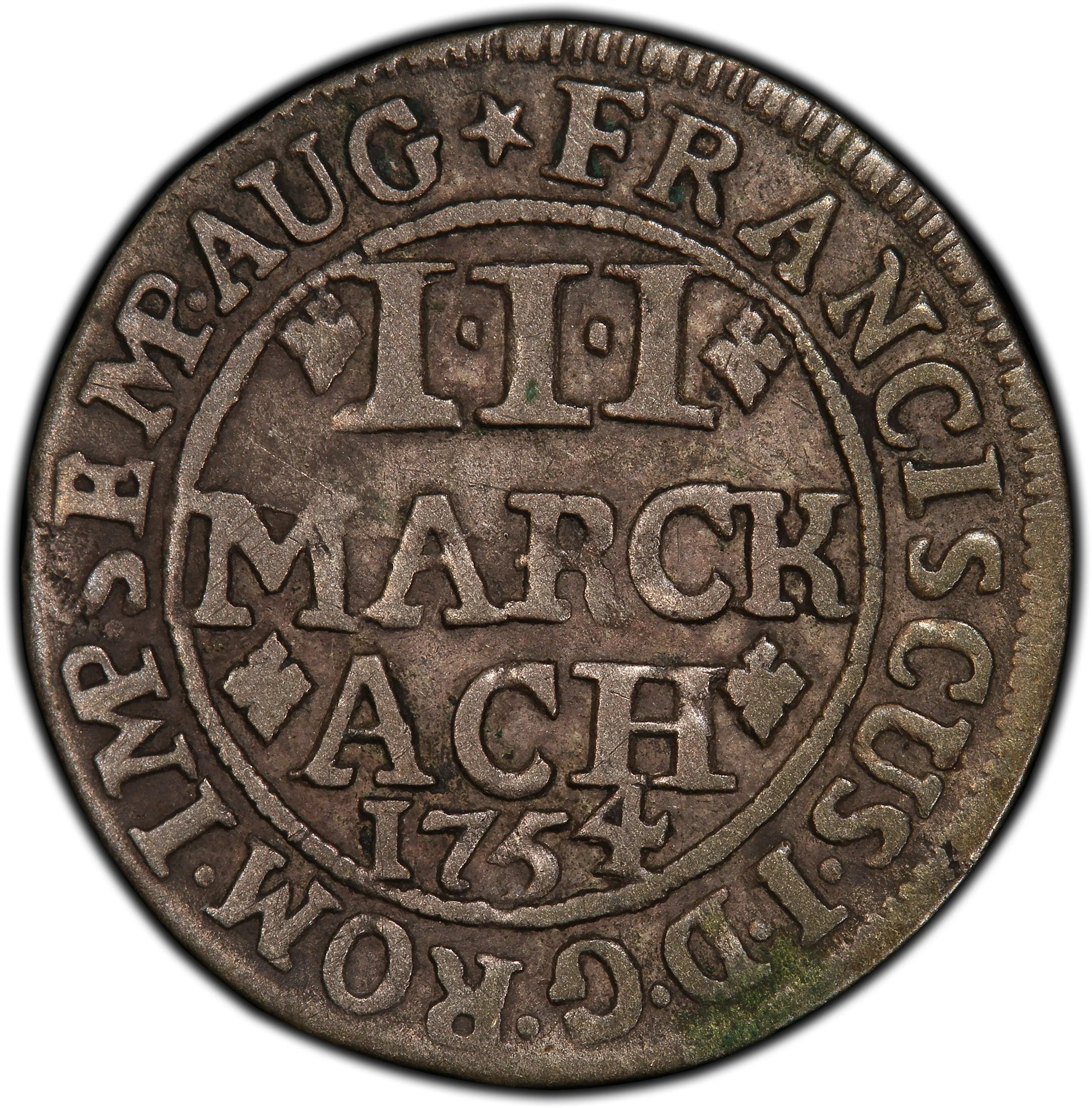

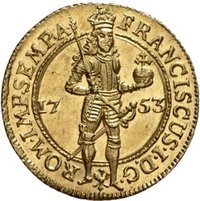
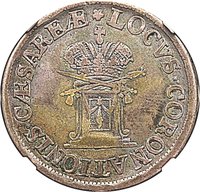
Obverse
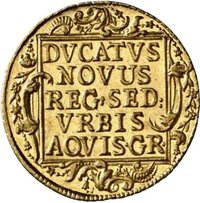
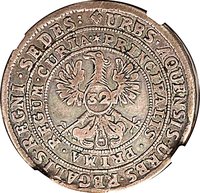
Reverse
Description:
Inscription in circle: value and date, surrounded by legend.
Inscription:
FRANCISCUS·I·D·G·ROM·IMP·SEMP·AUG
*I·I·I*
MARCK
ACH
1754
*I·I·I*
MARCK
ACH
1754
Script: Latin
Edge
Mintings
| Year | Mint Mark | Mintage | Quality | Collection |
|---|---|---|---|---|
| 1754 | — | — |
Historical background
In 1754, the Free Imperial City of Aachen operated within the complex and fragmented monetary landscape of the Holy Roman Empire. As an autonomous entity, the city minted its own coins, primarily Albus and Groschen, which circulated alongside a plethora of foreign currencies. These included coins from neighboring territories like the Duchy of Jülich and the Electorate of Cologne, as well as high-value "international" trade coins such as Reichsthalers and Dutch Guilders. This multiplicity created a constant challenge of exchange rates and valuation, requiring official ordinances to fix the relative worth of different coins in local transactions.
The city's monetary system was fundamentally bimetallic, based on silver and copper, but was under persistent strain. A key issue was the gradual debasement of smaller denomination coins, a common problem across Europe, where the intrinsic metal value fell below the face value. This often led to shortages of "good money" (full-weight coin) as it was hoarded or exported, while "bad money" (debased coin) flooded the local market, a principle known as Gresham's Law. For Aachen's artisans and merchants, this instability introduced uncertainty into everyday commerce and contract fulfillment.
Furthermore, Aachen's status as a major textile producer and its hosting of popular pilgrimage sites meant its economy was deeply integrated into regional trade networks. This made the city particularly sensitive to monetary policies enacted by larger political entities, especially the periodic Reichsmünzordnungen (Imperial Coinage Ordinances) that attempted, with limited success, to standardize currency across the Empire. Thus, in 1754, Aachen's magistrates were engaged in a continuous balancing act: managing local minting, regulating the flood of foreign coin, and striving to maintain a reliable medium of exchange to support both civic finance and the city's vibrant commercial life.
The city's monetary system was fundamentally bimetallic, based on silver and copper, but was under persistent strain. A key issue was the gradual debasement of smaller denomination coins, a common problem across Europe, where the intrinsic metal value fell below the face value. This often led to shortages of "good money" (full-weight coin) as it was hoarded or exported, while "bad money" (debased coin) flooded the local market, a principle known as Gresham's Law. For Aachen's artisans and merchants, this instability introduced uncertainty into everyday commerce and contract fulfillment.
Furthermore, Aachen's status as a major textile producer and its hosting of popular pilgrimage sites meant its economy was deeply integrated into regional trade networks. This made the city particularly sensitive to monetary policies enacted by larger political entities, especially the periodic Reichsmünzordnungen (Imperial Coinage Ordinances) that attempted, with limited success, to standardize currency across the Empire. Thus, in 1754, Aachen's magistrates were engaged in a continuous balancing act: managing local minting, regulating the flood of foreign coin, and striving to maintain a reliable medium of exchange to support both civic finance and the city's vibrant commercial life.
⭐ Rare