

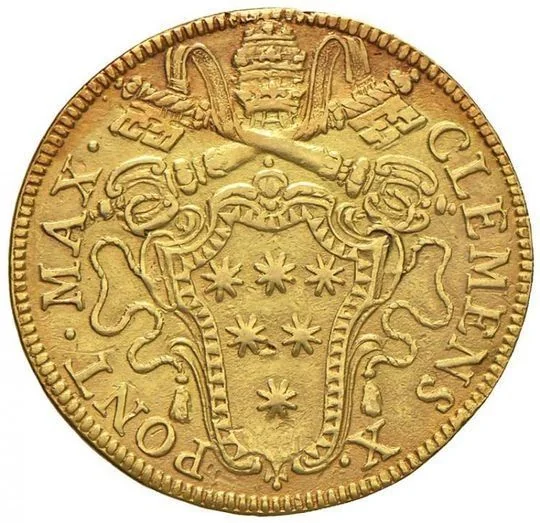
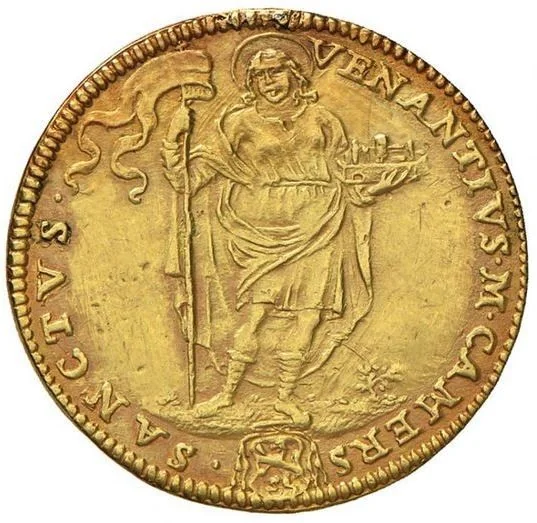
1 Doppia – Papal States
Vatican City
Context
Year: 1673
Country: Vatican City 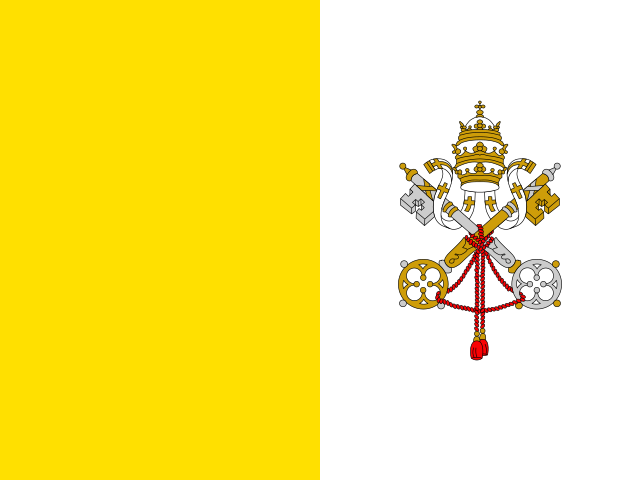
Issuer: Papal States
Ruler: Clement X
Currency:
(1534—1835)
Demonetized: Yes
Material
References
KM: #Click to copy to clipboard345
Numista: #373262
Value
Bullion value: $1080.08
Obverse
Reverse
Edge
Mints
| Name | Mark |
|---|---|
| Rome | — |
Mintings
| Year | Mint Mark | Mintage | Quality | Collection |
|---|---|---|---|---|
| 1673 | — | — |
Historical background
In 1673, the Papal States operated within a complex and often precarious monetary system, typical of early modern Italian polities. The state lacked a unified, centrally controlled currency. Instead, circulation was dominated by a multitude of foreign coins, particularly Spanish reales and escudos from the vast silver and gold shipments from the Americas, alongside various Italian coinages from rival states like Florence, Venice, and Genoa. The Papal mint in Rome produced its own coins, such as the giulio and scudo, but their value and acceptance were frequently undermined by debasement and the overwhelming volume of stronger foreign specie. This created a chaotic environment where exchange rates fluctuated, and the value of money was often determined by its metal content rather than its face value.
The financial pressures on the Papacy under Pope Clement X (reigned 1670-1676) exacerbated these monetary challenges. The need to fund administrative costs, architectural projects, and maintain diplomatic influence strained the treasury. A common response to such fiscal shortfalls was the practice of debasement—reducing the precious metal content in coins while ordering them to circulate at the same nominal value. This led to inflation, a loss of public trust in papal currency, and the phenomenon described by Gresham’s Law, where "bad money drives out good." People hoarded older, purer coins or foreign specie, further removing sound money from daily transactions and worsening the economic instability within the Papal States.
Consequently, daily commerce in Rome and the surrounding territories was conducted through a cumbersome process of weighing and assaying coins to determine their true worth. Money changers (banchieri) held significant power, and official attempts to fix exchange rates by proclamation often failed in practice. The situation reflected the broader political weakness of the Papal States, which, despite its spiritual authority, struggled to exert full economic sovereignty in a European financial landscape dominated by great powers and the influx of New World bullion. The monetary confusion of 1673 was thus a symptom of both internal fiscal policy and the Papacy’s vulnerable position within the international economic order.
The financial pressures on the Papacy under Pope Clement X (reigned 1670-1676) exacerbated these monetary challenges. The need to fund administrative costs, architectural projects, and maintain diplomatic influence strained the treasury. A common response to such fiscal shortfalls was the practice of debasement—reducing the precious metal content in coins while ordering them to circulate at the same nominal value. This led to inflation, a loss of public trust in papal currency, and the phenomenon described by Gresham’s Law, where "bad money drives out good." People hoarded older, purer coins or foreign specie, further removing sound money from daily transactions and worsening the economic instability within the Papal States.
Consequently, daily commerce in Rome and the surrounding territories was conducted through a cumbersome process of weighing and assaying coins to determine their true worth. Money changers (banchieri) held significant power, and official attempts to fix exchange rates by proclamation often failed in practice. The situation reflected the broader political weakness of the Papal States, which, despite its spiritual authority, struggled to exert full economic sovereignty in a European financial landscape dominated by great powers and the influx of New World bullion. The monetary confusion of 1673 was thus a symptom of both internal fiscal policy and the Papacy’s vulnerable position within the international economic order.
✨ Legendary