

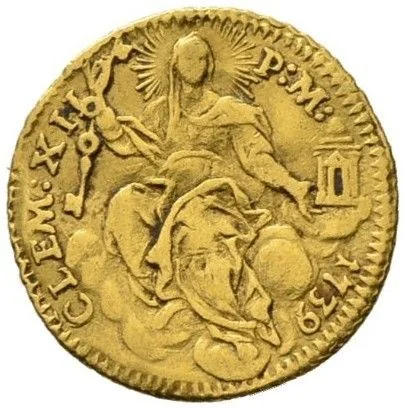
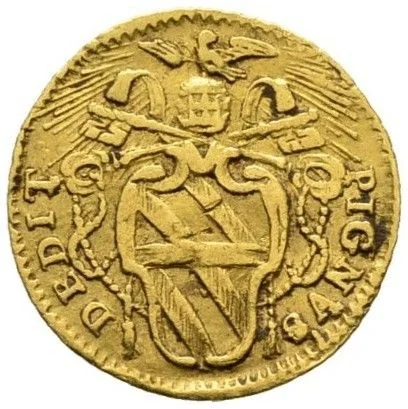
½ Zecchino – Papal States
Vatican City
Context
Year: 1739
Country: Vatican City 
Issuer: Papal States
Ruler: Clement XII
Currency:
(1534—1835)
Demonetized: Yes
Material
References
KM: #Click to copy to clipboard223
Numista: #371149
Value
Bullion value: $288.64
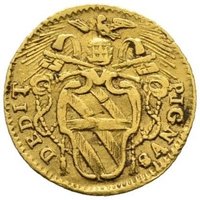
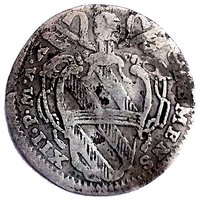
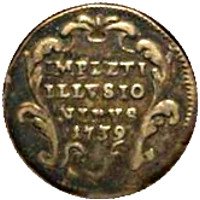
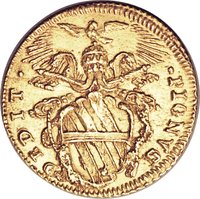
Obverse
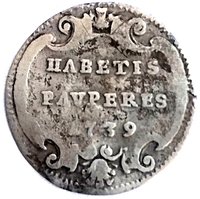
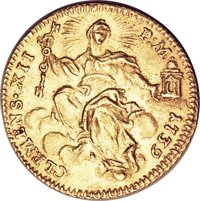
Reverse
Edge
Mints
| Name | Mark |
|---|---|
| Rome | — |
Mintings
| Year | Mint Mark | Mintage | Quality | Collection |
|---|---|---|---|---|
| 1739 | — | — |
Historical background
In 1739, the Papal States' monetary system was a complex and fragmented relic of medieval practices, struggling under the weight of both internal disunity and external economic pressures. There was no single, unified Papal currency; instead, the state operated on a bimetallic system where both gold scudi and silver giulii served as primary units of account. However, the actual coins in circulation were a chaotic mix of issues from the papal mint in Rome, alongside a plethora of older papal coins, foreign currencies (especially Spanish silver), and even the coinage of individual Italian cities. This proliferation of coins of varying weight, purity, and value made commerce cumbersome and fostered widespread counterfeiting and clipping.
The situation was exacerbated by chronic fiscal strain. The Papal government, under Pope Clement XII (elected in 1730), faced substantial debts from earlier conflicts and the costs of administration and patronage. A common response to such deficits was the debasement of coinage—reducing the precious metal content in new mintings while maintaining their face value. This practice, though providing short-term revenue, triggered inflation, eroded public trust in the currency, and disrupted trade. Furthermore, the Papal States' economy was largely agrarian and stagnant, lacking the dynamic commercial activity that supported stronger currencies in northern Europe, leaving its monetary system particularly vulnerable to manipulation.
Consequently, 1739 fell within a period of monetary instability and attempted reform. The authorities in Rome were perennially engaged in issuing proclamations to fix exchange rates between the myriad coins, attempting to impose order by legal fiat. These efforts were largely ineffective against market forces and the physical reality of degraded coinage. The fundamental problems—fiscal weakness, lack of uniformity, and the temptation of debasement—remained unresolved, setting the stage for continued monetary challenges throughout the 18th century until the radical upheavals of the Napoleonic era.
The situation was exacerbated by chronic fiscal strain. The Papal government, under Pope Clement XII (elected in 1730), faced substantial debts from earlier conflicts and the costs of administration and patronage. A common response to such deficits was the debasement of coinage—reducing the precious metal content in new mintings while maintaining their face value. This practice, though providing short-term revenue, triggered inflation, eroded public trust in the currency, and disrupted trade. Furthermore, the Papal States' economy was largely agrarian and stagnant, lacking the dynamic commercial activity that supported stronger currencies in northern Europe, leaving its monetary system particularly vulnerable to manipulation.
Consequently, 1739 fell within a period of monetary instability and attempted reform. The authorities in Rome were perennially engaged in issuing proclamations to fix exchange rates between the myriad coins, attempting to impose order by legal fiat. These efforts were largely ineffective against market forces and the physical reality of degraded coinage. The fundamental problems—fiscal weakness, lack of uniformity, and the temptation of debasement—remained unresolved, setting the stage for continued monetary challenges throughout the 18th century until the radical upheavals of the Napoleonic era.
✨ Legendary